Trade unions see Estonia's new immigration quota as threat to wages
Estonia plans to admit 2,569 foreign workers next year — twice its immigration quota — under a regulation the unions say will bring in cheap labor and hold down wages.
Amendments to the Aliens Act will enter into force next year, allowing more temporary residence permits to be issued to citizens of other countries. Next year's immigration quota is 1,284, equivalent to 0.1 percent of Estonia's population. On the basis of the law, the Ministry of the Interior has drafted a regulation that would allow additional residence permits to be issued next year in 20 areas of activity in industry, transport and storage, corresponding to a further 0.2 percent of the population.
"The 2,569 residence permits projected for next year would go to sectors where labor shortages have been confirmed by an OSKA study. Where we see high export value and, in fact, high average gross wages. In other words, these are sectors where there are labor shortages, but which also help create added value for Estonia as a whole," Sandra Särav-Tammus, deputy secretary general at the Ministry of Economic Affairs and Communications, told "Aktuaalne kaamera".
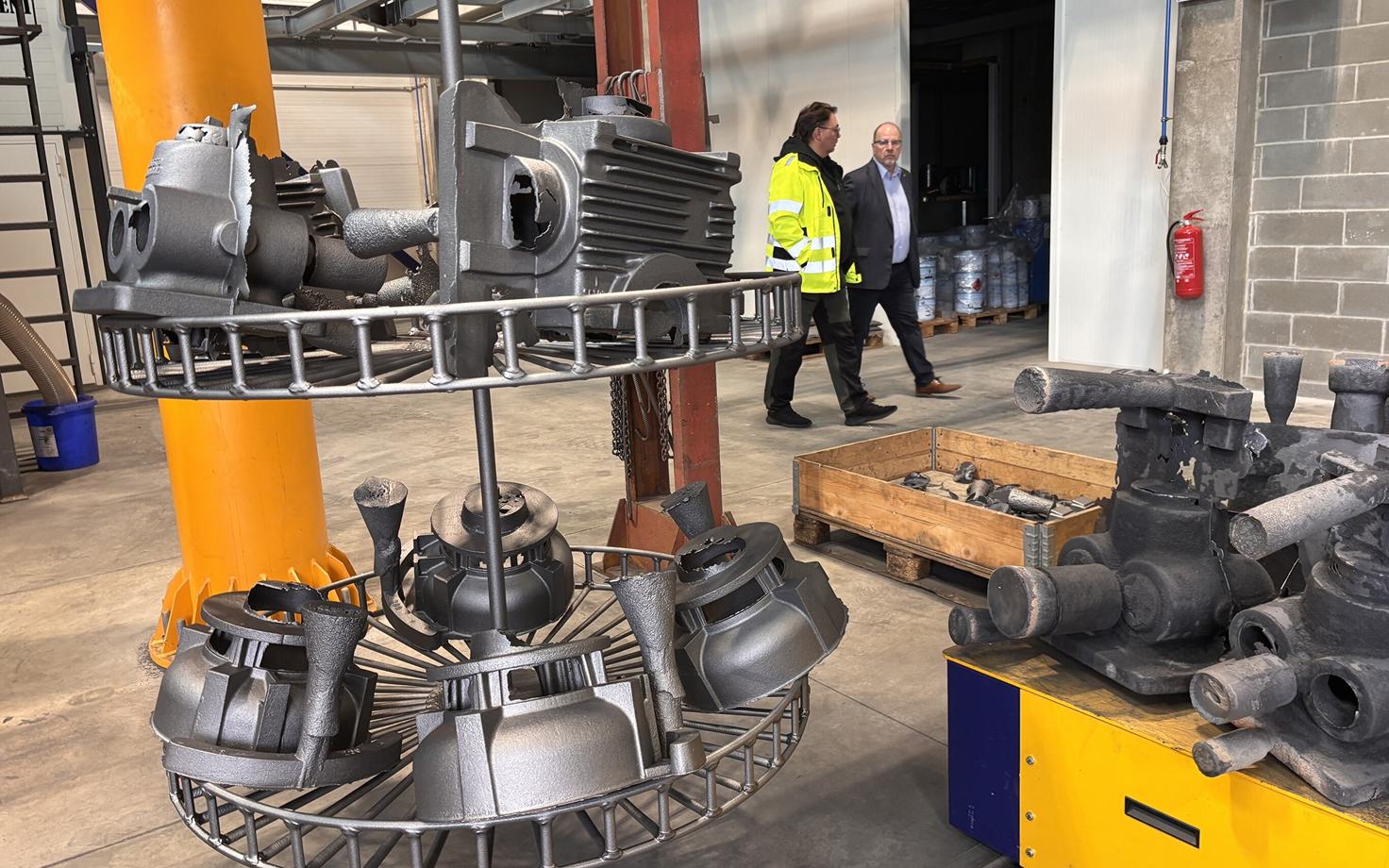
People of more than 30 nationalities work at the BLRT industrial group, which is engaged in shipping. The group's companies still face constant labor shortages, BLRT says.
"We are involved in shipbuilding and ship repair, and we work in the oil and gas industry. We are involved in wind energy, the offshore industry, mechanical engineering, transit and many other activities, which means that the range of professions is also broad. We need these workers all the time, depending on the project and the order we have received. We also need engineers and, of course, welders," said BLRT Group adviser Roman Vinartshuk.
Highly qualified specialists can still be brought to Estonia outside the quota, but they must also continue to be paid 1.5 times the average wage. However, under the 0.2 percent quota, a foreign national may be paid just 80 percent of the average wage. Trade unions believe this encourages the import of cheap labor.

Kaia Vask, chair of the Estonian Trade Union Confederation, said: "Are the 20 sectors or areas of activity named in this regulation really those where there are serious labor shortages, or are they also sectors where Estonians do not want to work because working conditions are poor? If we bring in foreign labor from third countries, we are effectively legitimizing these poorer working conditions. The situation will not actually improve".
Estonia's immigration quota for skilled workers will be 2,569 next year under the draft regulation, with the cap rising to 0.2 percent of the permanent population during economic growth and staying at 0.1 percent otherwise. The shortage list is led by electronic and electrical equipment manufacturing, followed by motor vehicles and machinery, with energy deliberately excluded on security grounds. Interior Minister Igor Taro has sent the draft to ministries and interest groups for approval, with opinions due by 13 November.
In recent years, the immigration quota had not been filled by year-end in contrast with an earlier situation when it tended to be filled up by or in January of the given year.
--
Follow ERR News on Facebook and Twitter and never miss an update!
Editor: Andrew Whyte, Johanna Alvin
Source: "Aktuaalne kaamera"


