Some phones may receive EE-ALARM alerts as cell broadcast testing begins
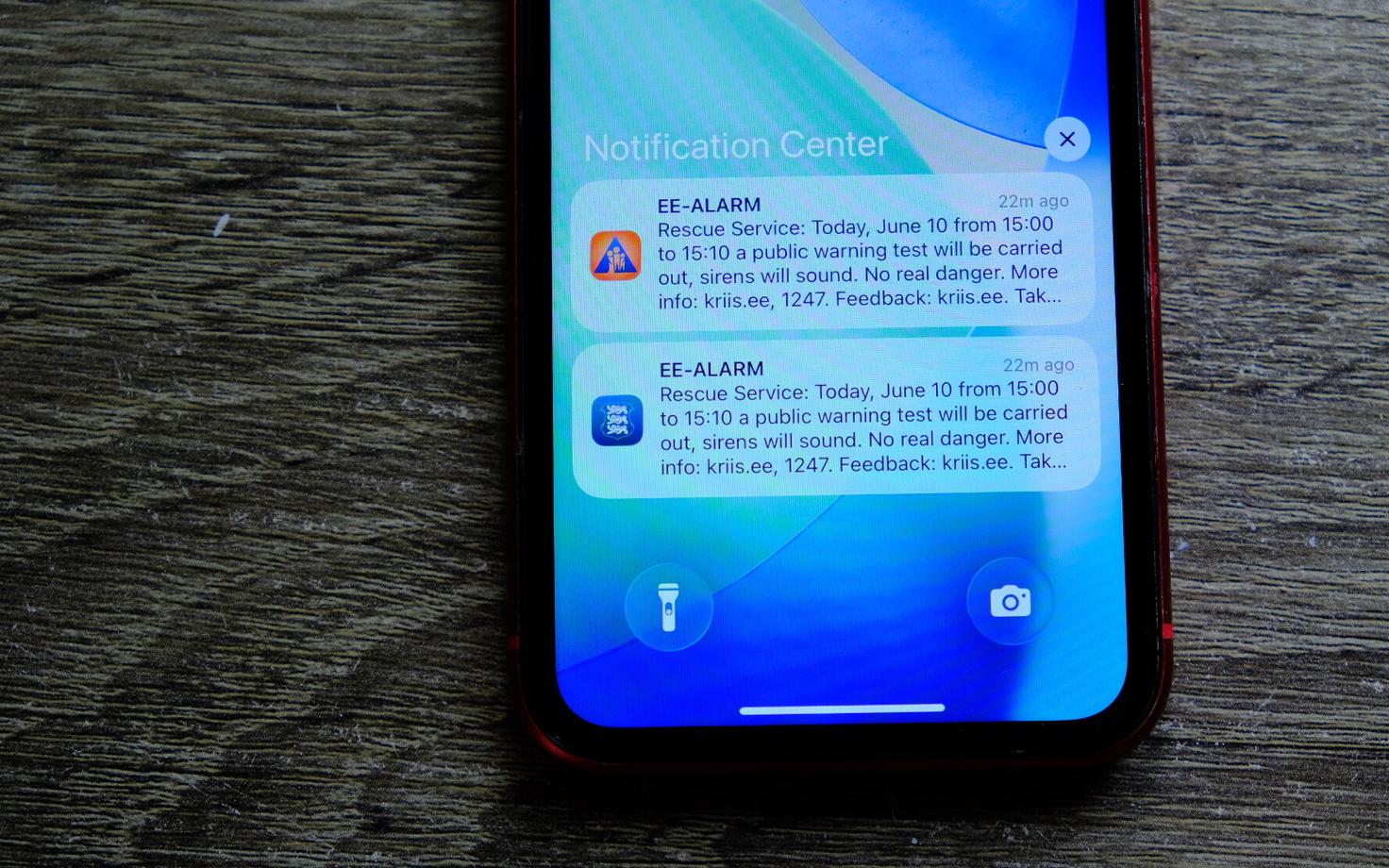
The Estonian Rescue Services Agency has begun testing cell broadcasts for the nationwide EE-ALARM system, and some Android users may soon already receive test alerts.
Unlike regular text message (SMS) alerts, cell broadcasts require both sending and receiving capabilities to be developed and tested on iOS and Android devices.
In the coming months, telecommunications operators Elisa, Tele2 and Telia will conduct tests in cooperation with the State Infocommunication Foundation (RIKS) to verify the system works as intended.
Viktor Saaremets, deputy director general of the Estonian Rescue Services Agency, said testing is a necessary step in the rollout process.
"Only after testing is successfully completed will the necessary software be included in updates to Google and Apple's operating systems, which will enable phones and other smart devices to receive alerts configured for Estonia," he explained.
Faster alert delivery
Estonia plans to launch cell broadcast alerts in spring 2027. The technology can reach large numbers of people in a danger zone within seconds, even when regular mobile networks are overloaded with calls and messages.
Unlike regular texts or push notifications, cell broadcasts appear directly on the phone screen, overlaying even other apps and notifications.
Depending on the threat, it can also trigger a loud sound and vibration even when the phone is on silent or do not disturb (DND) mode.
The test message, sent in Estonian, English or Russian, may appear as follows:
EE-ALARM
TEST! TEST! TEST! You have received a cell broadcast technical test message. There is no danger. More information and feedback: kriis.ee/cb
EE-ALARM cell broadcasts will work on 4G- and 5G-capable smartphones running up-to-date versions of iOS or Android.
Wider testing planned next year
In other countries, the system has initially reached about 70 percent of smartphones, with coverage rising above 90 percent within a year, said RIKS project manager Antti Turmann. The exact pace, he added, depends on software update schedules and whether users install them.
Cell broadcasts will supplement, not replace, Estonia's existing EE-ALARM alert channels. The agency responding to an incident, such as the Rescue Services Agency, Police and Border Guard Board (PPA) or Estonian Defense Forces (EDF), will decide which channels to activate based on the severity of the situation.
After technical testing is complete, a larger-scale trial is planned for next year in a limited area. The Estonian Rescue Services Agency will announce when the necessary updates are available.
--
Editor: Mirjam Mäekivi, Aili Vahtla


