PPA: Illegal immigration to Estonia has fallen, but may rise next spring
The number of migrants crossing from Belarus into Latvia and Estonia has fallen over the last week, but the Police and Border Guard Board (PPA) already expects the problems to return in the spring.
Thousands of migrants from Africa and the Middle East have crossed the Belarusian border into Latvia this year, as part of a long-running "hybrid attack" orchestrated by the regime in Minsk.
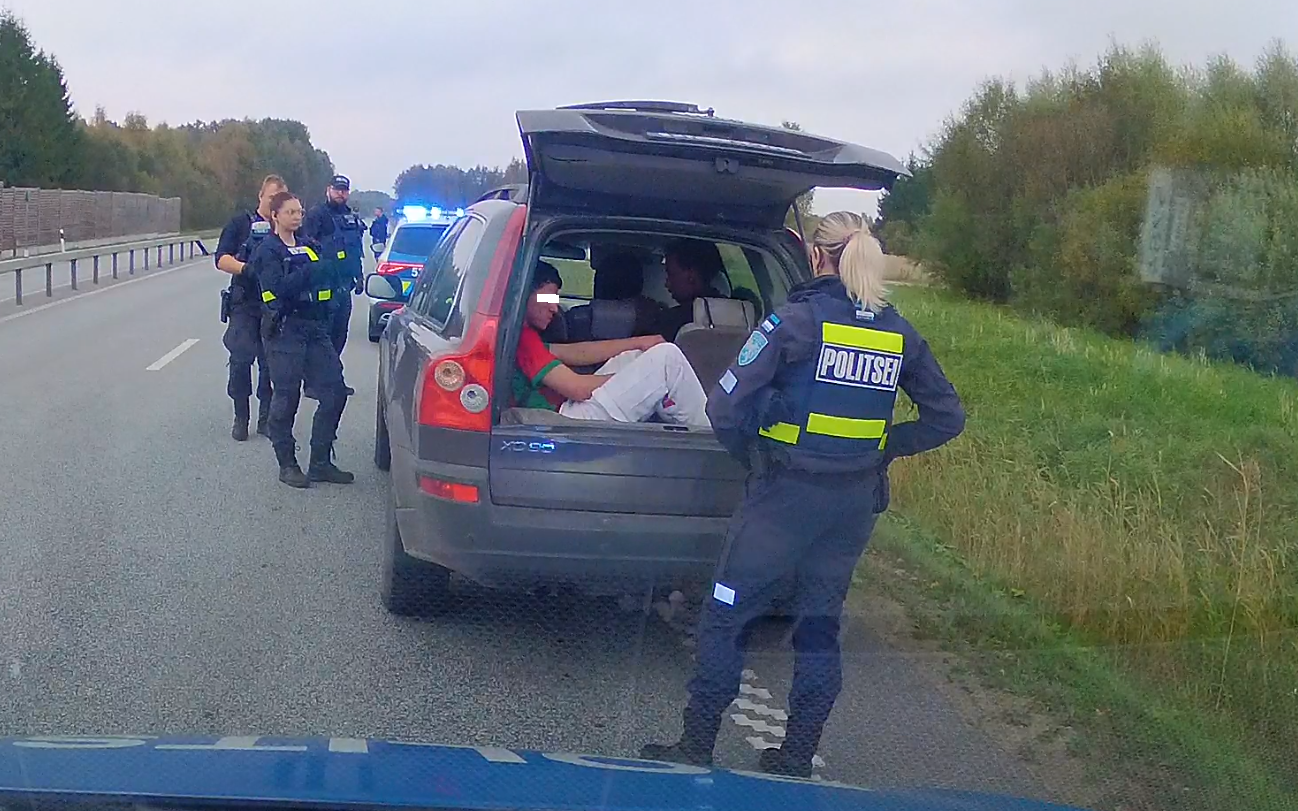
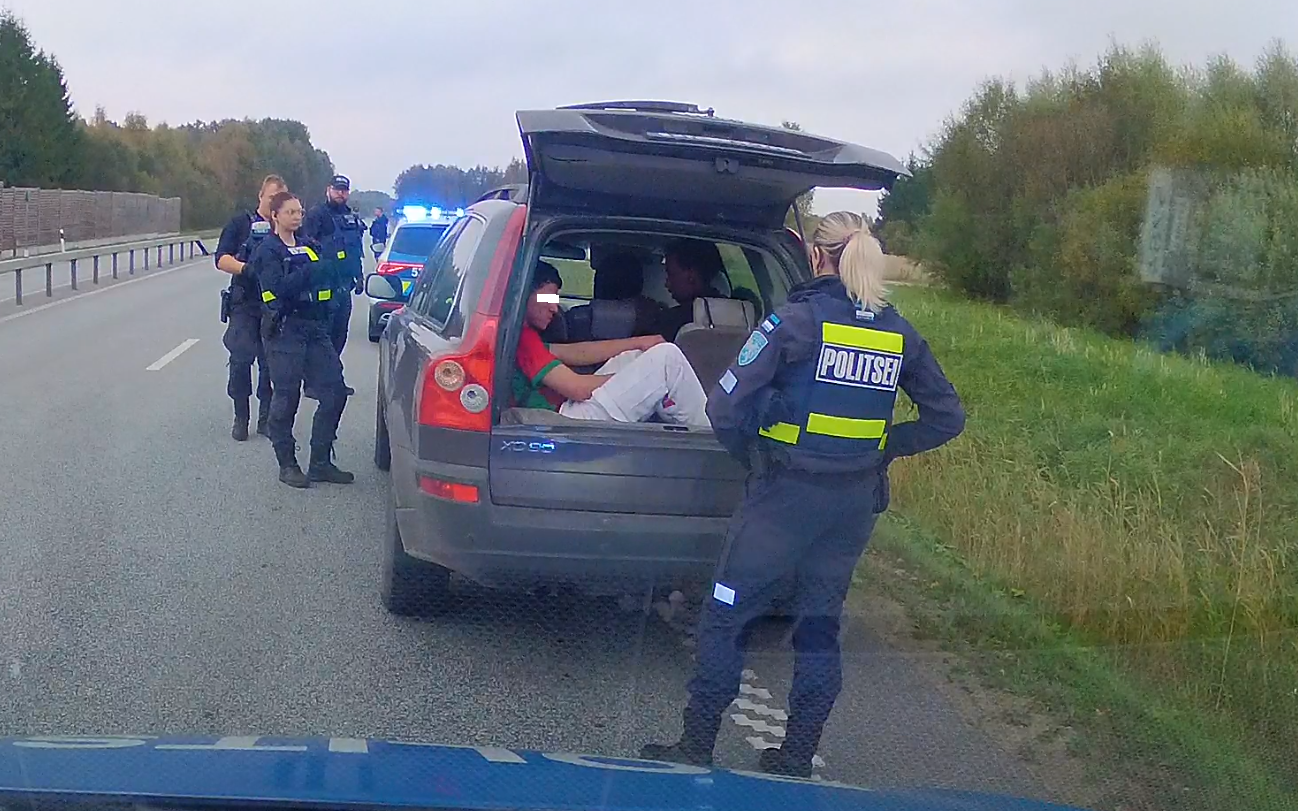
Almost 400 have been found in Estonia as smugglers try to move them on to Scandinavia, after Poland and Germany tightened checks at their borders to stop migrants traveling further west.
So far, 148 of the 388 migrants found to be in Estonia illegally have been handed back to Latvia, under EU rules. Fifteen people have been apprehended on suspicion of smuggling.
But while PPA Director General Egert Belitšev said on October 8 that the migration pressure could increase significantly before winter to beat the freezing temperatures, this has not been the case.
Indrek Aru, head of the Border Guard Bureau of the Northern Prefecture, said both Latvia and Estonia have seen the numbers fall. "Last week, we actually caught only 14 migrants," Aru told the "Uudis pluss" radio show. But an uptick cannot be ruled out ahead of the winter, he said

Migrants travel covertly
In recent weeks, migrants have only been caught in Tallinn. Aru put this down to migrants traveling covertly, and smugglers do not want the police to detect their activities either.
"When people are in vans, enclosed spaces without windows or hidden under a carpet on the back seat of a car, then naturally it is not easy to catch them," he explained.
Spot checks are carried out on the Estonian-Latvian border and in Estonia, but the PPA cannot check every vehicle.
Smugglers often come from Estonia, Latvia, Lithuania, Poland, or Ukraine. But some come from further afield and are in the Schengen Area legally. "They often arrived here a few years earlier, obtained a residence permit and are now trying to help their relatives or fellow citizens follow them," Aru said.
Conflicts in detention centers
Aru said tensions have risen in detention centers due to the uptick in residents. In most cases, arguments are about everyday matters, such as the television remote control or the queue for food.
"Today, we are also seeing tensions beginning to escalate between different ethnic groups," he added.
No very serious incidents have occurred so far, and no major attacks against officials have been observed. "These are more like squabbles among themselves," Aru explained.
Currently, illegal migrants have been temporarily accommodated at the detention facility in Pärnu.

Deportation is a lengthy process
Deporting migrants from Estonia is a long process. Aru said gathering evidence is complicated, as the individuals need to be identified, as well as where they entered the Schengen Area and other circumstances.
If someone requests international protection from the Estonian state, the PPA must carry out separate procedures and assess their need for protection.
"Considering that they speak languages that we do not speak in Estonia, we have to carry out the procedures with the help of several different interpreters, and all of this takes time," Aru stated.
The Social Insurance Board and local governments have had to spend considerable time and resources establishing the origins of people who themselves claim to be minors. Kaja Rattas, head of the substitute care department at the Social Insurance Board, said communication with the minors' countries of origin takes place through the PPA.
However, some people have arrived in Estonia claiming to be minors but without documents to prove it. Local governments act on behalf of minors in PPA proceedings, which are necessary to establish the facts of their cases.
Determining age is difficult
Rattas said many experts are involved in the age verification process, which also includes interviews with the minors. The PPA has created an age assessment committee, which includes a child protection expert, a medical professional, a psychologist and a migration expert from the Tallinn Migration Center.
The Social Insurance Board has been assisting local municipalities, such as Rae near Tallinn, which have said they are struggling with the situation. Rattas said the agency has assisted outside of working hours, such as evenings and on weekends.
"Increasingly, the Social Insurance Board has also taken on representation procedures during normal working hours, precisely to reduce the burden on local governments," she added.
Since mid-October, the Social Insurance Board has taken responsibility for all representation of unaccompanied minors in PPA proceedings. This arrangement will continue in the future to relieve the pressure on local councils.
The PPA's Aru said that statistical data from previous years indicate that the situation eases with the arrival of winter.
"However, it is also relevant that Poland and Lithuania have significantly strengthened their control measures this year, which is why the illegal migration route has shifted further north," he said. This has led to greater pressure on Estonia. He believes that the number of illegal migrants will continue to rise in the spring of next year.
--
Follow ERR News on Facebook and Twitter and never miss an update!
Editor: Helen Wright, Merilin Leetna, Lauri Varik
Source: Uudis pluss