Service dogs take on greater role as security situation worsens
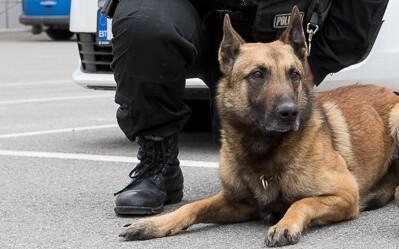
Service dogs' role and scope is being expanded as Estonia's security situation gains in complexity the head of the internal security academy's canine training center said.
Lt Col. Rene Radala said dogs handle some tasks better than people, and that eight handlers have just completed the basic service dog course at Meriküla. Harku Municipality, near Tallinn, and run by the Estonian Academy of Security Sciences (Sisekaitseakadeemia).
The growing need will not come at the expense of standards, however, Radala went on.
"Service dog training lasts approximately a year and a half, and a dog's working career usually lasts eight to ten years," Radala told Raadio 2.
To qualify dogs and handlers have to meet specific criteria. "You have to be some kind of official with a connection to the state, which means you must be referred by an agency. The agency acquires a puppy depending on whether it is intended to be a patrol dog or a drug detection dog," Radala said. "We expect young puppies aged two to four months to begin training."
Radala said dogs cope with their duties better than humans, and not only due to their far superior sense of smell: Some aspects of the work, including death, can provoke strong emotions in people, which also makes cadaver dogs a useful aid. At the same time, this does not mean dogs are a homogenous group, with all suiting well to the work – breed and type counts, for one thing.
A good service dog, he said, is one willing to cooperate with its handler and highly motivated to work.
"For this reason we use purebred dogs, because when buying a puppy, we want to know in advance what kind of dog it might turn into," Radala went on.
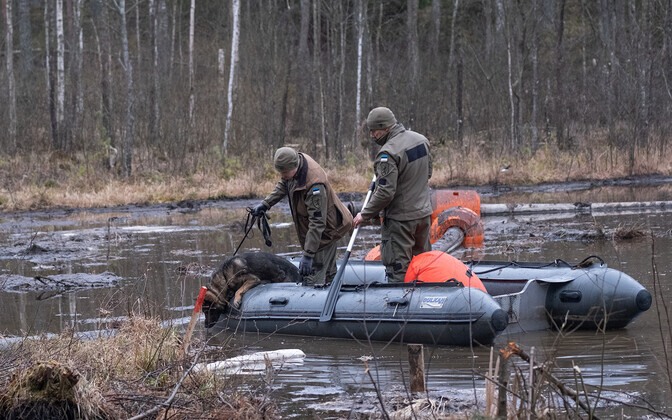
While the dogs are deployed by civilian authorities, they do work with the military too. Outstanding service dogs also get recognition as well as their human owners. Radala cited handler Risto Kotkas, whose dog in spring 2025 helped find the body of an American soldier who perished when the armored vehicle he had been traveling in sank into a swamp in Lithuania.
The main civilian operators, as well as the Police and Border Guard Board (PPA), include the Tax and Customs Board (MTA), whose canines are mostly used for narcotics detection. Meanwhile the Rescue Board's (Päästeamet) dogs are used in locating explosives.
Radala joined the service back in 1993, when Estonia had 8,000 police officers on payroll, about double today's figure, though dog handlers buck that trend. "Today, we have 3,500 uniformed personnel in total. All services have become more compact because there are fewer people. Thanks to the major role played by volunteers, we have more dog handlers than we did ten years ago," he noted.
"The importance of service dogs has in no way diminished, and the increasingly complex security situation may further increase the need for them," Radala concluded.
--
Follow ERR News on Facebook and Twitter and never miss an update!
Editor: Andrew Whyte, Annika Remmel
Source: "R2 Päev", presenter Ragnar Kaasik


