Estonian mardipäev, kadripäev traditions await UNESCO decision
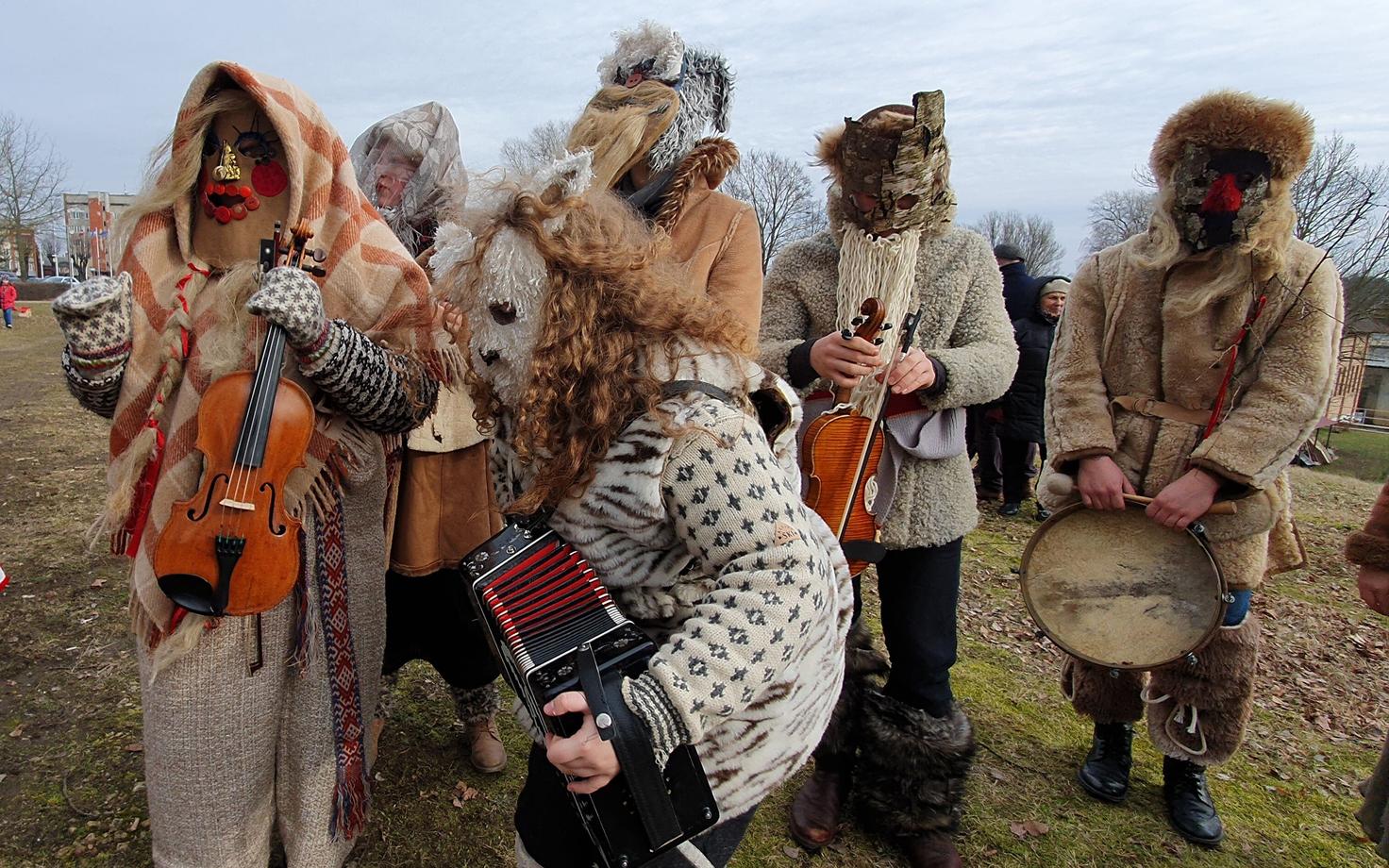
Estonia's centuries-old mardipäev and kadripäev customs were nominated for inclusion on UNESCO's Intangible Cultural Heritage list. A decision is expected in early December.
Monday was St. Martin's Eve, or mardilaupäev, in Estonia, and to help hype up the nomination, a group of dressed up mardid went door to door in Tallinn's Old Town that evening.
The mardid even visited the Estonian government on Toompea Hill, entering Stenbock House to sing, do cartwheels in front of the prime minister, tell riddles and perform other traditional antics — including bless Prime Minister Kristen Michal with good luck.
"He's a good lad who needs strength and energy, and could use a switch as well," said one mart, adding that the bundle of birch twigs was a health-boosting switch.
Whether the Estonian tradition makes it onto UNESCO's Representative List of the Intangible Cultural Heritage of Humanity will be decided at a committee meeting in China in early December.
The Estonian Folklore Council (EFN) is leading the nomination.
"We're hopeful," said another mart, asking why shouldn't these centuries-old traditions be included on the list, like the smoke sauna. "We've submitted our application, and we're still making a little noise today, and then we'll be on our way there."
'It's a two-way dialogue'
Laura Liinat, a Cultural Heritage Department adviser at the Ministry of Culture, said the chances look good, though she stopped short of calling the outcome.
She said the tradition's value lies not only in the mardid and kadrid keeping alive the custom of dressing up and going door to door, but also in the interaction between the costumed visitors and the people who welcome them into their homes.
"It's a two-way dialogue, and the hosts who receive the mardid and kadrid play just an important role," Liinat explained. "The way we welcome them may be a reflection of how we treat one another."
St. Martin's Day falls on November 10, and much like Halloween, or All Hallow's Eve, dressed up marts traditionally make their rounds the night before, on St. Martin's Eve.
Kadrid follow suit on kadrilaupäev, or St. Catherine's Eve, on November 24.
--
Editor: Karmen Rebane, Aili Vahtla


