Pensioners' party founder: Estonia must find more money, not take it away
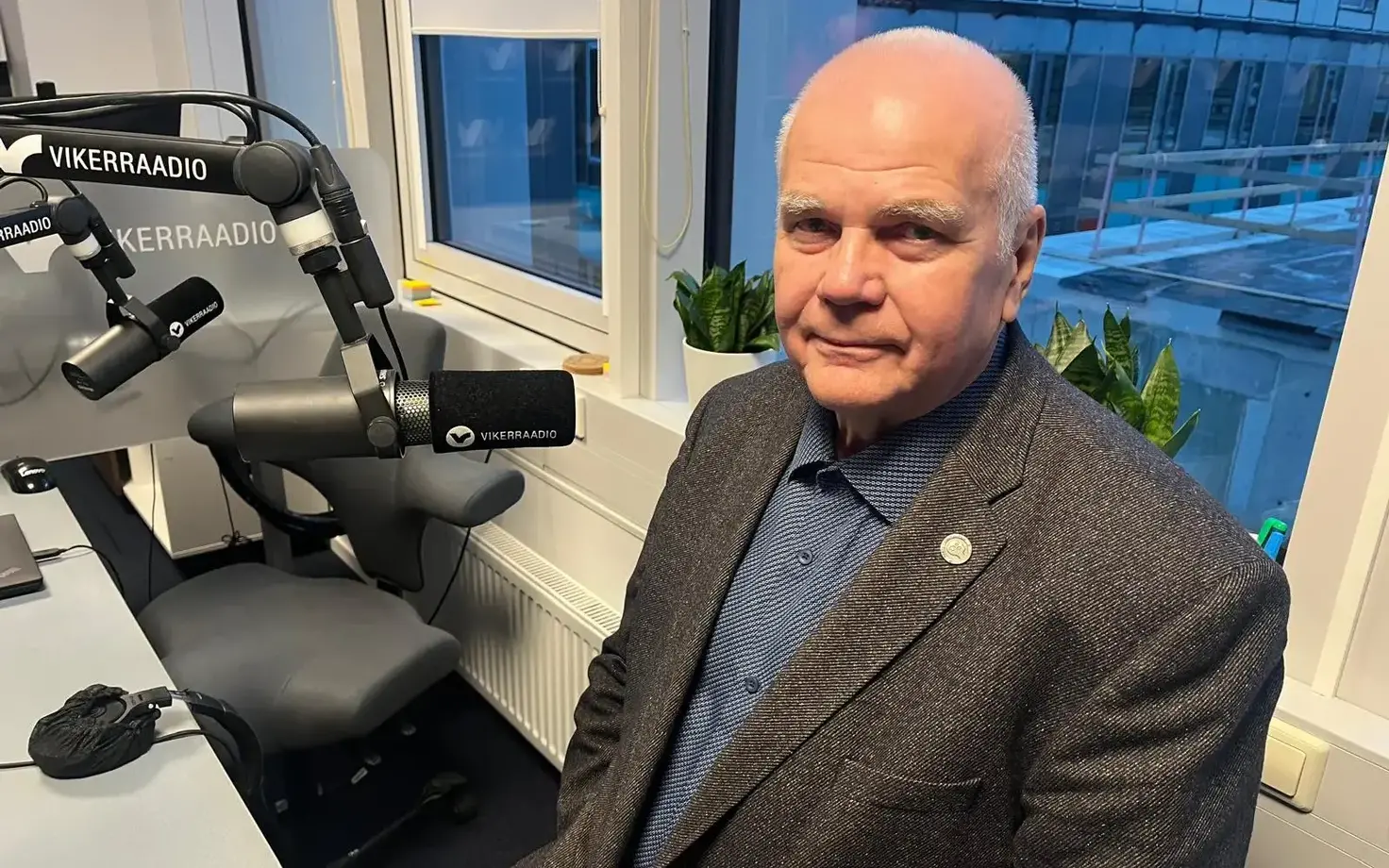
The founder of a new political party representing older people in Estonia wants to give that demographic a voice, and to fund a rise in pensions by boosting the economy and industry.
Ago Kokser heads up the newly founded party, Generations (Põlvkonnad), which he says will appeal to all age groups.
As we know, a political party must have 500 members [to legally register]. You held the founding meeting of your party on Saturday. What exactly is its status? Could it already be referred to a political party?
We wanted to set up a political party, and the founding meeting has taken place. We formed a provisional board, and now we have time to recruit members. I believe we will reach the required 500 members within the next week. Interest has been very high. We have already received 390 expressions of interest, and we have officially registered more than 50 members in just one day. When I have met people, everyone has been full of praise and said it was high time this was done.
So there are already around 390 people interested?
People who have indicated that they are willing to join us. We have an email address, but we did not have a party membership application form ready. It had not been available on the website. Now it is on the website, and people can immediately sign up and join the party there. We are also working directly with people. I give you my word that we will get this done.
This is by no means your first time as a member of a political party. You have been in the Center Party and the Reform Party. Those parties are still active, and there are other parties with strong ratings and very good prospects of entering the Riigikogu. Why did you feel that none of the existing parties offered a way to put your ideas into practice?
Initially, I had no such ambition at all. I was also involved with pensioners and pensioners' organizations, and we had a very large network across Estonia, with more than 24,000 members. But in recent years, the government's position has been that organizations do not need operating subsidies. That they should figure out for themselves how to manage and find money. But funding is only available for projects, not for keeping organizations alive.
We approached members of the Riigikogu, the chair of the Social Affairs Committee and the prime minister to ask whether a solution could be found. Promises were made, but a year passed, and nobody wanted to answer the phone or reply to emails anymore.
We called together the extended board to decide what to do. Should we disband or continue operating? We decided it was too early to disband because we still have ideas. And we could continue operating, since the network is already there.
So why shouldn't pensioners have their own representation? At the same time, people have asked me about the various attempts to establish pensioners' associations years ago. But political parties absorbed this interest group, and those organizations eventually disappeared. Now we felt it was the right time to come forward again because there is interest.
Politicians think that if they raise pensions a little, pensioners will be satisfied. They get their money and keep quiet. But there are more than 310,000 pensioners now. People want to have a say, not just be sitting at home. Communication is important.
In fact, whenever we are portrayed pictorially, we are depicted either with a walking stick or in a wheelchair. But we do not all use walking sticks; I did not come to this interview in a wheelchair or with a walking stick.
In our consideration, older people are those aged 55 and over, right through to end-of-life. We still have some capabilities. We have knowledge, skills and life experience.
And we decided this is not simply a party for older people. We need to involve everyone, the different generations. Young people also have many of their own problems, young families have problems, working-age people have their problems. And everyone of working age will eventually reach retirement age, so they should be able to prepare for that period of their lives.
The idea is certainly good, and the name Põlvkonnad [Generations] is very good, but from a marketing perspective, things seem to have gone a little wrong for you. You said from 55 to the end of life. I think a 55-year-old might be very offended to be referred to as "elderly."
But why would they be offended? When our media says that people aged 55 and over have a particular difficulty finding jobs. They are not accepted, and employers do not want to hire them.
I remember when I was younger, when the Estonian state was restored. Back then, people said that anyone over 30 could be written off; that there was nothing to be done with them.
We welcome all who want to join us. We do not set an age limit, but welcome people who have a good character, want to have a say and believe they have something to contribute.
Because at present when all these laws are being drafted, we are only sometimes involved. We are asked to give our opinions when everything has already been decided. In reality, only cosmetic changes can be made by that stage. And we are not involved in the decision-making process.
But we have the ability to contribute, we could have a say, but for some reason nobody wants to listen to us. So, now we have decided to try and see whether we can make ourselves heard.
You have major designs on taking part in next year's Riigikogu elections. Older people have always been very active voters, so you also have a strong base of support. What would be your main promises and issues, pensions aside, going into the elections?
There are actually many things. We wondered whether our little group had the right to put together the entire program. We will draft it, and everyone else gets to vote on it when we assemble the party's program. We still have a little time at the moment.
But you must have some ideas. You surely discussed these issues on Saturday. What are they then?
There is the care reform, how people can live out the final years of their lives with dignity and on their pensions. Pensions, the size of pensions, as although indexation exists, it does not guarantee that people's quality of life will be maintained, since prices are rising faster than pensions can keep up.
Are you pledging to hike pensions?
Of course, the entire system needs an overhaul. Everyone says we have no money for pensions and cannot do anything.
But if we change the system now, and 20-year-olds start approaching things differently, they will reach retirement age in 50 years. The decisions we make now will have an impact 50 years from now.
We also have to think about that, not just about what we do today and assume that in five years everything will be new and functioning. It will not.
You have been involved in pensioners' organizations. What changes could be made to Estonia's pension system?
There could be many changes. Perhaps we should review indexation, how the money comes in and how it is handled.
Should people, how should I put it, have to live on the edge of subsistence when they become pensioners? Or should they be able to live a dignified life?
Where the money would come from, I cannot say. Cutting or saving money is the easiest approach. But the goal of a society is to live well.
One political party once promised that in five years we would be among the five richest countries. That is what we should be striving for.
The purpose of politics is to stimulate the economy. If we do not stimulate the economy, we will get nowhere. We will simply decline.
What is your idea for stimulating the economy? I would still like to get to the question of where to find the money to raise pensions.
We have some very capable specialists who have retired. We can bring them together and form working groups.
Of course, there are many issues, as I said, including care reform, access to healthcare and mobility.
Just an hour ago, we were talking about how the main problem with Estonia's healthcare system is that there is too little money.
Yes, there is too little money. But everyone keeps saying õõ there is never enough money, while at the same time we hear in the news that a million goes here, another million goes there, and ten million goes on something else.
As I understand it, we do have money. The question is whether it is being directed to the right places and used properly. That is another matter.
Then I have a very good opportunity to ask you: if you had to take money away from somewhere, where would you take it from? Where is too much money being allocated at the moment?
I would not immediately say where money should be taken away from. I would find more of it.
In the near future, we need to find where additional money can come from. We need to focus on that and direct all our energy toward it, rather than looking for ways to take money out of somebody else's pocket.
So where would the additional money come from?
From the economy, from production. That means not just the soft-sector jobs we have here, but we need to work intensively on industry and encourage the development of manufacturing and industry.
That is where the money will come from.
--
Follow ERR News on Facebook and Twitter and never miss an update!
Editor: Andrew Whyte
Source: Vikerhiommik


