Expert: Longer lifespans should mean longer working lives

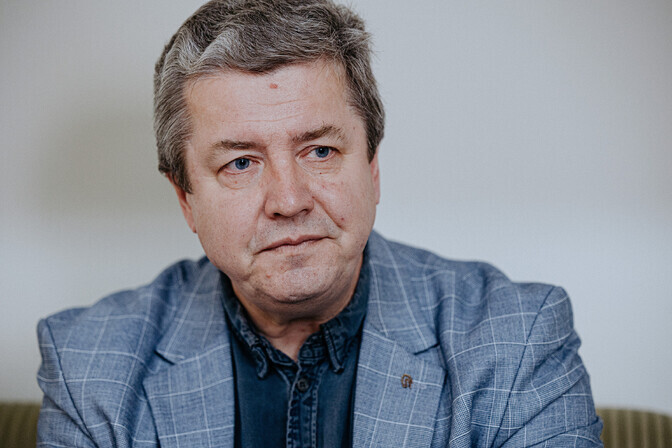
The retirement age in Estonia must rise together with life expectancy so that the pension system remains sustainable and different generations spend roughly the same amount of time in retirement, says Lauri Leppik, professor of social and population policy at Tallinn University.
"If people live longer, then they must also work longer. We see that as of 2026, Estonia has about 315,000 old‑age pensioners. If we add other types of pensions, then almost every fourth person in Estonia is a pensioner," Leppik said.
"Of course, this is a burden on the state. If the retirement age had not been raised, then soon every third person here would be a pensioner. So this decision was necessary from the standpoint of the burden on the working population."
In 2026, the retirement age in Estonia is 65, applying to people born in 1961. Starting next year, the retirement age will be tied to the expected life expectancy of people aged 65.
"This means that if 65‑year‑olds live longer than before, then the retirement age will rise accordingly. In other words, it is specifically the life expectancy at age 65 that is taken into account," Leppik explained.
A nuance that was overlooked
When the law on old‑age retirement was adopted, a transition to a new system was also foreseen, where the retirement age is determined by calendar years. The minister of social affairs approved the retirement age for the next two years: 65 years and 1 month in 2027, and 65 years and 3 months in 2028.
"But it turns out that only people born from January to November 1962 can retire in 2027. Those born in December 1962 will reach retirement age only in 2028, when it will not be 65 years and 1 month, but 65 years and 3 months. This means they can retire only in March 2028 — their retirement age is two months higher," Leppik said.
"It's hard to say why this happened; I did not participate in those discussions, but it seems that when the transition to the new system was being discussed, this nuance was not noticed," he added.
Out of 100 men, 80 will reach retirement age
After the restoration of Estonia's independence, women retired at 55 and men at 60 for some time. Now the ages have equalized.
"Women's retirement age has risen by 10 years during this period, and men's by five. But average life expectancy has also risen significantly over 30 years. In 1995, women lived an average of 74 years, and now more than 83. For men, average life expectancy in 1995 was only 61 years, and now more than 75. So women's average life expectancy has increased by almost 10 years, and men's by 14," the professor explained.
According to Leppik, men's chances of reaching retirement age are now much higher — almost 80%. That means out of 100 men, 80 will reach retirement age, and for women the figure is 91%.
"Of course, people's lives differ: there are long‑lived individuals who reach 100, and there are those whose lives are quite short. There are significant individual differences in life expectancy," he added.
Historically, women's retirement age in Estonia was lower than men's. Now the ages have equalized because Europe follows the principle of gender equality.
"At the same time, men who reach 65 have about 16 years left based on average life expectancy. Women have more than 20. So in retirement age, the difference in life expectancy is about five years," Leppik said.
Estonia has a lot of working retirees
Estonia ranks among the top European countries in employment rates among people of retirement age.
"In many cases, people are forced to work to ensure a sufficient standard of living. On the other hand, people with higher education — for example teachers or doctors — can continue working and choose to do so in retirement. There are also many in Estonia who lose their jobs before reaching retirement age and cannot continue working either for health reasons or because they cannot find work," he said.
"It is also true that the indicator of healthy years is low. But subjective factors influence it as well — for example, Estonian residents tend to be quite critical when assessing their own health."
Leppik noted that no sharp improvements in Estonia's state pension system are expected, so people must prepare themselves and use all available opportunities before reaching retirement age.
--
Editor: Irina Kirejeva, Argo Ideon
Source: rus.err.ee


