New buildings may improve air quality but not always lower energy costs
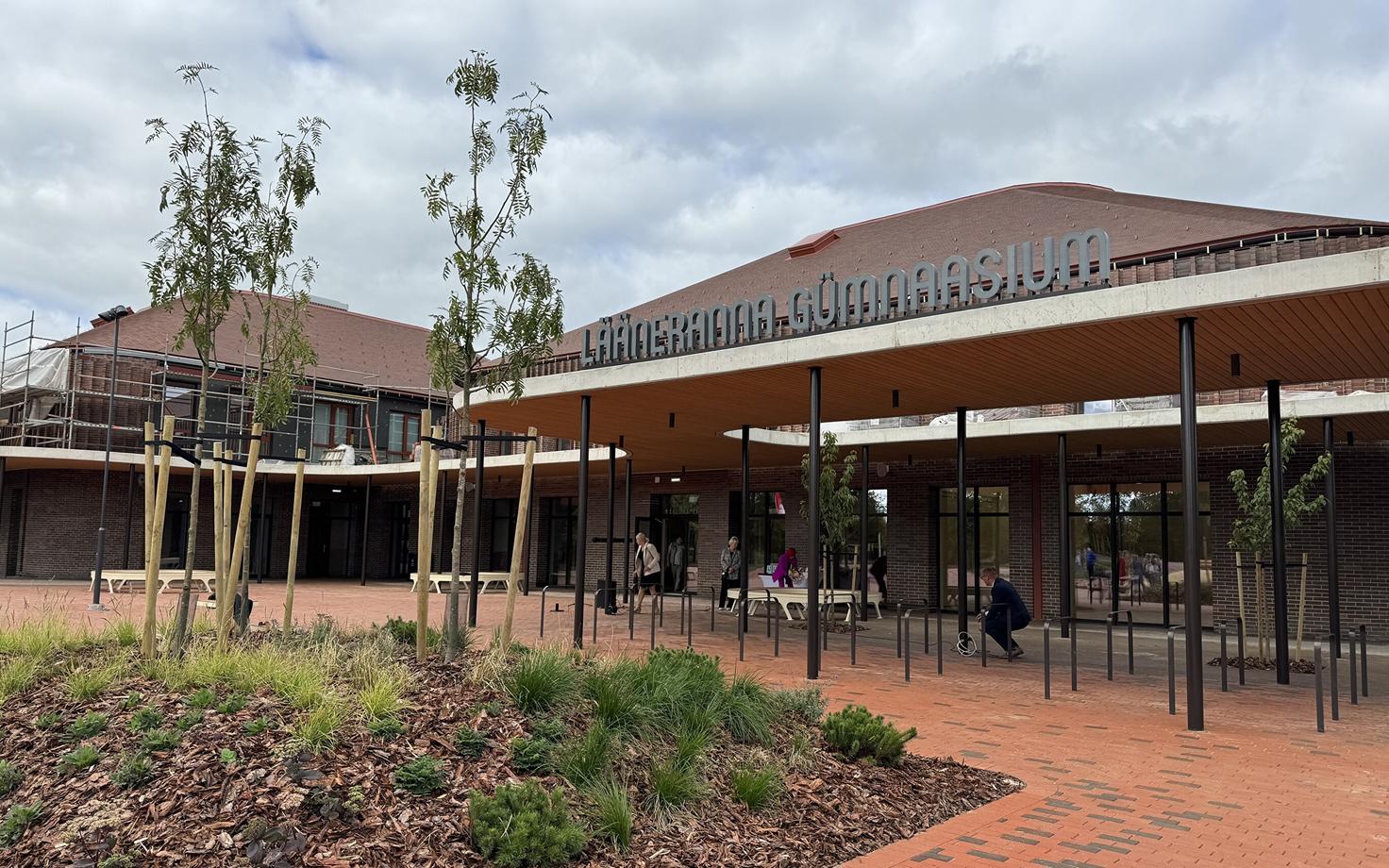
A newly built school in western Estonia has delivered a better indoor environment but also significantly higher electricity and heating bills.
Lääneranna Municipality replaced its old school building with a new facility for Lääneranna High School, but the new building's utility costs have proven much higher than those of its predecessor.
Mayor Tarvi Sits said that part of the increase is due to higher energy prices, but the main reason may be the building's modern ventilation system, which consumes considerably more electricity.
"At the moment, the assumption is that the cause is the ventilation system, because the old and depreciated building did not have such a system at all," Sits said, adding that this remains a preliminary assessment.

"The energy audit was already planned, but we are now speeding it up so specialists can review all the systems and determine whether this is our new reality or whether there is room to reduce costs through better adjustments and settings," he said.
With winter still ahead, the municipality has budgeted additional funds for the school's heating and electricity costs.
Better indoor climate can mean higher energy use
Riigi Kinnisvara AS (RKAS), Estonia's state real estate company, manages a large portfolio of both old and new buildings. RKAS facility services director Priit Valk said situations can arise where a new building consumes more energy than an older one.
The reason often lies in providing a proper indoor climate, Valk noted.
"The same can happen after renovating an old building. For example, if a building previously lacked a mechanical ventilation system, it may have had poorer indoor conditions, in terms of both temperature and air quality. Adding such a system can increase energy consumption, but working conditions in the building improve significantly," Valk explained.
One of the key goals of constructing a new building or renovating an old one is to ensure that indoor climate standards are met.
"Each building must be evaluated individually, and there is no universal rule that applies to every case," Valk said.

Good air quality comes at a cost
Jarek Kurnitski, professor and academician at Tallinn University of Technology, who leads the university's nearly zero-energy buildings research group, said school buildings naturally require energy-intensive ventilation.
"In a school, many students occupy relatively small classrooms. The air needs to be exchanged five times per hour, and achieving that requires a substantial amount of electricity," Kurnitski said.
"If the old school building did not have a ventilation system, it is understandable that electricity consumption was very low."
He stressed that energy use is unavoidable when maintaining high indoor air quality and that such systems cannot simply be turned off because poor ventilation directly affects students' learning outcomes.
Another issue is whether the ventilation system has been designed and configured efficiently.
"If rooms are not used intensively throughout the day, a demand-based ventilation system could reduce electricity consumption by about half," Kurnitski said regarding the Lihula school building.
"I do not know whether that option has been used in this specific building, but if the ventilation is running from morning to evening regardless of actual room occupancy, there could certainly be opportunities for savings."
Kurnitski described the reported increases in both heating and electricity costs as counterintuitive and suggested that newly completed buildings sometimes operate inefficiently during their first months because systems have not yet been fully adjusted.
Residents seeing similar surprises
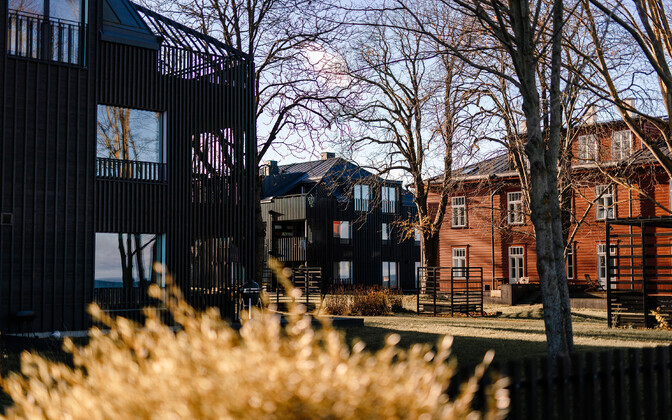
A Tallinn resident who moved from a Soviet-era apartment block in Lasnamäe district to a newly built development in Kopli also reported an unpleasant surprise: an electricity bill roughly twice as high as in the older, unrenovated apartment.
The resident has attempted to lower heating costs by turning off ventilation when leaving home, but Kurnitski said that is not a sensible solution and is unlikely to produce major savings.
"Before switching off ventilation, it is worth checking how the ventilation unit is operating. Sometimes the supply air temperature has been set unnecessarily high. If the incoming air is heated above 18 degrees Celsius, heating that air starts consuming significant amounts of electricity," he said.
Despite such examples, Kurnitski stressed that new buildings are generally much more energy-efficient than old ones. Older buildings often consume two to three times more energy.
"A new building should save at least half of energy costs. That is a typical result that can be achieved without applying any extraordinary measures. The same principle applies to both residential and non-residential buildings," he said.
--
Editor: Karin Koppel, Argo Ideon


