Rail Baltic Estonia chief: A few years' delay will have little impact on freight business

A delay of a few years in the completion of Rail Baltica will make little difference for freight operators, Rail Baltic Estonia CEO Anvar Salomets said. Estonia's section of Rail Baltica is now expected to be completed and operational by the end of 2034.
The government has abandoned its goal of completing the Estonian section of Rail Baltica by 2030. Salomets said there are several reasons for the delays and repeated revisions to the completion schedule, but the main causes were poor management and unrealistic expectations that were set before the necessary capabilities existed.
The project's estimated cost within Estonia was initially €1 billion but has now risen to €3.5 billion. Salomets noted that the figure reflects current costs and does not include future inflation.
"A major factor has been that the scope of the project itself has changed," Salomets said. He added that rising prices have also contributed significantly, particularly after various crises that pushed costs up by tens of percent over a three- to four-year period in Estonia.
The current goal is for a train to depart for Berlin by the end of 2034.
"I would like to believe that will happen," Salomets said.
He explained that the expectations set by the project's owners require the railway not only to be completed by the end of 2034 but also fully commissioned and in operation.
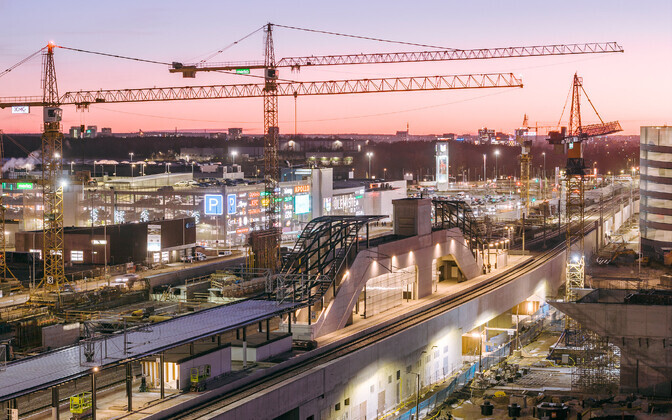
The railway itself will be completed earlier, followed by testing and commissioning. The Tallinn-Pärnu section is expected to open first, and passengers should be able to travel by train to Pärnu by the end of 2032, provided financing is available.
Salomets noted that Rail Baltica is part of the wider European rail network used for freight transport.
"In the long-term freight business, the difference between 2030 and 2032 really does not matter very much," he said.
Goods are transported by road today, and Salomets said this is where Rail Baltica is expected to gain a competitive advantage, leading some freight volumes to shift from highways to rail.
"Naturally, new infrastructure also creates new freight traffic," he added.
Rail Baltic Estonia's cost-benefit analysis shows that annual maintenance and operating costs for the Estonian section will range between €30 million and €50 million. The difference largely depends on the timing of major maintenance projects.
"On the other hand, there is a revenue base. The cost-benefit analysis also shows that, ideally, by the end of the first decade, operating costs can be covered by revenue," Salomets said.
The government has said that extending construction by five years would lower the project's cost for Estonian taxpayers. Salomets explained that the financing plan is based on the next European Union budget period, which runs from 2028 to 2034.
Maximizing the amount of EU funding available to Estonia during that period would allow more foreign funding to be used and reduce the need for national co-financing, making a longer construction timetable less expensive for Estonia.
--
Editor: Merilin Leetna, Argo Ideon
Source: ERR interview by Mirko Ojakivi


