Estonian refugee couple still promoting their homeland's culture in Atlanta

Estonian Honorary Consul in Atlanta Aadu Allpere and his wife Kristi Vuht-Allpere have spent years sharing their homeland's culture with Americans, calling it an "easy sell."
Tallinn-born Allpere and Pärnu native Vuht-Allpere are both part of the generation of refugees displaced by World War II and Estonia's occupation.
Allpere was nine when he arrived in the United States. He went on to study business and commerce at the University of Pennsylvania and spent 30 years at the Coca-Cola Company, including as president of its operations in Austria and five Eastern European countries. He now runs a healthcare center specializing in foot care.
In 1993, Allpere and his wife returned to Atlanta, Georgia, where his work with Coca-Cola first brought them several decades prior. He became Estonia's local honorary consul in town in 2011.
Both are avid classical music fans and regular season-ticket holders at the Atlanta Symphony Orchestra.
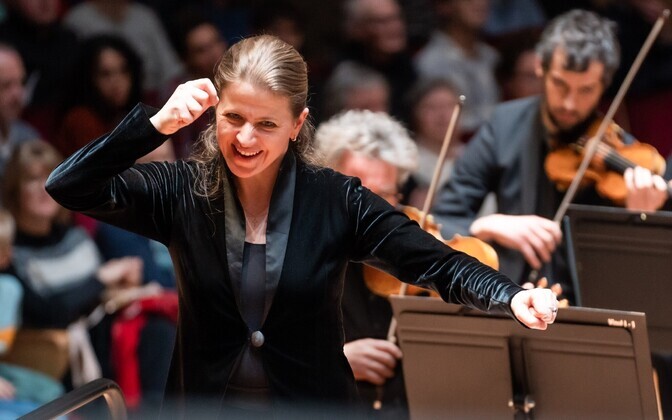
Late last month, they organized a reception with visiting Estonian conductor Kristiina Poska, along with an exhibition on Estonian musical culture in the lobby of the Atlanta Symphony Hall.
As soon as they had seen Poska's name on the upcoming season calendar, they knew they had to arrange something.
'Music is part of our soul'
"As Estonians, music is part of our soul," Allpere said. "Pair that with the fact that Estonian music is well known worldwide, and that makes it easier for us to promote and support it."
For both Allpere and Vuht-Allpere, who is active locally as a volunteer, cultural outreach is about more than their formal duties. Vuht-Allpere said they have made it a personal mission to introduce Americans to Estonia.
"We've taken Americans along with us to Estonia, where we've taken them everywhere, even to the Song Festival, which is an incredible experience for them," she said, noting that the more familiar people are with Estonia, the safer it is.
"We're from the refugee generation," she continued. "And as we know, when people know and understand something, they develop a connection to it."
The couple has been cultivating those connections for years, both in Atlanta and in previous places they called home, including Chicago, New York and other parts of New England.
"We call everyone we know our 'friends of Estonia,'" Vuht-Allpere added. "We've been brainwashing them for years."
Estonians rarely tour in Atlanta
"It's really easy to sell people on Estonia," Allpere acknowledged. "Especially when it comes to culture, because Estonia offers so much to talk about."
They would nevertheless like to see more Estonian talent come perform in Atlanta. Vuht-Allpere said the Southern U.S. city sometimes feels overlooked when Estonian choirs and conductors tour cities like New York, Chicago and Los Angeles — all home to bigger diaspora communities.
"We're constantly talking about Arvo Pärt's music and asking whether it could be performed more in Atlanta," she said. "We keep putting the idea out there, hoping it will eventually happen. I know the music world is both big and small, but sometimes we really do feel left out. So having Kristiina Poska come here was a great boost for us, too."
Allpere also sees Georgia as an attractive destination for Estonian businesses, citing the busy Hartsfield–Jackson Atlanta International Airport, the state's major seaport in Savannah and incentives for companies relocating to the U.S.
So far, however, he hasn't managed to attract any Estonian companies, "but there's always hope."
No Estonian businesses yet
The couple said Atlanta offers a good quality of life, pointing to how diverse and green the city is and perks like not having to worry about shoveling snow in the winter.
Life there and in the U.S. in general has its downsides, however, and not just when it comes to hot and humid Atlanta summers or a conspicuous lack of local sources for Estonian sült.
"Half our lives here are spent in the car," Allpere said. "You can't get around any other way."
U.S. cultural institutions also aren't taxpayer-supported the way they are in Estonia either, leaving museums and even some of the country's best major symphony orchestras scrambling for funding.
"The Atlanta Symphony Orchestra has been operating in the black for 12 years now, although it went through some very difficult periods," Vuht-Allpere noted. "Our volunteer committee has to raise more than $3.5 million annually from individuals and businesses."
The key, she said, is building relationships. "This year, we're even on track to exceed that goal," Vuht-Allpere said.
--
Editor: Neit-Eerik Nestor, Aili Vahtla


