Estonia seeks power to suspend doctors over unsafe practices

The Health Board has limited powers over doctors disregarding evidence and putting patients at risk. Proposed changes could mean new tools to hold practitioners accountable.
Doctors in Estonia who disregard evidence-based practices or recommend ineffective treatments can currently continue practicing with relatively little oversight.
In Haapsalu, patients at the Piret Mets Family Medicine Center are still being seen by Dr.Martin Ruumet, whose practices the Estonian Association of Family Physicians (EPS) considers potentially dangerous. Regional paper Lääne Elu reported on the issue two years ago, prompting a Health Board investigation following patient complaints.
That investigation has since been closed.
Külli Friedemann, head of the Health Board's Health Services Department, told ERR that to her knowledge, the health center had severed ties with Ruumet during the investigation.
He nonetheless remains listed as a doctor in Estonia's National Register of Healthcare Professionals, and while Ruumet no longer appears on the Haapsalu health center's website, ERR is aware of recent cases in which patients have still been seen by him there.
"I don't actually know what's really going on over there right now," Friedemann admitted.
Currently, the Health Board investigates healthcare providers — the institutions employing doctors — rather than individual practitioners themselves. In the Estonian healthcare system, employers are responsible for overseeing practitioners' work, including their qualifications and quality of care.
'He may have changed'
"Every institution's management must ensure its staff is competent," Friedemann said. "Anyone can have a medical degree, for example, but it's up to the employer to assess how they actually practice medicine."
While patient feedback can help alert the Health Board to problems, she explained, providers should have quality assurance systems in place.
This division of responsibility, however, limits the Health Board's ability to act against an individual doctor, even when concerns have been identified.
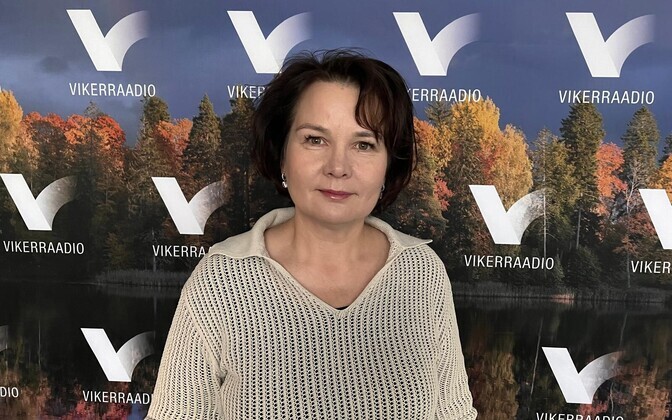
Asked why Ruumet can continue practicing medicine after the Health Board's investigation, Friedemann said he may have changed his practices since then.
"But we'd only know if further investigations are opened or new concerns are raised," she said. "We can't rule out the possibility that he's changed his practices, taken the Health Board's orders seriously and made lasting changes as a result."
Friedemann said cases involving medical doctors who promote unproven treatments are relatively rare in Estonia, though the same names tend to recur in more serious cases.
Under current rules, if a healthcare provider cuts ties with a problematic doctor, the Health Board cannot continue its investigation because its oversight authority only applies to legal entities, not individual practitioners. Legislation currently being considered by the Riigikogu would change that.
Changes would hold doctors accountable
Amendments to the Health Services Organization Act would allow the state agency to suspend doctors' and nurses' active status in the National Register of Healthcare Professionals, a move previously only possible with court approval or for a limited period.
The changes would also allow the Health Board to assess not just formal licensing requirements, such as premises, equipment and staffing, but also how providers ensure staff competence, quality of care and patient safety.
Pille Saar, a specialized medical care expert at the Ministry of Social Affairs, said suspension would require a repeated or serious breach of professional standards that puts patients or quality of care at risk.
"This wouldn't just be a doctor simply telling someone to lose weight and declining to prescribe blood pressure medication," Saar said.
The concern is a pattern of misconduct, she explained, such as advising patients to pray instead, withholding necessary antibiotics or discouraging contraceptives, including on religious grounds.
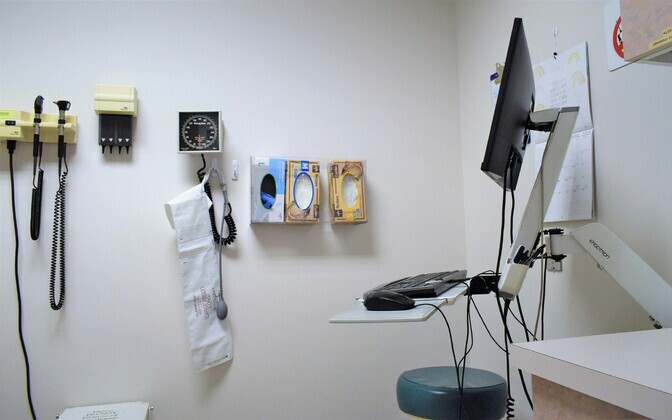
After consulting with university or professional association experts, the Health Board could take further steps if a doctor is found to have disregarded evidence-based practices: issue orders, require additional training or suspend the doctor's active registration until they pass another examination.
Patients urged to document questionable advice
The proposed changes are slated to take effect next October. Until then, patients whose doctors discourage vaccination or recommend homeopathy for a cold have limited options.
EPS chair Elle-Mall Sadrak advises patients to request that doctors and nurses record all treatment instructions and medication recommendations in their medical records — more specifically the centralized national health information system — providing a paper trail in case of a dispute.
"That makes it easier to investigate complaints and take concrete action against practitioners putting patients' health and lives at risk," Sadrak said. "Otherwise it's the doctor's word against yours."
The association chief also called for easier ways to report questionable medical advice and more robust public education about evidence-based care.
"If something sounds too good to be true, it probably is," Sadrak said, urging people to report claims about miracle cures. She also pointed to databases in other countries that help consumers check claims about supplements and other products, adding that similar resources could help Estonians assess whether a recommended remedy has any proven benefit.
Finally, patients unhappy with their family doctor should consider switching, Sadrak said, noting that only a few parts of the country have just one doctor available.
At the Health Board, Friedemann added that even doctor shortages are no excuse for allowing a practitioner whose methods have raised patient concerns to continue seeing them.
--
Editor: Mirjam Mäekivi, Aili Vahtla


