Elise Jalonen: A driver will not become a biker overnight
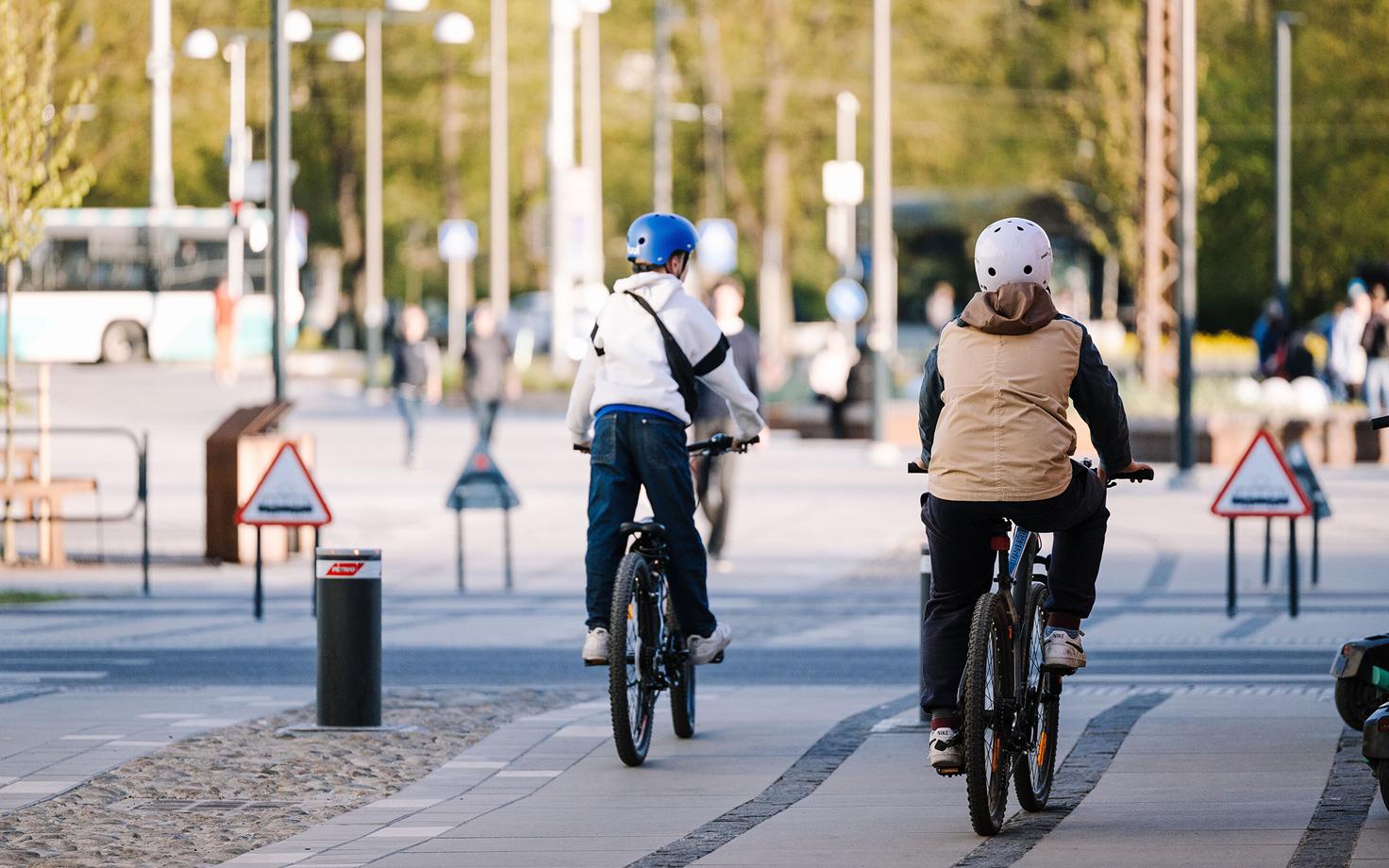
Most drivers may be more open to cycling than their daily habits suggest, but encouraging them to make the switch requires understanding their different levels of readiness to change, writes Elise Jalonen.
Imagine a long line of cars waiting at a traffic light in the morning. Most have just one person inside. You might think these drivers are inseparable from their cars. My research suggests otherwise. Seven out of 10 drivers are either thinking about cycling, preparing to do so or already cycling at least occasionally.
We are building bike lanes and proper bicycle parking facilities. We are teaching children to get around by bike. Yet our streets are still full of cars. Driving is, of course, very convenient. But when there are too many cars, they pollute our environment, take up valuable urban space and harm our health.
That is why efforts are being made to nudge drivers in every possible way. Cities are building infrastructure, the government is passing laws and campaigns are encouraging people to get on their bikes. All of this takes a great deal of money and time. Yet the results are often underwhelming. Perhaps we are addressing all drivers in the same way, even though they are far from alike. Behavioral theories can help us understand people's choices.
To explain people's behavior, I turned to the stages of change model. It has been used in health sciences for more than 40 years to study, for example, how people quit smoking and researchers have begun applying the same model to transportation studies. The idea behind the model is simple: Nobody changes overnight. Change happens gradually, within individuals.
At the lowest stage, known as precontemplation, a person sees no reason to change anything. They are satisfied with how they currently get around and have no intention of changing. In the contemplation stage, they begin to consider whether they could or should travel differently but do not see it as a realistic option for themselves. In the preparation stage, they might take their bike in for servicing or find out where they could park it at work. The action stage, when a person has just changed their behavior, such as starting to cycle shorter distances, is brief and intense. The final stage involves maintaining the desired behavior.
In spring 2025, our research team conducted a survey in four cities: Pärnu, Riga, Espoo and Gävle. We received more than 1,200 responses. I took a closer look at 644 employed respondents for whom cars play an important role in everyday life. Only 29 percent were in the precontemplation stage, meaning they had no intention of taking up cycling within the next year. The rest were either considering cycling or already taking steps toward making it part of their lives.
There were substantial differences between the cities. In Pärnu, only one in six drivers was at the lowest stage. People were represented at every stage, and many cycled during the summer or year-round. In Gävle's industrial district, however, every second driver was at the lowest stage. The proportion was nearly as high in Riga's apartment building neighborhoods. Because the areas studied differed from city to city, the results may reflect the fact that different urban neighborhoods attract or are home to car users with varying levels of readiness to change.
What interested me most was what sets apart those who have no intention of giving up their cars. Age, gender and education made no difference, nor did responsibilities for caring for children or other loved ones. Confidence, however, did matter. The less confident people felt cycling in traffic, the more likely they were to remain at the bottom of the ladder.
Distance also mattered. Those whose commute to work exceeded 10 kilometers (6.2 miles) were more likely to be car users who saw no need to change their behavior. What people see around their homes matters, too. Drivers who frequently noticed cyclists in their neighborhoods were more ready to make a change.
Knowing how drivers are distributed across these stages allows us to use money and resources more wisely. An inexperienced cyclist who lacks confidence might benefit from adult cycling lessons. Where cyclists are rarely seen, it makes sense to increase the visibility of cycling on the streets. Someone who cycles in the summer, meanwhile, might need secure bicycle parking or help with winter bike maintenance. A one-size-fits-all campaign is like buying the same size shoes for everyone in the family.
Not everyone has to cycle, nor can everyone do so. If your workplace is 30 kilometers away or you have three young children waiting at home, a car may be the best option. And that is perfectly fine. The goal is not to drive every car off the streets. The goal is to leave cars for those who genuinely need them.
The easiest people to help are those who are already partway toward making a change. There are more of them on our streets than you might think from looking at all the cars. We just need to recognize them and offer a helping hand at the right moment.
More details about the study's findings are available in the journal Re-Generation in Transport.
--
Editor: Marcus Turovski, Jaan-Juhan Oidermaa


