Experts: Foreign policy uncertainty to intensify after Democrats win US midterms
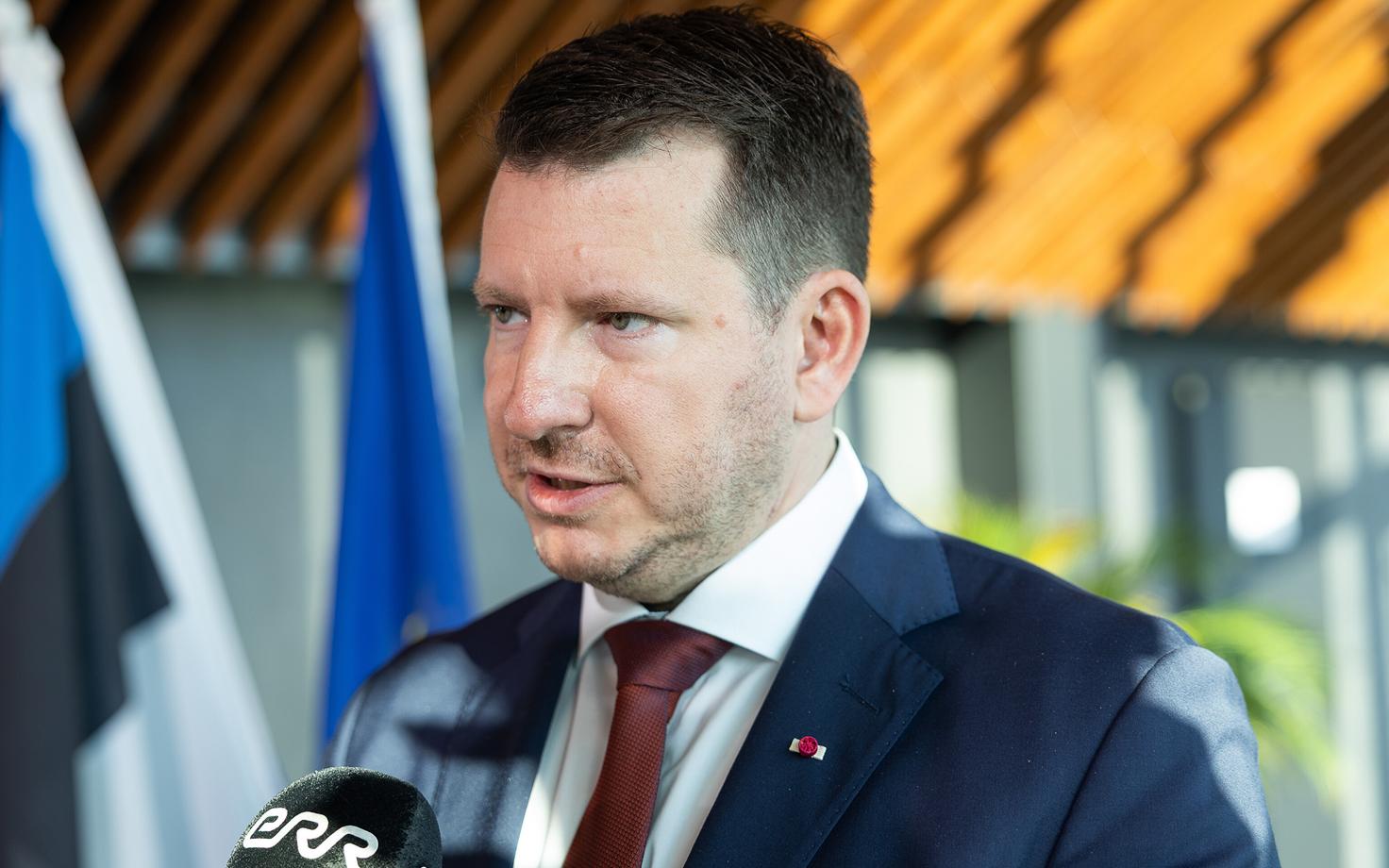
The Democrats' sweeping victory in the U.S. midterms could prompt Donald Trump to pursue an even more unpredictable foreign policy, while Europe has no cause to rest of laurels, Estonian experts find.
Former Ministry of Foreign Affairs Secretary General Jontanan Vseviov said he was surprised by the scale of the Democrats' victory in the midterm elections and the states in which they won.
"Yesterday, no one was predicting that the Democrats would win in Republican strongholds like Texas, South Carolina and North Carolina. Georgia — we've almost gotten used to having a Democratic senator from Georgia, but just a few years ago, that would have seemed like pure political science fiction," Vseviov said.
According to Vseviov, the Democrats had several exceptionally strong candidates this time around. "I think the people who won these elections are people we'll be talking about in the context of the presidential election over the next couple of years," he said. Republicans, meanwhile, were less fortunate with their candidates, he added.
"And then there's the strength of the nationwide trend. Voters punished Republicans and Trump for what they see as bad policies. All of this combined to create something I would certainly call a political tsunami," Vseviov said.
Foregn policy turbulence to pick up
Vseviov agreed with foreign policy expert Liis Mure's assessment that Donald Trump, having lost both chambers of Congress to the Democrats, may now focus even more of his energy on foreign policy, taking aggressive and unexpected steps on the international stage.
"This has happened repeatedly throughout American political history. When a president enters the final stretch of his presidency, which these last two years certainly are, he may turn his attention to the rest of the world. And if his domestic agenda stalls because he has lost control of Congress, it is indeed possible that, paradoxically, foreign policy activity will actually increase," Vseviov said.
"From this point on, that foreign policy activity will be characterized by even more 'turbulence' and 'uncertainty' than before. So if political observers are wondering whether even more turbulence and uncertainty are really possible, my message today is that yes, unfortunately, I'm afraid they are," said Vseviov.
At the same time, Vseviov emphasized that the newly elected Congress would certainly be more friendly toward Europe and more skeptical of efforts to cultivate friendly relations with Russian President Vladimir Putin.
Vseviov acknowledged that Democrats could also make it more difficult to conduct foreign and security policy. "Even waging wars requires money. Congress controls the purse strings. Congress decides how much funding is allocated to different purposes or whether funding is allocated at all," he said.
According to Vseviov, the U.S. administration's foreign policy could also be disrupted by the various investigations and inquiries Democrats may launch in the House of Representatives.
"One can imagine that if America's leading foreign and security policy officials are not sitting in their offices conducting foreign and security policy, but are instead sitting through congressional hearings, that will also affect America's ability to conduct foreign policy," Vseviov said.
Vseviov also noted that appointing new officials requires Senate approval, not only for Cabinet secretaries but also for lower-ranking political appointees, including ambassadors.
Reinsalu: Democrats' victory no cause for Europe to rest of laurels
Former foreign minister, head of the Isamaa party, Urmas Reinsalu, said voters in the U.S. midterm elections felt that Republicans had failed to deliver on their campaign promises.
"Above all, these promises concerned people's purchasing power, their financial well-being and the economic outlook. Republicans' criticism in the fall of 2024 was also focused on bringing inflation under control and lowering energy prices. In reality, however, we have seen that these goals have not been met. On the contrary, overall inflationary pressures have intensified, primarily due to rising energy prices, and voters delivered a resounding rebuke," Reinsalu told ERR.
"In the near future, after January, when Democrats effectively take control of the majority, attention will shift to domestic political confrontation. Political divisions will deepen, with much of the conflict playing out in legal disputes over the permissible limits of presidential authority and, in turn, the president's power to veto legislative initiatives passed by Congress," Reinsalu said.

According to Reinsalu, a major question is how countries such as Russia and China will interpret the election results.
"There is certainly a significant degree of uncertainty here, which could also send signals that the United States is seen as more internally divided and weaker. Formally, the president retains his foreign policy powers and I believe that uncertainty will certainly increase in this area as well," Reinsalu said.
Reinsalu warned, however, that Europe should not misinterpret the election results and conclude that it no longer needs to invest as heavily in building its own economic and security sovereignty.
"Efforts to address these issues must not lose momentum simply because Democrats have secured a majority in Congress."
The U.S. held midterm elections Tuesday, with the results indicating that Republicans will lose their majorities in both the House of Representatives and the Senate to Democrats.
--
Editor: Marcus Turovski, Aleksander Krjukov


