Estonian agency fails to demonstrate how €70 million unsuccessful ammo contract reached
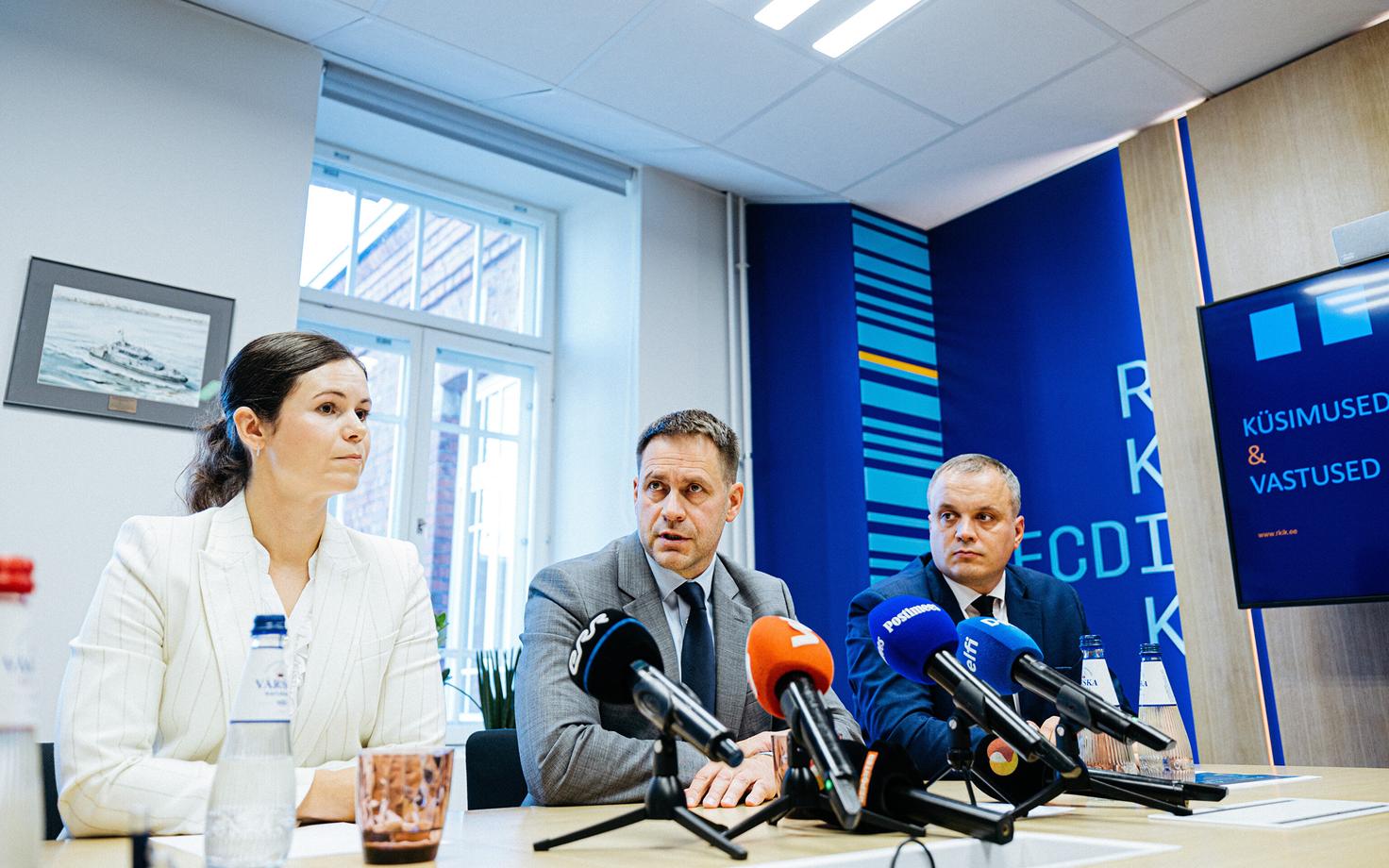
The Estonian Center for Defense Investments (RKIK) is unable to provide documentation showing how it selected Datasel S.R.L., the company with which it signed an approximately €70 million contract to purchase ammunition.
It is now known that in 2024 and throughout the procurement projects involving Datasel established procedures for conducting procurement processes were not followed. RKIK Director General Elmar Vaher said he does not know how the initial negotiations with Datasel were conducted. "I wasn't working here at the time and neither was my team. So what we can talk about now is how we operate today," he said.
Media reports have said that Datasel copied images of artillery shells from other websites and even used cover art from a computer game. RKIK does not know how the decision was made that Datasel was an appropriate company to work with. There is also no documented account of how contact with the company was established or how RKIK came across the company in the first place.
Nor has RKIK subsequently determined how Datasel's background check was conducted and there is no summary of that check. This is important because procurement procedures generally involve checking first and foremost whether a company actually possesses the technology it is offering and how it can demonstrate its ability to supply that technology. The company's financial capacity is also assessed, including whether it has investors, bank guarantees and other financing options.
Former RKIK head: I do not have the documents
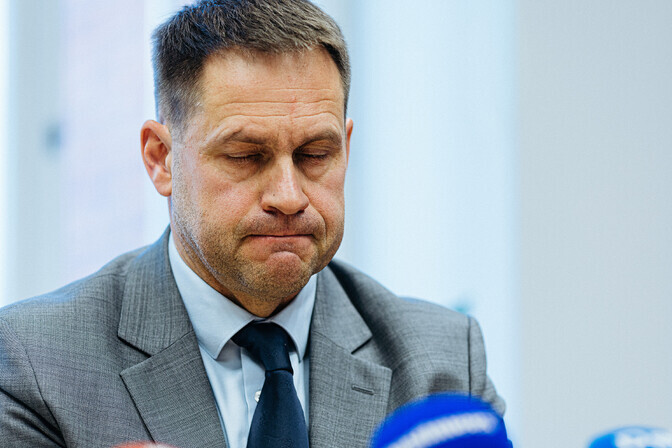
Magnus-Valdemar Saar, who headed RKIK when the contracts were signed, told ERR's "Aktuaalne kaamera" news program in response to an inquiry that the agency's contact with Datasel came through high-level international cooperation.
"Such direct contacts are generally neither documented nor made public. There are normally various ways of conducting background checks on bidders. In Datasel's case, it was demonstrably an affiliate of a publicly traded company and that company was involved in the preparation and execution of the contract at RKIK from the outset. Documents to that effect exist," he said.
Saar said that before the contract was signed, several inspection trips were made to India where Datasel's connections and production capacity were verified. RKIK representatives also made visits to Italy and to manufacturers and assemblers of components.
"All of this took place before the contract was signed and continued while the contract was being carried out," he said.
Saar confirmed that RKIK took possession of the goods following a visual inspection, but that this did not constitute the transfer of ownership under the contract. "A separate expert assessment was carried out to check the quality and ownership has not been transferred," he said.
Saar added that he is, of course, prepared to provide the European Commission's investigative team with background information and explanations, but that he no longer has the documentation in his possession.
"Detailed review meetings with European Commission contacts also took place previously, including when problems emerged during the performance of the contract," Saar added.
Datasel counsel: RKIK verified production and quality
According to Datasel's attorney, RKIK verified both the company's production capacity and the quality of the goods delivered.
"RKIK thoroughly verified that Datasel had the necessary production capacity. Even before the contracts were signed, during a process and discussions that lasted several months, several RKIK employees visited the production facilities in person to conduct inspections," said Veiko Viisileht, an attorney at law with LINKLaw.
"Every batch delivered was thoroughly inspected and handed over to RKIK only after all quality-control requirements under the contracts had been met. It is important to note that RKIK did not raise a single complaint regarding quality before terminating the contracts," he said.
Viisileht said he could not comment on the substance or value of Datasel's counterclaims. RKIK's attorney considers the counterclaim likely to be a tactical move.
Investigative team to travel to Estonia
Speaking at a Monday meeting of the Riigikogu State Budget Control Select Committee, Vaher said the European Commission will send an investigative team to Estonia for three days at the end of September to examine how well RKIK fulfilled its due diligence obligations.
According to Vaher, RKIK is continuing to search for documents related to what happened in 2024 and is speaking with former managers to obtain as complete a picture as possible of how the Datasel contracts came about.
The initial claim made publicly that only one contract had gone wrong has since changed. According to RKIK, seven contracts have been terminated.
Five of them are currently the subject of court or arbitration proceedings, while two contracts have been terminated but remain under negotiation, with preparations underway for possible litigation. RKIK cannot currently comment in greater detail on the latter two contracts because the negotiations are confidential.
The contracts currently before the courts or in arbitration are connected to Datasel.
Datasel, in turn, has filed a counterclaim against RKIK, although its exact contents are not currently being disclosed. RKIK has also not seen the documents on which the claim is based. As the disputes are ongoing, RKIK did not rule out the possibility that the counterclaim could be a tactical move. The center declined to disclose the monetary value of the counterclaim at this time.
Money from the European Peace Facility
Funding for the approximately €70 million procurement involving Datasel did not come from Estonian taxpayers but from the European Peace Facility (EPF). The funding was provided at the European level and includes, among other sources, proceeds generated by frozen Russian assets.
According to Vaher, RKIK currently has around 200 procurement projects underway, handled by approximately 80 people. They include lawyers, project managers and specialists who prepare technical specifications. Procurement decisions are made by RKIK and contracts are signed by RKIK's director general. "That means RKIK is responsible for its own actions," Vaher said.
Asko Kivinuk, RKIK's deputy director general for procurement, said RKIK becomes involved in procurements as early as the planning and pricing stage. Infrastructure and procurement plans are drawn up based on the Ministry of Defense's development plan and procurement plans are then prepared on that basis.
Maria Pihlak, an attorney at law with Sorainen who advises RKIK, stressed that court and arbitration proceedings are closed and that the parties cannot publicly comment on all the circumstances or evidence involved in the proceedings.
In addition, the contracts contain confidentiality clauses that may carry contractual penalties. RKIK must therefore be cautious about what information it discloses regarding ongoing disputes.
Contracts fail to arrive
Vaher also rejected the claim that RKIK had withheld information from the National Audit Office. He said the organization's employees cooperated fully, but a technical problem occurred when the contract materials were sent. The necessary documents were first sent to the National Audit Office on May 21 and again on June 5, but initially failed to reach the recipient.
Vaher said that, as director general, he takes responsibility for the failure to verify that the materials had been received.
According to RKIK's management, one of the main lessons from the Datasel case is that the reasoning behind procurement decisions, background checks and documentation must in the future be recorded in a way that makes it possible, even years later, to clearly establish how and why a particular contract came to be signed.
In RKIK's lawsuit against Datasel S.R.L. before Harju County Court, RKIK — and, in effect, the Estonian state — is represented by Raul Kartsep, Maria Pihlak and Kaupo Lepasepp of law firm Sorainen. Datasel is represented by Maksim Kozlov, Veiko Viisileht and Liina Rekand of law firm LINKLaw.
It emerged last Wednesday that Estonia sought to buy shells for Ukraine and paid a total of €70 million in advance to Indian businessmen who had reportedly never sold a single shell before. RKIK terminated the contract after the company only delivered an incomplete shipment of low-quality components.
The article was updated on September 8 to add details and comments by former RKIK head Magnus-Valdemar Saar and the defense counsel of Datasel.
--
Editor: Merilin Leetna