Should the Estonian people be involved in electing the president?
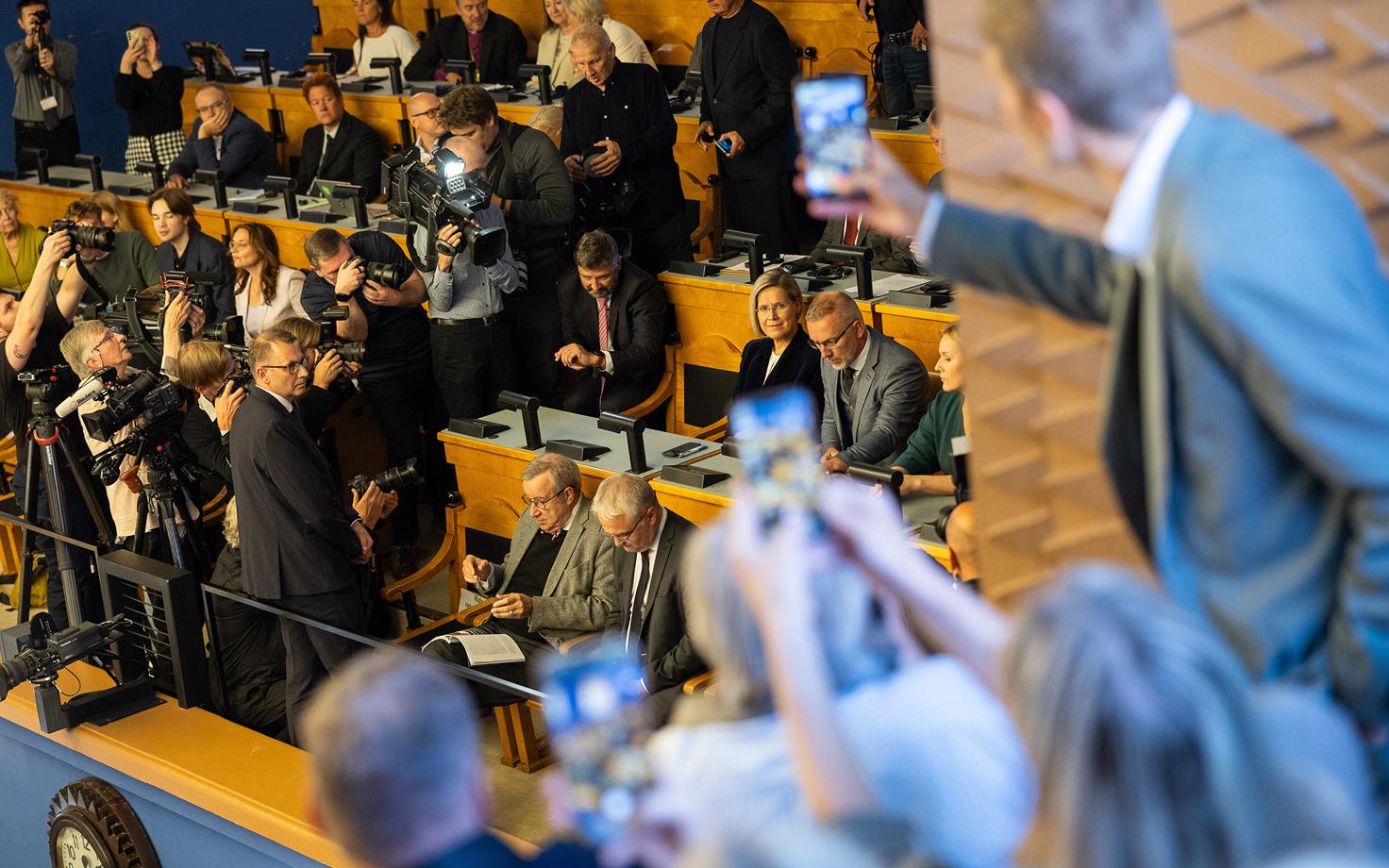
Ülle Madise's first-round election as Estonia's next president brought an unusually swift end to a process that nevertheless revived debate over the transparency and democratic legitimacy of the country's presidential election system.
The 2026 presidential election will go down in history as a rare occasion when the sole candidate nominated in the Riigikogu, Ülle Madise, was elected head of state in the first round of voting.
While parliament may regard this as a success, the election process drew mixed reactions from the public.
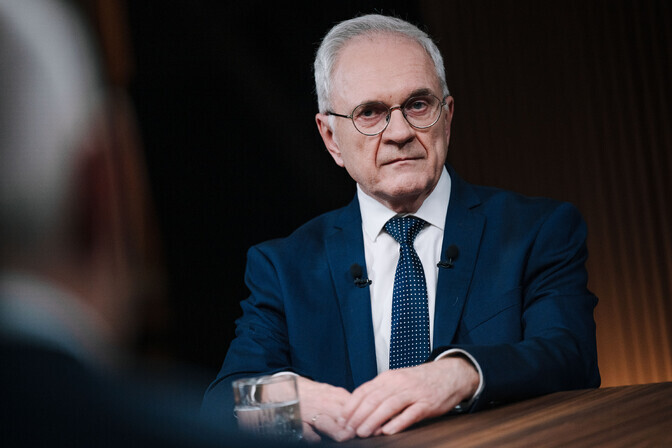
"I have gathered from various statistics and opinion polls that people do not understand the current procedure for electing the president and that it seems opaque. As a result, a significant amount of frustration has arisen among the public," said legal scholar and chair of the Constitutional Assembly's expert committee Jüri Raidla.
"There has always been a great deal of discussion surrounding the candidates. There has been confusion and there have been attempts to create confusion, but each time they have ultimately managed to get the job done. And this time, too, the Riigikogu did an excellent job," said public administration expert Külli Taro.
But how did we get there? The search for a president began early in the year when incumbent head of state Alar Karis had yet to give a definite answer on whether he intended to continue in office. Although Karis is popular with the public, the political parties were not united in their support for him. As a result, the process remained at a standstill for a long time.
"There was relative quiet in the spring partly because many politicians simply did not know what Alar Karis was going to do. And that [Karis' decision to run — ed.] would have been a major game changer. Even Ülle Madise, who has now been elected president, said that she would not want to run against Alar Karis if he wanted to continue," said political scientist and journalist Erik Moora.
The picture became clearer on Victory Day.
"As head of state, I wish you a happy Victory Day for the last time," Karis said in his Victory Day speech.
That gave the parties reason to put their heads together again, but they still failed to come up with a common candidate. It was at this point that the Social Democrats put forward the name of Chancellor of Justice Ülle Madise who, because of the impartiality required by her office, could not put herself forward for the presidency.
Mart Helme, proposed by EKRE, did not have the support of other parties. At the same time, several other prominent public figures expressed interest in seeking the presidency, including Maive Rute, Indrek Laul, Hannes Hanso and Tiit Land.
"In Estonia, the president has to be elected on the basis of a cross-party agreement. That means it can only happen through the parties gradually coordinating and sounding each other out to determine which candidate their members might be willing to support," Moora said.
The deadline for nominating candidates, however, was drawing ever closer. Isamaa and the Center Party considered nominating university rector Tiit Land, but in the end only the Center Party backed him, arguing that the country needed multiple candidates and society needed a substantive debate.
"I believe public debate is extremely important and it is what keeps us on track. But public debate is happening all the time. It consists of our everyday conversations, opinion articles and expressions of opinion. If we attach great importance to a staged debate between candidates, line them up somewhere, ask them questions they know in advance and prod them from every direction ... I don't attach much importance to that. It tells you little about people other than whether they are good at that particular format. But that doesn't make them a good president," Moora said.

No such debate ultimately took place. When signatures began to be collected to nominate Ülle Madise, 75 MPs backed her. Madise thus became the only official candidate.
The situation angered several opposition politicians. They no longer regarded the process as an election, but as an appointment made in backroom deals on Toompea.
"I don't understand those Riigikogu members who said they did not come to vote or who afterward say that the president of the republic is somehow not a legitimate president because there was only one candidate. Every Riigikogu member has the right to nominate a candidate. It is true that they may nominate only one candidate, meaning a Riigikogu member may sign in support of only one candidate. But even after 75 members of parliament had signed in support of Ülle Madise's nomination, there were still enough Riigikogu members left to nominate another candidate. Why they did not do so was up to them, but in my view it is not fair to then say afterward that the problem with the election was that there was only one candidate," Taro said.
Ülle Madise was elected president by secret ballot with 71 votes. She was supported primarily by members of the Social Democrats, Reform Party, Eesti 200 and Isamaa, as well as several unaffiliated MPs. EKRE members did not enter the chamber, while Center Party MPs did not collect their ballots.
"Our main message was and remains that the current process is not actually democratic," Center Party chair Mihhail Kõlvart said.
"In my view, when a party does not allow its members to register, does not allow them to collect ballots and does not allow them to cast a vote if they wish, that is, on the one hand, cowardly, because under the Constitution, a Riigikogu member is independent. An MP must be able to make choices that differ from the party's official line; they have a mandate to do so. They represent their voters, not merely the party's interests or message. Restricting or preventing that is not a very honorable course of action. It is perfectly OK for an individual politician not to vote, not to vote in favor, to spoil their ballot or to shout across the chamber that everything happening there is nonsense. But for a party leadership to decide that those who would like to act differently are not allowed to do so is, in my view, a violation of the Constitution," Moora said.
The situation once again raised the question of whether the current system has run its course and whether the election of the president should instead be entrusted directly to the people.
"Every presidential election to date, including the most recent one, has taken place in full accordance with the Constitution and the law; there is no question about that. Despite the good results and an appealing process, there are clearly pain points that should be addressed in the future," Raidla said.
"So far, the issue of direct elections has always faded away, despite having influential supporters at various times. We have had prime ministers who have said that we really should introduce direct presidential elections and so on. And it cannot be ruled out that at some point such a decision will be made," Moora said.
Raidla also does not consider direct elections necessary, but he has proposals for making the process more transparent. The first would be to give the public, in addition to the Riigikogu, the right to nominate presidential candidates.
"In a legally binding way. I emphasize: in a legally binding way. That means that 10,000, 20,000 or 25,000 citizens — whatever number the law might stipulate in the future — would provide their signatures. And once those signatures have been collected, that person would become a presidential candidate," Raidla said.
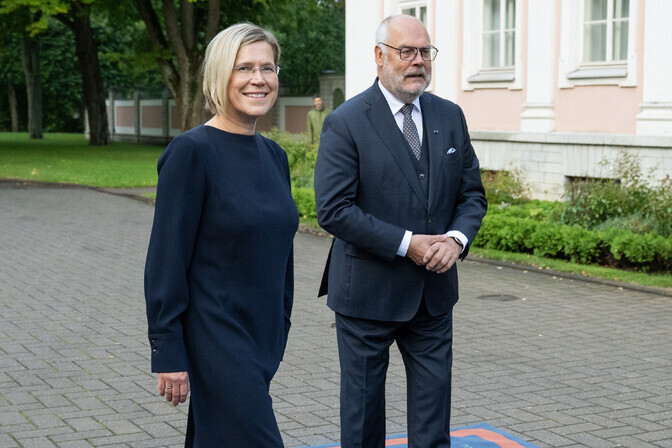
A second option, according to Raidla, would be to move the election directly to the Electoral College, made up of MPs and local government electors, bypassing the rounds of voting in the Riigikogu.
"In the Electoral College, the president clearly receives a mandate with a broader base of support while remaining fully compatible with the current Constitution. The president gains significantly greater capacity to act as a counterbalance," Raidla said.
For now, however, the process has run its course and the next president of the Republic of Estonia will be Ülle Madise.
"Given that the rule of law in Estonia has clearly come under strong pressure in recent years, it is fundamentally necessary to have someone in Kadriorg who is a highly credible guardian of the Constitution and the rule of law, and Ülle Madise undoubtedly is that," Raidla said.
--
Editor: Marcus Turovski, Marko Tooming
Source: "AK. Nädal"


