Eesti 200: Government to curb infrastructure investments to rein in deficit
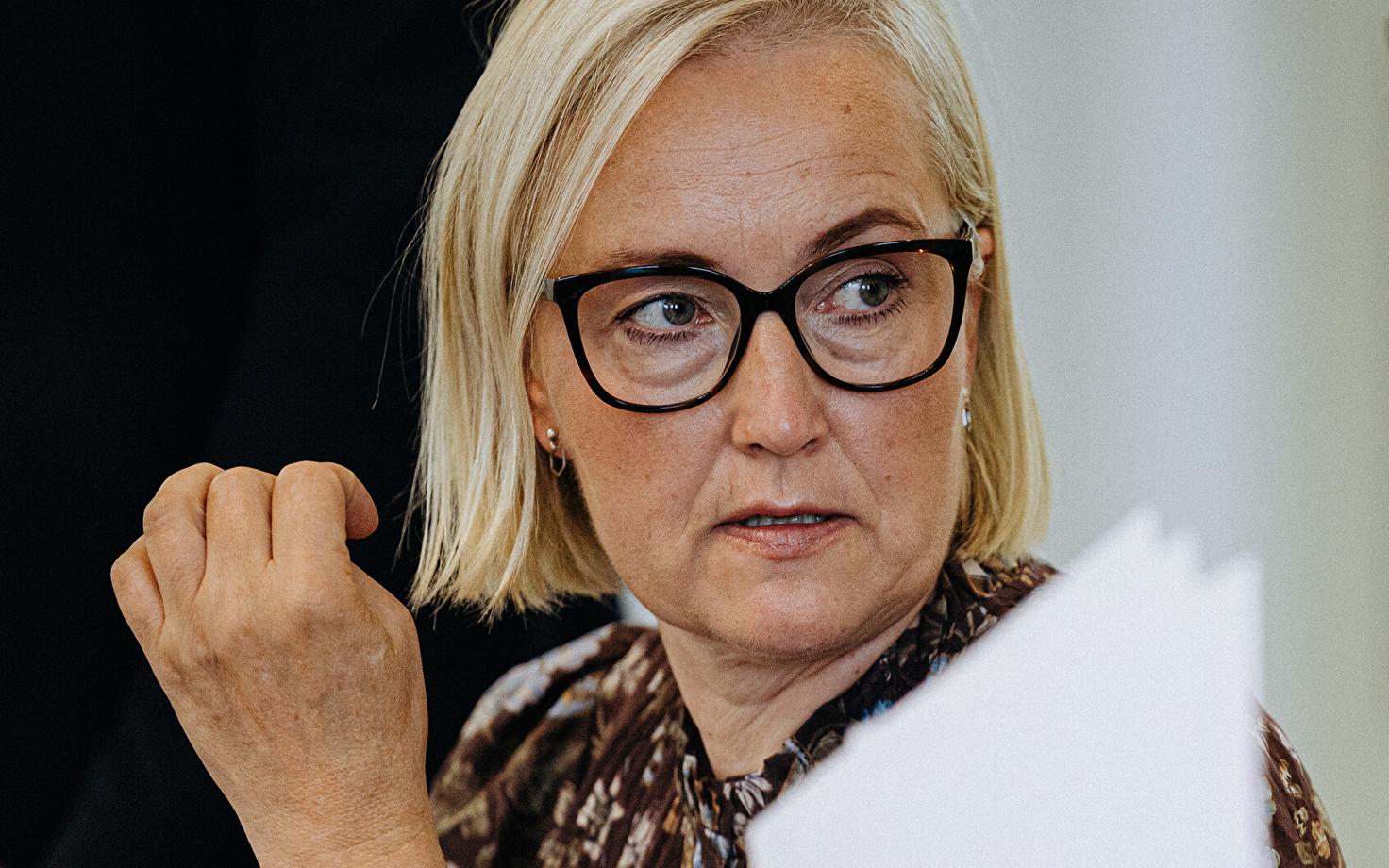
Some planned infrastructure and real estate investments will have to be postponed or canceled to cut next year's budget deficit and, if possible, fund modest pay raises for teachers and rescue workers, Education Minister Kristina Kallas told ERR.
According to Kallas, the government has reviewed all revenue and spending in the budget negotiations and looked for savings across all areas.
"We have also reviewed the investment portfolio and the state's real estate costs, so all the reviews in the budget negotiations are complete and the budgets for the coming years are now broadly in place. We know where we are spending, but we still need to tie up the final loose ends on what we can invest additional money in next year," she said.
Kallas said there is no more room to cut investments in people, such as benefits and wages, so the government has turned to infrastructure investments and real estate costs.
"We cannot start cutting benefits, such as higher education funding or hobby education funding — in other words, the investments we make in people. I don't see any room for cuts there; we have already cut them significantly," Kallas said.
"Then there are real estate and infrastructure investments where the state spends quite heavily — Estonia ranks first in Europe in terms of the share of its budget spent on infrastructure and real estate investments. There are certainly some things that can be dropped, meaning we don't carry out those construction projects or that can be postponed until later. That's also possible, in order to improve the budget position," she added.
Erkki Keldo (Reform), who was economy minister at the time, has also previously said that some investments will have to be cut.
Improving the budget position has been the Reform Party's position both before and during the budget talks. More specifically, the party wants to reduce next year's deficit by half a percentage point to 4 percent of GDP.
Kallas said that while there is agreement on cutting investments, Eesti 200 and Reform have not yet agreed on the 4 percent target.
"No, we have not agreed on that target because we said from the outset that we first wanted to see where it was actually possible to make savings and where those cuts could come from. We have now gone through all spending and can see that savings can be made on infrastructure and real estate investments," Kallas said.
Infrastructure investments mainly involve road construction and Rail Baltica. "There are also port and building construction projects, but relatively few. The state invests most heavily in infrastructure. A couple hundred million euros' worth can either be dropped or spread out over a longer period," she said.
Kallas added that the government believes Estonia's infrastructure construction sector is close to overheating because of the construction of Rail Baltica, another reason for the state to scale back its investments for now.
"Estonia's infrastructure construction market is worth about €1 billion and is currently almost at capacity. If the state were to add significantly more investment, the market would overheat and prices would rise, so that may not make sense at all," she said.
Rescuers and teachers still have hope for pay rises
Kallas has previously said that while raising teachers' salaries is a goal in the budget talks, she saw no way to do so because no new spending could be added to the state budget.
She now said work is still underway to find the money.
"Our position is that we have to find the money to provide at least some pay increase because salaries for rescue workers and teachers have lagged behind average wage growth. From Eesti 200's perspective, it is important that the state is still able to invest in areas other than defense because all other areas have had to make cuts over the past four years. The state cannot function on just one area. We have to be able to provide healthcare and school education for children," she said.
"We are currently fighting, if I can put it that way, to find further infrastructure cuts so that we can also direct money toward salaries. So, to put it plainly: I can't promise anything, I don't dare promise anything, but we are working on it," Kallas added.
However, the government cannot meet the Education Personnel Union's demand to raise the minimum teacher salary to Estonia's average wage of €2,312 next year.
"That would require finding €112 million in the state budget next year. That's 0.2 percent of GDP," Kallas said.
Prime Minister Kristen Michal will submit the state budget to the Riigikogu in the final week of September.
Public transport to receive millions in additional funding
Minister of Regional Affairs and Agriculture Hendrik Terras (Eesti 200) told ERR that his areas of responsibility will face a one-time cut of €900,000. It has not yet been decided where exactly the cut will be made.
"We haven't decided on the details yet; we simply agreed that we would make the cut. But broadly speaking, it won't affect public transport. Public transport is our main focus anyway and accounts for most of our ministry's budget, and costs in that area keep rising. Once again, operating public transport has become €10 million more expensive compared with last year," Terras said.
As a result, public transport funding will actually increase next year. With fuel prices currently difficult to predict due to global developments, some of the funding will remain in the government's reserve.
"We agreed on an additional €7.5 million for transport. We also agreed that around €8 million to €10 million would be allocated from the reserve. That's because the situation with fuel prices is so uncertain that we can't currently estimate how much additional money may be needed if fuel prices rise," Terras said.
"In the second and third quarters of next year, we can look at actual fuel prices and how much was spent and the government can then allocate money for fuel from the reserve accordingly," he added.
Prime Minister Kristen Michal will submit the state budget to the Riigikogu in the final week of September.
--
Editor: Marcus Turovski


