New finds emerge inside Estonia's oldest medieval church
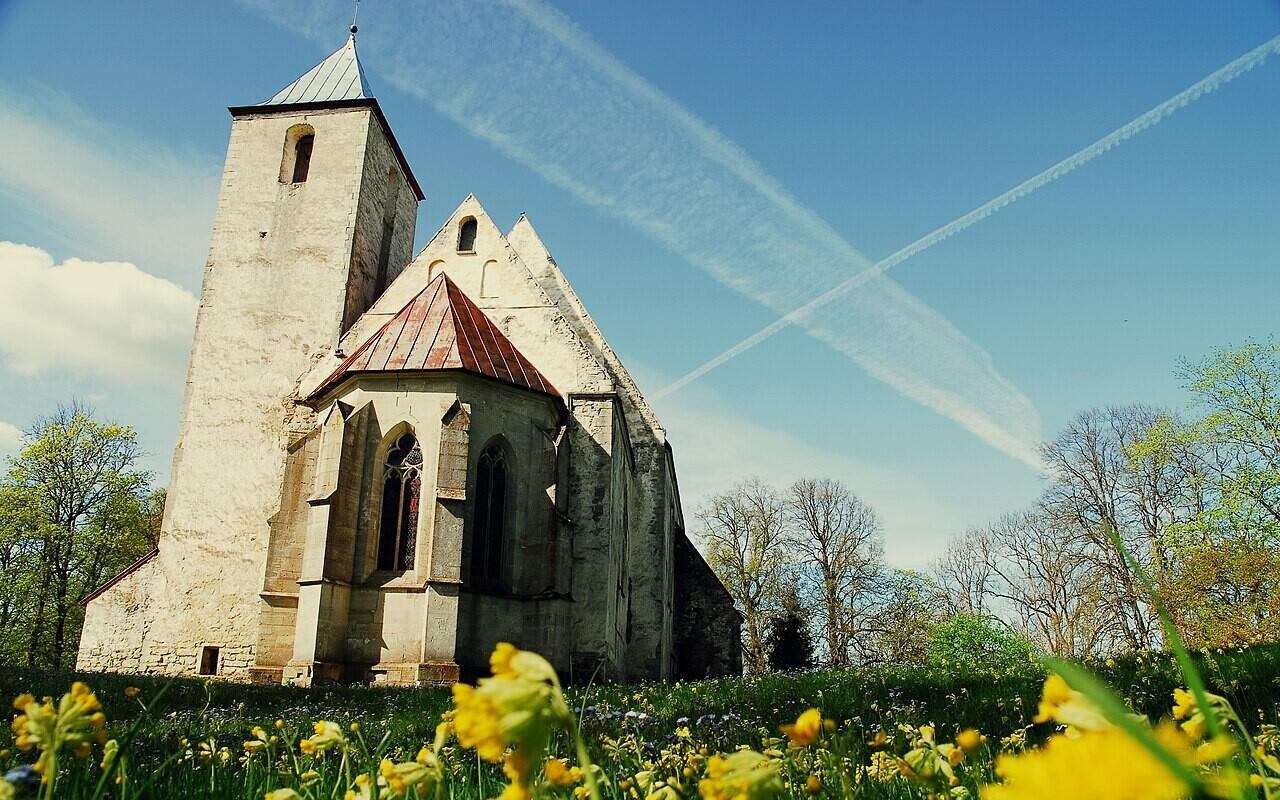
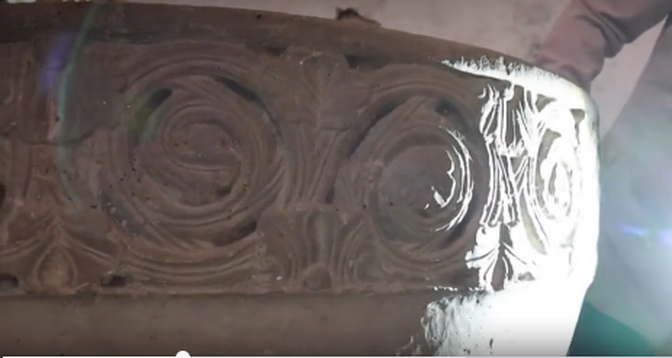
More than 800‑year‑old Valjala Church on Saaremaa still contains surprises and discoveries despite the passing centuries. One important find this year is a baptismal basin crafted by a master of exceptional skill.
"There is no other similar piece in Estonia," said Kersti Markus, professor at Tallinn University and head of the Valjala Church research project. "When a sculpture conservator comes in, examines, cleans and shows what the stone actually looks like, they reveal the craftsmanship. With the help of geologists, it has also emerged that this is local Valjala stone, which in the 13th century was indeed a very high‑quality material."
This summer, additional studies were carried out through two different projects for a total of €160,000.
Still, some secrets remain hidden. The wooden church that researchers hoped to find beneath the floor was not discovered.
"We would have loved to find the very first wooden church, but we can more or less imagine where it might have been inside the current church, somewhere near the triumphal arch, because burials point us to the church's location. But coffins from later periods have ruined all the soil," Markus said.
It also became clearer how the church should be repaired and restored so that it remains safe. Ceiling beams were once installed to prevent the walls from spreading, but some cracks have still appeared in the ceiling. Now it is known what work must be done to keep the building stable.
"We have here the oldest church in Estonia, and at the same time there is a great risk that, due to the outward movement of the walls, the vault could collapse," Markus said.
"Various works are needed. Our biggest step forward would be the gables, where the gable slabs are starting to fall down. The support beams need to be fixed so the roof can be repaired. The vault must be restored so plaster does not fall on people's heads. There are many different tasks," said restorer Ando Siim.
At the same time, facts allow us to assume that wealthy islanders once lived in Valjala.
"Our research aligns with Marika Mägi's work on Valjala stronghold, and a sacred building may have existed here already in the early 13th century, when the stronghold was at the height of its power. So the builders — or those behind the church's construction — should be sought from the stronghold. These were, of course, islanders, Estonian nobles!" Markus said.
--
Editor: Annika Remmel, Argo Ideon


