Raul Aron: The next pay raise should be a reward for innovation
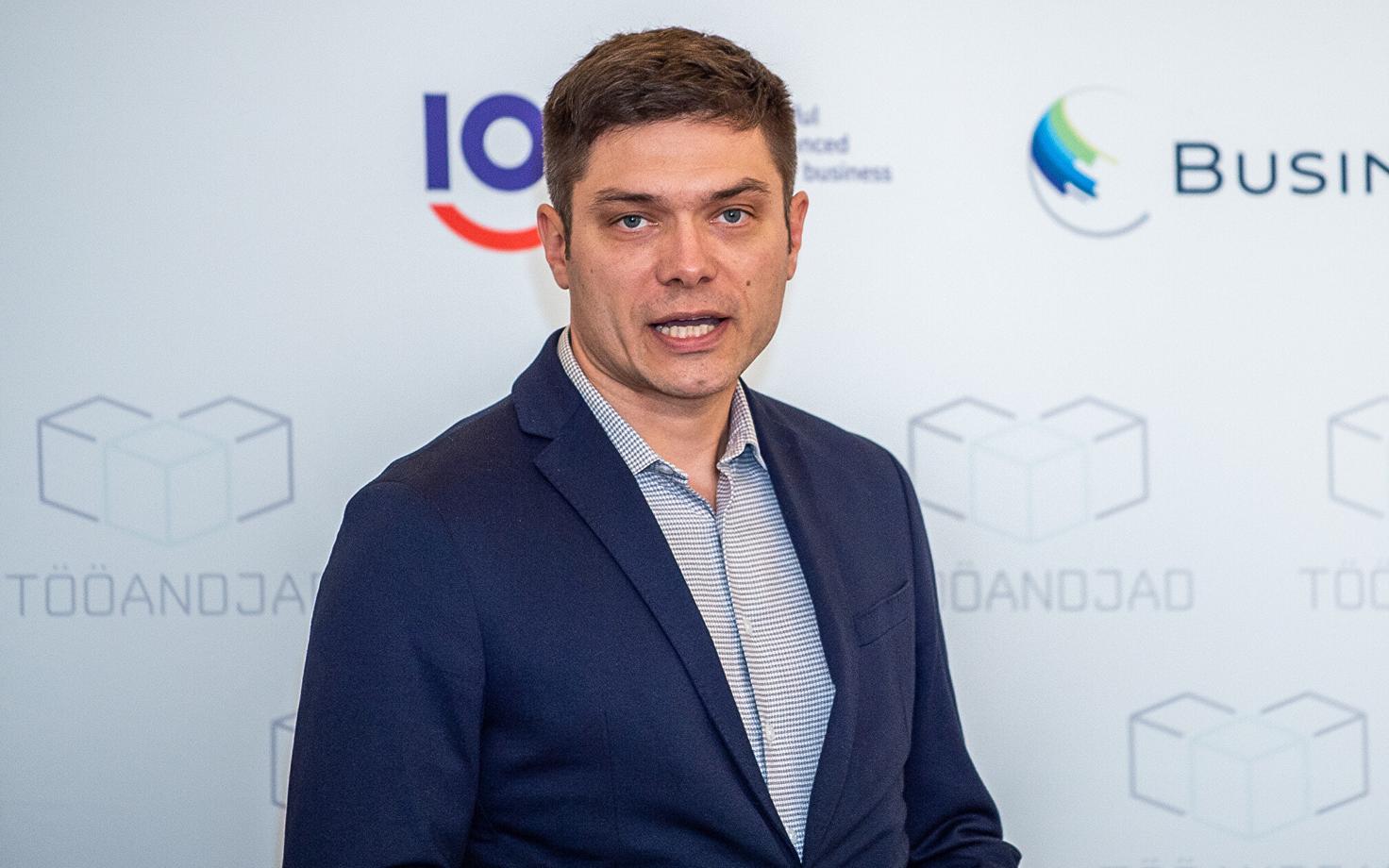
The increase of the Estonian average wage by 117 euros is good news, but future years' wage growth cannot be built only on labor shortages and wage pressure, writes Raul Aron.
According to fresh data from Statistics Estonia, the average gross monthly wage grew in the second quarter of this year by 117 euros year‑on‑year, reaching 2243 euros. For employees, this is good news, because wage growth once again exceeds price increases and purchasing power improves. For companies, the picture is more complicated, as wages are rising faster than productivity.
Wages can grow only together with productivity. If labor costs grow faster than the value created by the worker, Estonian companies lose competitiveness — especially considering that we compete in manufacturing and services with countries where wages and often other input costs are lower. Estonian wages should of course grow, but where will the next 117‑euro pay raise come from?
According to Statistics Estonia, Estonia's labor productivity in 2025 was 77.2 percent of the European Union average. As recently as 2021, it reached 83.6 percent. Thus, instead of moving closer to the goal, we have moved further away.
In the Employers' Confederation's new manifesto "Time to give 110%," we have set the target that Estonia's economic productivity should reach at least 110 percent of the EU average. This determines companies' competitiveness, wage levels and tax revenue, from which the state funds education, healthcare, social protection and national defense.
Only the wealth that has already been created can be redistributed. So how can this wealth be increased?
Money invested in education must reach the economy
One place to look for productivity growth is education. Education is the foundation of Estonia's economic competitiveness. Estonian students rank at the top of the world, yet the labor market simultaneously lacks precisely the skills that would help companies create higher added value.
Education spending has grown nearly 40 percent in four years and accounts for 6.3 percent of GDP — one of the highest shares in the EU. Economic productivity has fallen, but certainly not solely because of the education sector.
This is not sustainable. The problem therefore cannot lie in education being underfunded, but in how the money is used and which skills are taught. When an economy has as little "ammunition" — people and capital — as Estonia, it cannot afford to shoot blindly.
For example, preparing engineering and technical talent creates one of the biggest opportunities to raise value added per employee. In the Employers' manifesto, based on OSKA data, we point out that Estonia's labor market needs 4700 new engineers — 3400 to replace retirees and 1300 due to employment growth. Although intake in engineering fields has increased recently, it is still not enough.
Productivity growth as organizational learning
Skilled people alone are not enough for a productivity leap. To increase productivity and incomes, this knowledge must also be applied. Estonia's productivity and competitiveness growth requires three simultaneous leaps: faster adoption of technology in companies, more ambitious research and development investments, and higher‑value exports and new export markets.
Employers must also do more themselves — invest in innovation and technology, improve management quality and develop their people, and enter foreign markets more boldly.
A study commissioned by the think tank Foresight Center shows that artificial intelligence, automation and digitalization improve company performance primarily when work processes, management and employee skills change alongside technology.
Automation alone increased the productivity of Estonian companies by six to nine percent, but together with organizational innovation the increase reached up to 24 percent. The adoption of artificial intelligence without organizational changes did not bring noticeable productivity growth. With improved work organization, productivity increased by 19 percent in manufacturing and 23 percent in knowledge‑intensive services.
The state's role is to create a competitive and stable economic environment for entrepreneurship and direct money invested in education and science to where its impact reaches the economy. A growing tax burden weakens business incentives and pulls money out of the economy. Administrative burden is mostly a deadweight cost that does not create value added. This burden should be kept as low as possible.
The increase of the average wage by 117 euros is good news, but future wage growth cannot be built only on labor shortages and wage pressure. Estonia must start creating more value with every hour worked. Otherwise our work becomes more expensive, but we do not become richer.
--
Editor: Kaupo Meiel, Argo Ideon


