Study: Copper surfaces can help render public spaces safer from infection
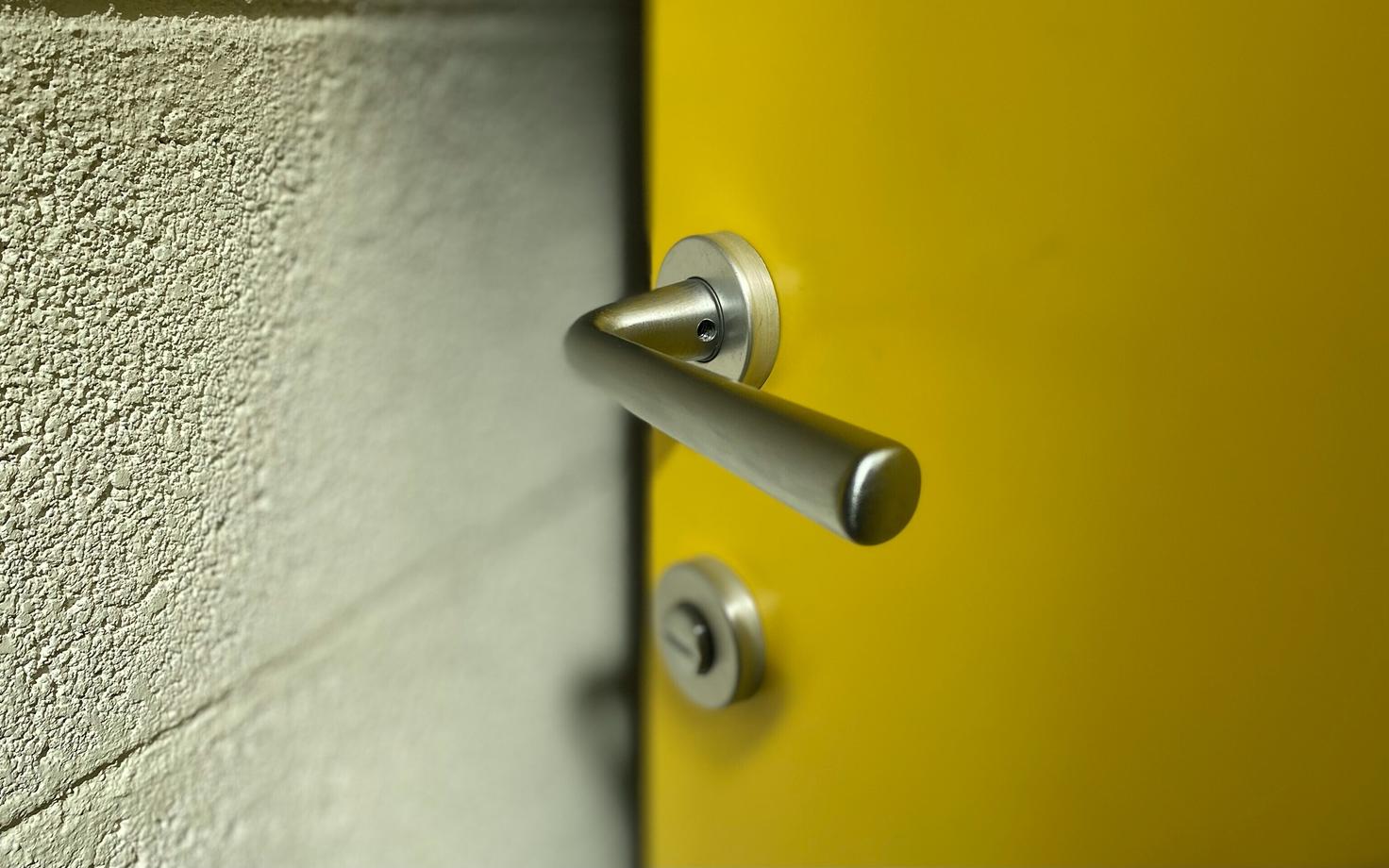
Several materials that effectively kill bacteria under laboratory conditions may not work as well in crowded spaces. Their effectiveness is reduced by repeated cleaning as well as changes in humidity, according to a doctoral dissertation defended at the University of Tartu.
Fall often brings colder, wetter weather, creating favorable conditions for the spread of infectious bacteria. Every day, thousands of microbes are transferred from people to commonly touched surfaces such as door handles and shopping baskets. Disease-causing bacteria primarily reach these surfaces from people's hands or, for example, when droplets released into the air by sneezing settle on them.
As a result, diverse microbial communities form on surfaces and quickly adapt to their surroundings. Conventional cleaning and disinfecting products can keep surfaces clean for a while, but within a few hours, microbes recolonize the same area and can spread easily over long distances through subsequent contact. Researchers are therefore looking for longer-lasting solutions.
One option is to incorporate antimicrobial metals, such as silver and copper compounds, into surfaces or surface treatments. Before such materials can be adopted more widely, however, they must first demonstrate their ability to reduce the number of microbes by at least 99.9 percent. Most of the necessary tests are conducted under strictly controlled laboratory conditions, which cannot accurately replicate many of the variable factors encountered in real-world settings.
Wet laboratory testing favors materials
In everyday use, the effectiveness of surfaces depends on how worn they are, fluctuations in humidity and invisible grime that accumulates on the material. Harleen Kaur, who recently defended her doctoral dissertation at the University of Tartu's Institute of Molecular and Cell Biology, has now shed light on the effects of these and similar changes.
In laboratory tests, researchers typically apply a bacterial solution to a surface and cover it with a film. This keeps the sample moist and in contact with the material for up to 24 hours. "However, conventional wet tests can significantly overestimate the antimicrobial activity of surfaces used in dry indoor environments," Kaur noted in her dissertation.
In her study, Kaur compared surfaces based on copper, silver and a quaternary ammonium compound, examining their actual antimicrobial effectiveness on door handles, shopping basket handles and tabletops in a cafe. The results showed that in these settings, most coatings that had performed well in laboratory tests became less effective.
Different metals, different effects
"Several surface coatings were highly effective in humid conditions, but in dry air or on dirty surfaces, most quickly lost their antibacterial properties," Harleen Kaur said. Copper was the exception, showing the most consistent performance, with its antibacterial effect persisting regardless of environmental conditions.
Copper primarily affected bacteria associated with humans, while the diversity of bacteria originating from the environment remained largely unchanged. Coatings based on silver and quaternary ammonium compounds were already significantly less effective in laboratory tests and lost their effectiveness altogether under real-world conditions.
Kaur also studied the antimicrobial effects of light-activated coatings based on zinc oxide and titanium compounds. Because these coatings require direct sunlight to become active, she recommended using thin silver-antimony-selenide coatings that can be activated by indoor lighting instead for indoor applications.
Environmental impact
Surprisingly, a comparison of the surfaces showed that their antibacterial effectiveness was influenced more by humidity, drying rate and the amount of organic grime accumulating on the surface than by the type of material. In tests, even copper lost its effectiveness when the mixture used to simulate grime was diluted tenfold.
"The loss of antimicrobial effectiveness on surfaces contaminated by fingerprints, food residue, bodily fluids or dust is one of the biggest challenges in developing surface coatings," Kaur wrote. The coatings also became less effective over time as a result of cleaning, friction and mechanical wear. All these factors need to be considered when introducing new materials.
The findings can therefore help in designing infection-control measures for public spaces and allow for a more realistic assessment of the potential and limitations of different antimicrobial materials. Because copper-based surface coatings primarily reduce the spread of microbes associated with humans, they can help curb the transmission of bacterial infections in public buildings.
Laboratory test results alone are therefore not enough when selecting antimicrobial surfaces. It is equally important to assess how they perform under real-world conditions and to account for environmental factors, including lighting.
Harleen Kaur's doctoral research was supervised by University of Tartu Professor of Genetics Angela Ivask and Professor of Materials Science Vambola Kisand. Tomas Kačergius of Vilnius University served as the opponent. Kaur's dissertation, "Performance of antimicrobial surfaces under application-relevant conditions," is available in the University of Tartu's digital repository.
--
Editor: Jaan-Juhan Oidermaa, Marcus Turovski


