Listeria most often found in cold smoked and lightly salted fish products
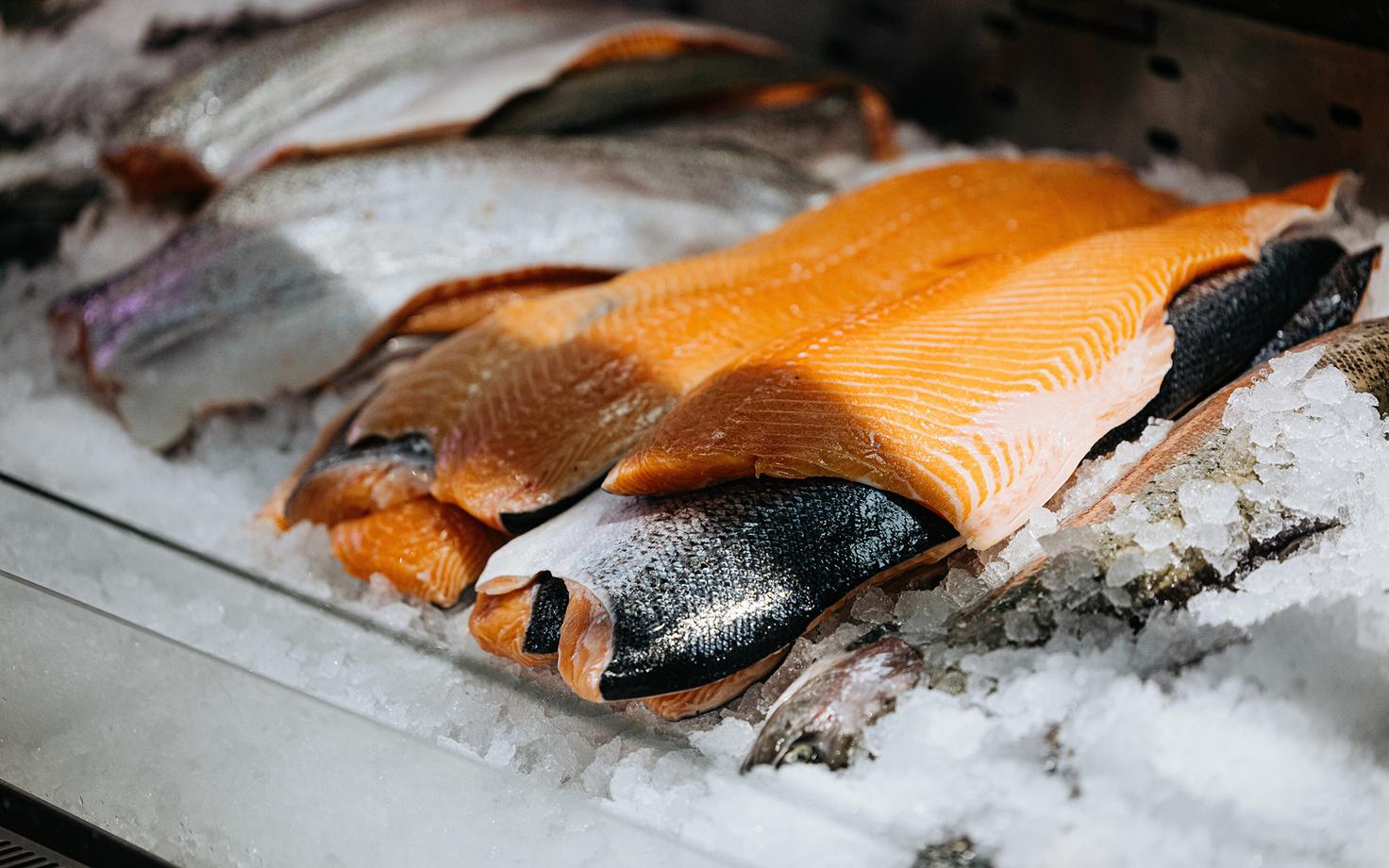
Listeria bacteria were generally uncommon in ready-to-eat foods studied in Estonia from 2012 to 2016, but contamination was clearly concentrated in certain product groups, particularly cold-smoked and lightly salted fish products, a doctoral thesis found.
Listeria monocytogenes differs from many other foodborne pathogens in that it can grow even at refrigerator temperatures. Slowly, but it can still grow. This makes refrigerated ready-to-eat foods that people consume without additional heating particularly problematic. If such food has a long shelf life, an initially small number of bacteria can increase significantly over time and become dangerous to consumers.
Listeriosis is rare compared with many other foodborne infections, but the illness can be very serious. Those most at risk include older adults, pregnant women, newborns and people with weakened immune systems. Because of the potentially severe course of the illness, ready-to-eat food producers must be able to control raw materials, the production environment and hygiene. The shelf life of the food must also be set appropriately.
The first part of Julia Koskari's doctoral dissertation, defended at the Estonian University of Life Sciences, provided one of the most comprehensive overviews to date of the prevalence of Listeria bacteria in ready-to-eat foods in Estonia. Over five years, she analyzed more than 30,000 samples from meat, fish, dairy, prepared food and bakery products, fruit and vegetable products, mixed salads and several other food categories. Ready-to-eat food is food that a producer or manufacturer intends for direct human consumption without cooking or other processing that would eliminate pathogenic microorganisms or reduce them to an acceptable level.
Listeria most often found in fish products
According to data from 2012 to 2016, 3.6 percent of ready-to-eat food samples analyzed using a detection method tested positive for L. monocytogenes. However, there were substantial differences between food groups. Listeria bacteria were found most frequently in fish products, 11.6 percent of which tested positive. The proportion was particularly high in lightly salted and cold-smoked fish. The bacteria were much less common in hot-smoked and other heat-treated fish products and were not found in canned fish.
In salads, prepared foods and fruit and vegetable products, the proportion of positive samples ranged from 2.1 to 3.9 percent. In bakery and dairy products, it was just 0.2 to 0.5 percent, while no Listeria bacteria were detected in sauces, infant foods or foods for special medical purposes.
The presence of the bacteria does not necessarily mean that a food contains enough to pose a health risk. When bacterial counts were measured, 99.3 percent of samples contained fewer than 10 Listeria bacteria per gram or had levels below the limit of quantification.
However, in a small number of fish, meat and fruit and vegetable products, Listeria levels exceeded the European Union food safety criterion used as a benchmark in the study: 100 Listeria bacteria per gram or milliliter of food on the final day of its shelf life. Levels exceeded 1,000 in 17 samples, with the highest counts measured in meat, fruit and vegetable and fish products. These findings cover the years 2012 to 2016 and therefore do not directly reflect the current situation.
However, this period partially overlaps with the 2014–2023 period covered in Nora Plym's recent master's thesis. Her analysis also found the highest proportion of positive samples in the raw fish, raw fish product and cold-smoked fish categories. The product groups associated with a higher risk of Listeria therefore largely coincide in the two studies. This consistency confirms that fish products eaten without heating continue to require particular attention.
Could food industry byproducts be used as preservatives?
The second area of research in the dissertation addressed another current issue. Consumers increasingly want foods made with natural ingredients and fewer synthetic preservatives. At the same time, the juice and fruit and vegetable processing industries generate large quantities of pomace. These byproducts are not necessarily worthless waste: peels, stems, roots and berry residues contain bioactive compounds that may inhibit microbial growth or slow food spoilage.
The dissertation therefore also examined plant-based additives. The project's aim was to determine the antimicrobial and antioxidant effects of plant-derived substances in meat and fish products and identify effective combinations of additives.
Koskari studied the effects of various plant powders and combinations of them in both raw and cooked ground meat products. The experiments used rhubarb stems and roots, tomatoes, apples, onions, garlic, black currants, chokeberries and rowan berries, among other ingredients. She monitored total microbial counts, levels of spoilage-associated Pseudomonas bacteria, yeasts and molds, as well as the growth of deliberately introduced L. monocytogenes, using specific challenge tests.
Rhubarb most effective at slowing down spoiling
Among the individual additives, rhubarb stem powder stood out. It effectively inhibited the growth of both aerobic microorganisms and yeasts and molds in raw and cooked ground meat products. In some experiments, combinations of powders produced even better results. For example, combinations of apple, onion and black currant and of apple, garlic and tomato, kept microbial counts in raw ground meat products with a lower fat content considerably below those in control samples.
At the same time, the results showed why a natural compound that appears effective in the laboratory may not provide the same level of protection in actual food. Food is a complex environment in which an additive's effectiveness depends on factors including acidity and fat and protein content. In ground meat with a higher fat content of 27 percent, the plant powders were generally less effective at inhibiting microbial growth than in meat with a fat content of 13 percent. Fat and other food components can bind bioactive compounds, reducing their contact with microorganisms.
Natural does not equal effective enough
To address the most important safety issue, Koskari conducted challenge tests: she added a specific amount of L. monocytogenes to samples of cooked ground meat products and monitored changes in the pathogen's numbers over the course of their shelf life. Such tests help determine whether a particular food product supports the growth of a pathogen and whether its intended shelf life is safe.
All of the cooked ground meat products studied allowed Listeria bacteria to multiply. Rhubarb stem powder and a combination of rhubarb stem and tomato powders performed best, but even these only slowed bacterial growth rather than stopping it. Some ingredients that consumers might expect to inhibit microbial growth, such as onion or garlic powder, unfortunately did not provide sufficient protection against Listeria bacteria in the food matrix.
The dissertation's main practical conclusion is therefore a measured one: plant-based powders have the potential to help extend the shelf life of meat products and reduce the growth of some spoilage microorganisms, but they cannot be regarded as a universal substitute for conventional food safety measures. To control Listeria bacteria, plant-based additives must be combined with other methods of inhibiting microbial growth, such as appropriate heat treatment, prevention of contamination, an effective cold chain, a properly determined shelf life and, where necessary, synthetic preservatives.
Results to benefit both producers and food control
The research provides food businesses with practical information about which plant materials are worth using in product development and why their effectiveness must be assessed in the specific product rather than solely in laboratory tests. Particularly promising is the potential to make use of byproducts from the local food industry, reducing waste while turning them into value-added ingredients. Before they can be used more widely, however, the effects of plant-based additives on a food's taste, color, texture and shelf life must also be assessed and the microbiological safety of the final product must be demonstrated.
From a food safety and public health perspective, the dissertation can help focus monitoring on product groups in which Listeria bacteria are found more frequently or may multiply during the product's shelf life. The message for consumers is also straightforward: refrigeration slows the growth of many microorganisms, but it does not automatically make ready-to-eat foods with a long shelf life risk-free. People in high-risk groups in particular should follow recommended storage temperatures and use-by dates and exercise caution with unheated cold-smoked and salted fish. Refrigerators should be kept at 2 to 4 degrees Celsius, no higher.
The dissertation therefore brought together two topics that may initially appear quite different. On the one hand, it mapped the prevalence of a foodborne pathogen and helped refine risk-based monitoring. On the other, it showed how circular bioeconomy principles can be applied in food production without compromising safety. Plant-based byproducts could play a useful role in improving the quality of foods of animal origin, but as a rule their antimicrobial effects are not sufficient to prevent the growth of foodborne pathogens.
Koskari added that all the plant materials studied were sources of health-promoting bioactive compounds. They may therefore be worth using in product development even when their antimicrobial effects are limited. The ideal combination of plant powders would allow food to be enriched with substantial amounts of bioactive compounds while also providing antimicrobial effects and slowing rancidity. Research to identify the ideal combination and concentrations is continuing in the laboratories of the Estonian University of Life Sciences' food hygiene and safety unit.
Julia Koskari defended her doctoral dissertation, "Listeria monocytogenes in ready-to-eat food and antimicrobial effect of plant additives in meat products" ("Listeria monocytogenes valmistoidus ning taimsete lisandite antimikroobne toime lihatoodetes"), at the Estonian University of Life Sciences.
--
Editor: Sandra Saar, Marcus Turovski


