Artificial intelligence helping turn yeast into a better cell factory
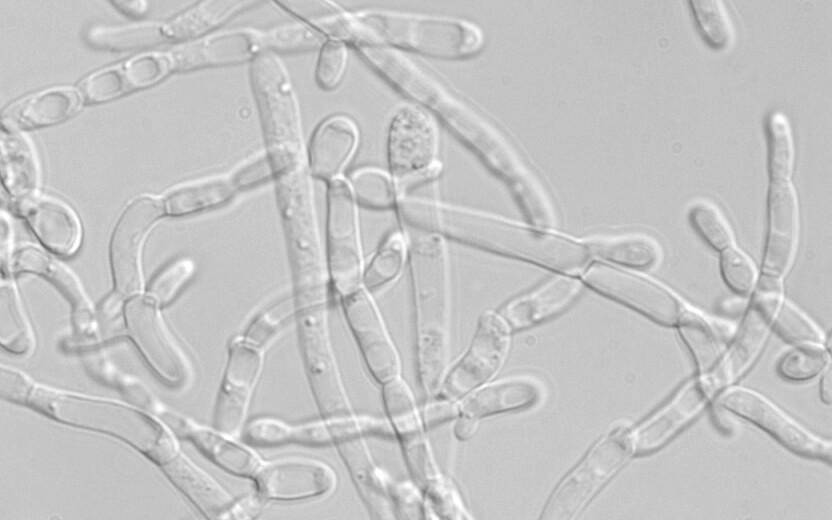
Researchers at TalTech used AI to predict which genes could make oleaginous yeast more efficient at producing lipids and pigments. A newly developed metabolic model could help create raw materials for new foods, cosmetics and biofuels hundreds of times faster.
Baker's yeast, Saccharomyces cerevisiae, has helped humans turn sugars into alcohol and carbon dioxide for thousands of years. In next-generation biotechnology, however, biologists are interested in oleaginous yeasts, among which Yarrowia lipolytica stands out for its ability to store large amounts of oil-like substances in its cells. An international research team led by Estonian bioengineers sought to determine how the yeast could be engineered to produce not only lipids but also valuable pigments known as carotenoids.
In its natural form, lipids make up between one-fifth and one-half of the yeast's dry mass. By making targeted genetic modifications, researchers can increase the proportion of oil-like substances to nearly 80 percent and induce the cells to produce carotenoids they would not normally make in nature. Scientists face a challenge, however, because thousands of metabolic processes operate as a single network, meaning that changing even one gene immediately alters the entire system.
When scientists screen for the best gene variants, they rely on genome-scale metabolic models run on computers. These models describe biological reactions taking place inside cells and help biologists narrow laboratory experiments down to only the most promising variants. Each reaction in a cell is controlled by specialized proteins called enzymes and the instructions for making them are encoded directly in the yeast's genes.
Earlier models had significant gaps in the data describing enzyme properties. Biologists addressed the problem using DLKcat, an artificial intelligence-based algorithm. Drawing on existing information, the computer program can predict how nearly all Yarrowia lipolytica enzymes will behave under different conditions.
Juliano Sabedotti de Biaggi, a researcher at Tallinn University of Technology (TalTech) and lead author of the study, said AI sped up enzyme analysis by several hundred times.
"With previous mechanistic models, calculating the properties of a single enzyme took us several days, while DLKcat was able to provide answers for hundreds of enzymes in less than an hour," Sabedotti de Biaggi said.
This allowed researchers to study and compare enzymes on a much larger scale and conduct analyses that had previously been computationally impractical.
In laboratory experiments, the researchers also collected large amounts of proteomics data and fed them directly into the new computer model. The data accurately reflects which proteins the yeast begins producing and in what quantities at different stages of its life cycle. This led the biologists to develop ecYali5-GEM, a new and, to date, the most detailed metabolic model of the yeast.
A yeast cell's needs change drastically over its life cycle. A gene that boosts lipid production during the early growth phase may have no effect later on. The new model helps scientists identify precisely when the activity of a particular gene inside the cell should be increased or decreased.
When the researchers compared the computer model's results with laboratory experiments, they found that the new approach was accurate. The algorithm not only confirmed previous experimental results but also identified entirely new target genes. Scientists can therefore use the computer model to clearly identify which gene to target first.
Carotenoids and lipids are produced in yeast through similar internal pathways. When researchers direct a cell's resources into one pathway, fewer resources are inevitably available for the other. The detailed computer model can identify the optimal balance at which the yeast is able to produce both valuable substances at the same time.
AI and mathematics, however, do not solve all of the biologists' problems. The researchers found that modifying some of the genes recommended by the algorithm did not produce the expected results in laboratory experiments. The actual metabolism of a yeast cell remains too complex for current computer models to fully capture.
"This shows that yeast cell metabolism is more complex than current models are able to describe. But even unsuccessful predictions can help improve future models," Sabedotti de Biaggi added.
The researchers see broad potential for the new method across industrial biotechnology. Advanced computer models can help biologists engineer cells capable of consuming industrial waste and converting it into pure compounds. The authors wrote in the research paper that researchers studying other microorganisms could apply similar computational methods in the future.
Efficient cell factories could help humanity reduce its dependence on petroleum and intensive agriculture. AI can help biologists put yeasts to work profitably, allowing sustainable biofuels, novel cosmetics and dietary supplements to move from laboratories to factories sooner. The combined power of biology and mathematics brings us one step closer to changing everyday patterns of consumption.
The article was published in the journal Applied Microbiology and Biotechnology.
--
Editor: Sandra Saar, Marcus Turovski




