Prime minister: Arctic security closely linked to Estonia's security
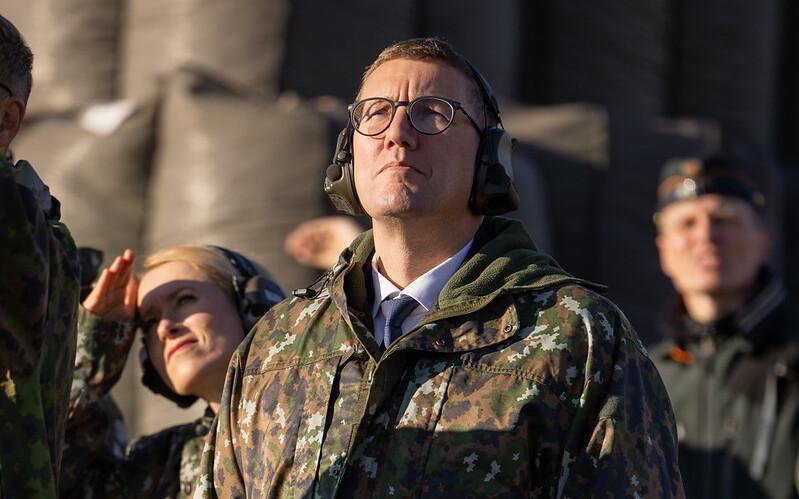
The Arctic is becoming an increasingly important part of European security and Russia's activities in the region are heightening risks, Prime Minister Kristen Michal (Reform) said Monday.
Michal made his remarks while taking part in the European Arctic Summit in Rovaniemi, Finland. While only three EU member states — Finland, Sweden and, via Greenland, Denmark — have territory above the Arctic Circle, Michal noted Estonia, as the northernmost non-Arctic nation, is directly affected by developments in that region too.
"My message is very simple: Arctic security is linked to our security, and that message will certainly be heard," Michal told "Aktuaalne kaamera."
"Russia poses a strategic threat in the Arctic, the Baltic Sea region and elsewhere in Europe. The activity of the shadow fleet along the Northern Sea Route is also on the rise. This fuels Russia's war machine and poses a serious environmental threat in an already vulnerable region," the prime minister said via a press release.
Russia as the elephant in the room was no longer avoided, nor was the threat it poses glossed over with diplomatic language: the outcome of Russia's war of aggression in Ukraine will also directly shape the future of the Arctic, Michal added.
"If Russia fails in Ukraine, it will be good news for the Arctic. Russia must be forced to engage in serious negotiations, and this requires pressure — tougher sanctions, greater isolation and even more support for Ukraine ahead of winter."
The prime minister stressed security, the economy and climate change are closely intertwined in the Arctic as new trade routes and access to natural resources heighten both competition and risks, including those to critical infrastructure. He said the EU must work with NATO and Arctic partners to safeguard security, sustainability and the rules-based order in the region.
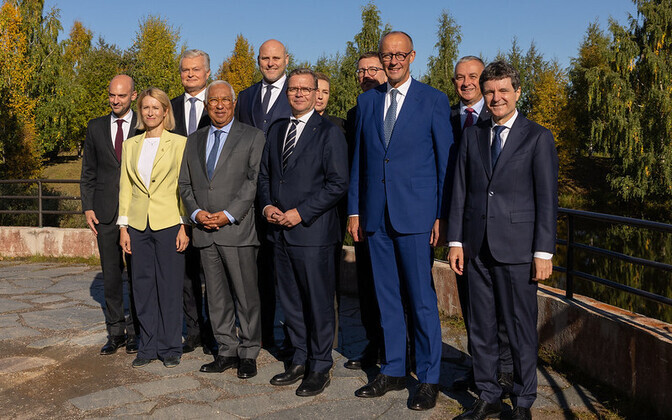
Representatives of 12 countries met in Rovaniemi, the capital of Lapland, and issued a joint statement calling on the EU to take a more strategic and active role in the Arctic, with a particular emphasis on transport and digital connectivity, satellite technologies, the protection of critical infrastructure and the capacity to respond to hybrid threats.
No binding documents were signed in Rovaniemi, but the outcome is to be taken into account in the EU's impending new Arctic strategy.
Also taking part was EU foreign policy chief Kaja Kallas, who said Russia's actions have changed Arctic countries' threat perceptions, with states increasingly seeing the region as less peaceful. Finland's Prime Minister Petteri Orpo, hosting the event, warned that Russian-Chinese cooperation strengthens Russia and said Europe must impose more sanctions and curb the shadow fleet, while maintaining dialogue with Beijing over Ukraine. German Chancellor Friedrich Merz said the EU must have a stronger, more visible Arctic presence to complement NATO's efforts.
Latvia and Lithuania were also represented at the meeting, joined by France, Romania, Poland, the Netherlands and Greece. The joint summit statement is here.
--
Follow ERR News on Facebook and Twitter and never miss an update!
Editor: Andrew Whyte, Mari Peegel
Source: 'Aktuaalne kaamera'


