Estonian MoD rejects agency's claim it proposed terminating EPF ammo brokerage in 2025
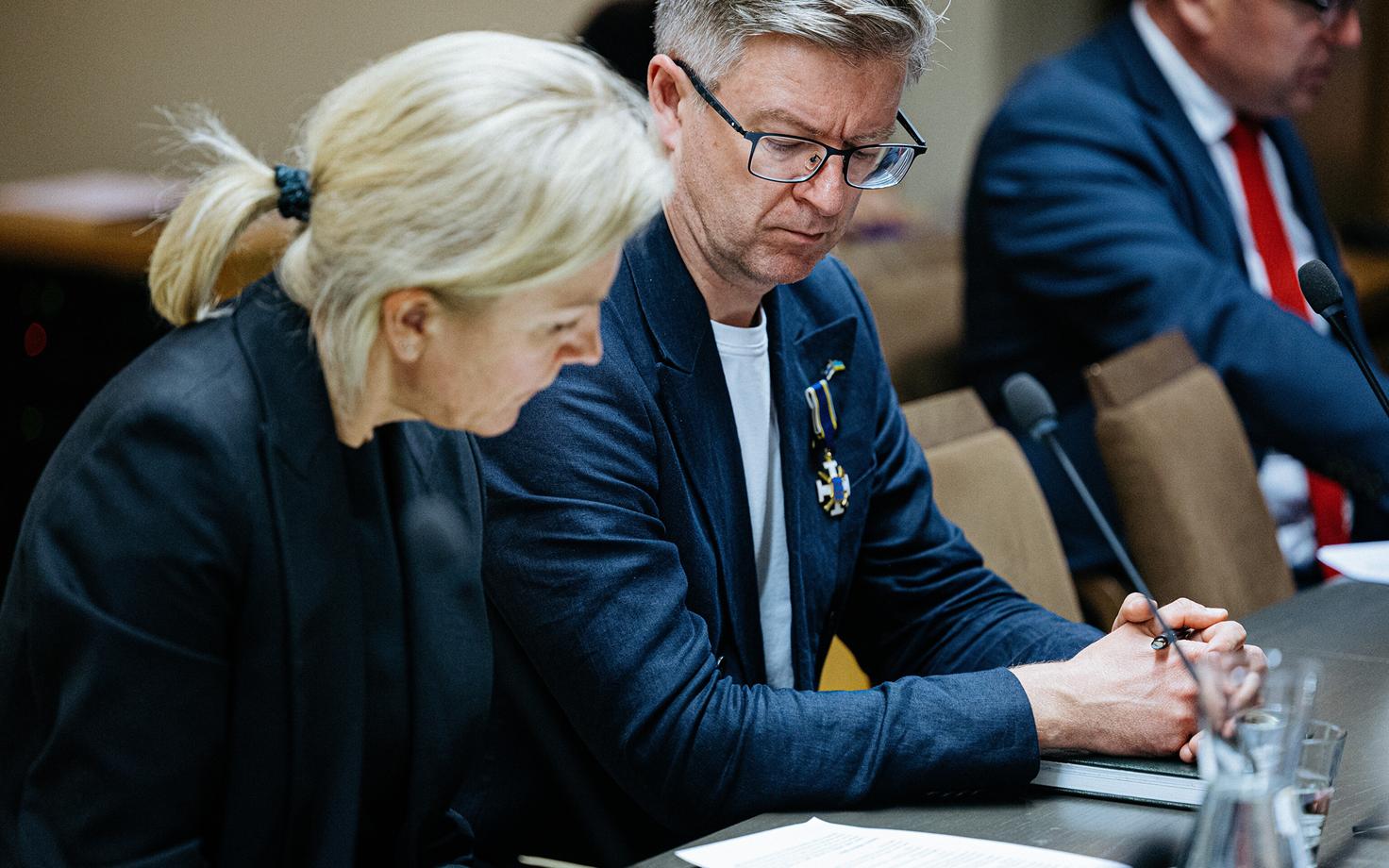
Lawmakers continued examining problems with Estonia's defense procurement and financial management Monday, focusing on the role of Defense Minister Hanno Pevkur in controversial ammunition deals.
The Riigikogu State Budget Control Select Committee continued its discussion Monday at a public sitting on problems related to financial management in the defense sector and national defense procurement. The aim was to obtain answers to questions raised by a National Audit Office audit and by information that has emerged publicly in recent weeks.
At the start of the sitting, it emerged that Defense Minister Hanno Pevkur (Reform), former Estonian Center for Defense Investments (RKIK) Director General Magnus-Valdemar Saar and State Secretary Keit Kasemets, all of whom had been summoned, were not present.
RKIK Director General Elmar Vaher said committee members will be able to visit RKIK on Wednesday where they will be given access to documents protected as state secrets or confidential information.
Committee members will also see a so-called timeline showing various points at which decisions were made, along with related materials. It is still not known precisely who was involved in the decisions or how they were reached.
Unanswered questions
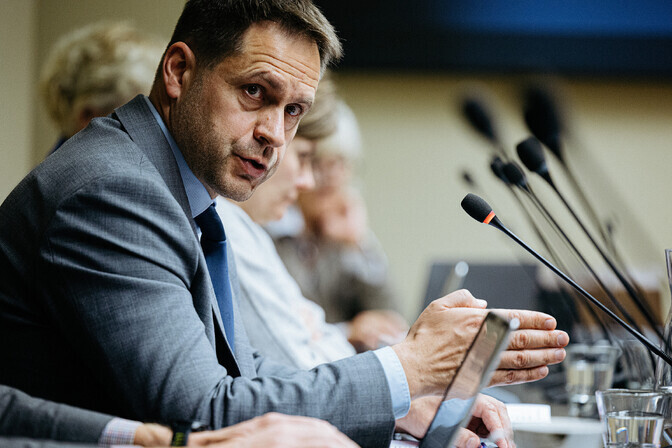
Committee chair Urmas Reinsalu said he had sent Saar written questions before the sitting. The first concerned conflicting accounts after Pevkur said the ministry did not look into the background of individual transactions in detail and that neither the minister nor the secretary general were responsible for negotiating with market participants.
Saar told Reinsalu that his experience had been the opposite. He added that Pevkur had not kept his distance or merely been kept informed, but had actively intervened in the process. Saar said weekly discussions were held covering new supply opportunities, risks and the progress of projects, during which specific instructions were given.
"He himself brought forward and proposed deals to be made and offers were constantly coming to RKIK through him," Reinsalu continued, reading Saar's response. Pevkur had also allegedly urged that a payment be expedited on at least one occasion after contracts had been signed, shortening the contractual payment deadline and demanding an exception to state accounting rules.
Outgoing Ministry of Defense Permanent Secretary Kaimo Kuusk was asked to comment and said various ammunition offers had been sent to everyone whose email address was publicly available. Those offers, including ones forwarded by the minister, were passed on to RKIK. The center was then responsible for validating the offers and assessing production capacity, the possibility of obtaining ammunition as aid for Ukraine and the associated risks.
Kuusk said it was common for offers of this kind to be forwarded by various parties, including the minister.
Another unresolved question is who established contact with Datasel. Saar maintains that the contact came through Pevkur who, according to Saar's account, said the contact was reliable. Contact was then established with Oculus, which in turn brought Datasel into the process. Pevkur denies this.
Reinsalu again asked Kuusk for an explanation. Kuusk said he had no reason to doubt the minister's account. "What Magnus-Valdemar Saar has presented does not convince me. There is one screenshot of a conversation in which Magnus himself claims that he received it from the minister, but the other party does not confirm that," Kuusk said.
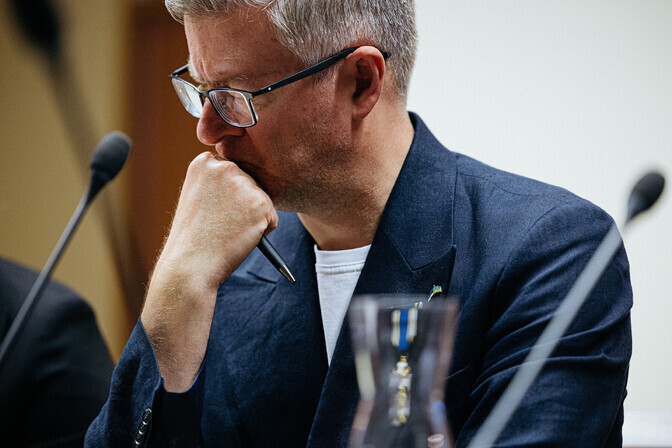
From there, the process was supposed to continue with RKIK assessing the offers and securing the ammunition for Ukraine.
Saar further claimed that the final two transactions in the Datasel case were carried out at Pevkur's personal initiative. The minister was particularly interested in concluding the deals through the Greek company Nordeto. Once again, there was pressure to sign the contracts quickly, citing the short validity period of the offer.
Saar added that by that point, RKIK had already been notified of delays in deliveries under the initial contracts. Nordeto was an unknown company and, to Saar's knowledge, its business activities were not related to ammunition or defense goods.
Reinsalu asked whether Pevkur had given instructions regarding Nordeto's involvement as an intermediary. Kuusk again replied that offers reached everyone whose contact details were publicly available.
Reinsalu also asked whether Pevkur or any Ministry of Defense official had urged RKIK to sign additional contracts involving Datasel ammunition after delivery problems with the initial procurements had emerged. Kuusk said he could not confirm that any such pressure had been exerted.
Proposal to stop ammo mediation
Saar also told the media that, as RKIK director general, he proposed in early 2025 that the center stop brokering ammunition through the European Peace Facility. Reinsalu also asked Saar about this and Saar replied that the first delivery problems involving the Datasel contracts emerged in January or February 2025. It had become clear to RKIK that the market had dried up in terms of reliable suppliers and that continuing to support Ukraine in the same way would have required taking even greater risks.
RKIK reportedly submitted a written proposal in late winter 2025 to stop concluding ammunition contracts in this manner using European Union and third-country funds and to return funds that had not yet been committed under contracts. The defense minister did not accept the proposal and decided to continue brokering the aid.
Responding to these claims, Kuusk said it would have to be verified whether such a written proposal had in fact been submitted at the time. He added that even if it had been submitted, contracts with Datasel had already been signed by that point and the first deadlines had already arrived.
Erkki Tori, director of security and national defense coordination at the Government Office, was asked whether the defense minister had informed the Cabinet of the problems in early 2025 when the risks emerged. Tori replied that, to his knowledge, he had not.
Tori also said the government had not discussed the specific problematic ammunition brokerage contracts funded through the European Peace Facility. In fall 2025, the National Audit Office conducted an audit that highlighted risks associated with the ammunition brokerage contracts. Reinsalu asked whether the Cabinet had still not considered it necessary to discuss the issue separately at that point. Tori said he was unable to comment on that.
Ammunition in Romania
During the sitting, Reinsalu also asked about ammunition that has not been entered into inventory and is being held at an interim storage facility in Romania. Vaher said not all of the equipment and ammunition at the facility belongs to Estonia. He added that Estonia nevertheless guards the site to ensure the items remain there. Vaher said there are dozens of containers of ammunition at the facility.
RKIK has inspected the shells on two occasions. The first visit was an expert inspection during which their quality was assessed. The inspection found that the ammunition was not fit to be fired and did not comply with the contract.
The second visit took place about a month ago when the aim was to verify that the goods were still there. "It is true that we did not count every individual shell, but the team confirmed that the number of containers that was supposed to be there was still there," Vaher said.
Background
In 2024, the Estonian Center for Defense Investments (RKIK) signed four procurement contracts with Datasel S.R.L., an Italian company acquired earlier that year by Indian-owned Neco Defence Munitions. Despite neither Datasel nor its parent firm having any prior track record of manufacturing or selling artillery shells, RKIK wired roughly €70 million in advance payments.
The contracts meant to deliver desperately needed ammunition to Ukraine using EU European Peace Facility funding suffered severe delivery delays. Ammunition that did arrive was flagged as incomplete and of substandard quality, leading RKIK to terminate the agreements and launch legal efforts to recoup the money. Datasel has denied wrongdoing, claiming it delivered tens of millions of euros' worth of goods and was left with financial losses.
The European Public Prosecutor's Office has since launched an investigation into the use of European Peace Facility funds by Estonia.
The scandal was part of Minister of Defense Hanno Pevkur's recent decision to resign, alongside wider accounting and oversight issues at the Estonian Defense Forces and other parts of the ministry's administrative area.
--
Editor: Merilin Leetna, Marcus Turovski


