Ille Nakurt-Murumaa: Everyone wants a hand in entrepreneurs' pockets, including private health care
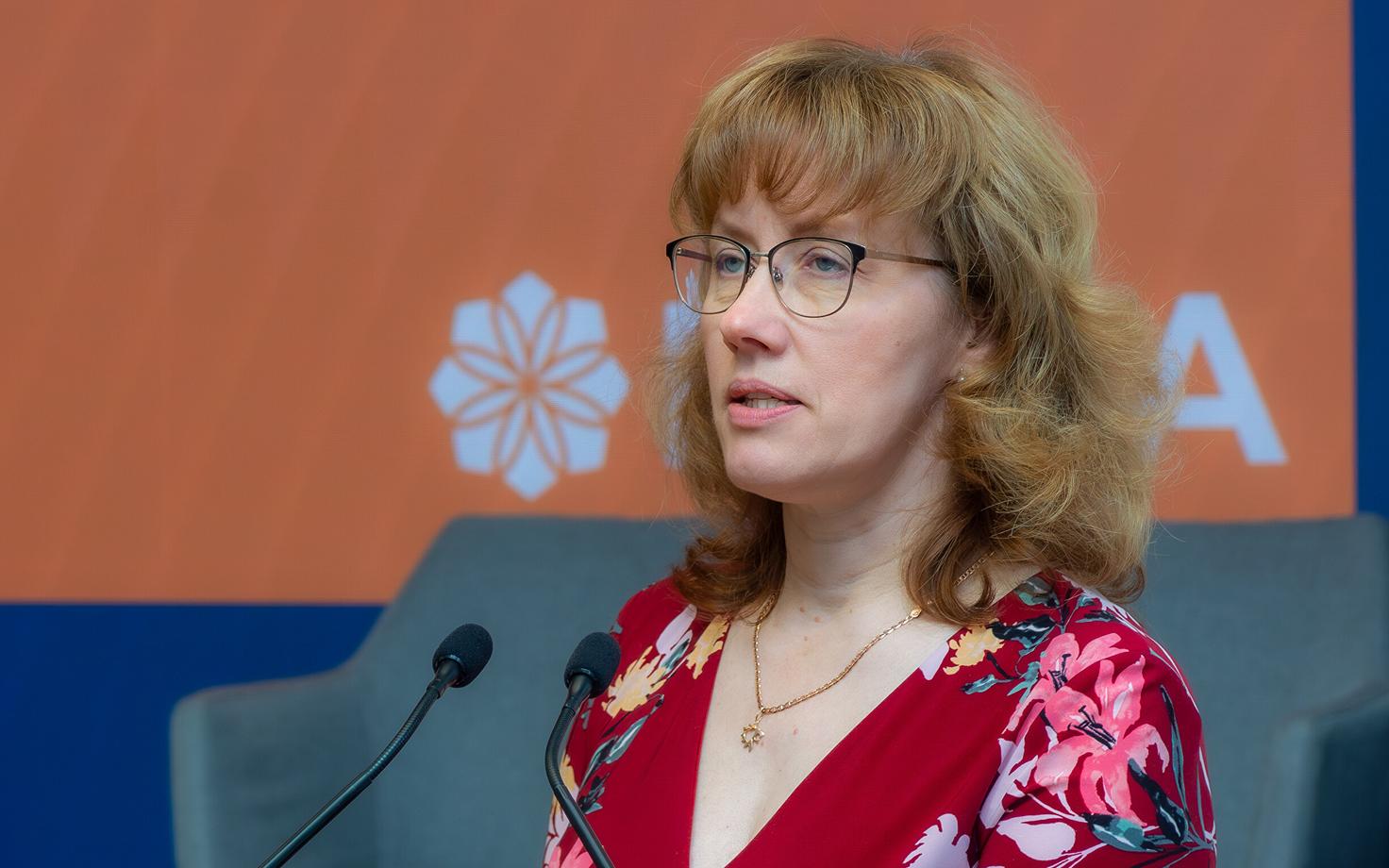
Estonian entrepreneurs are facing growing pressure from both labor unions seeking minimum wage increases above economic growth and private health care providers pushing for expanded occupational health requirements that would increase employers' costs, argues Ille Nakurt-Murumaa.
The Ministry of Social Affairs is currently drafting occupational health policy guidelines through 2035 and candidly acknowledges the system's problems: uneven or inadequate quality, health checks that do not reflect actual workplace risks, and limited access to occupational health physicians outside major cities, where services are often available only at high cost.
The Estonian Association of Occupational Health Service Providers (ETTOL), which strongly supports mandatory occupational health services and their expansion, proposes the opposite approach: turning occupational health into an expanded primary health care service that would assess employees' general health and broader public health risks. Employers, or partly the Health Insurance Fund, would be expected to pay for these additional services.
The association claims that a working group reviewing occupational health policy reached a consensus on the idea and that the ministry has since moved away from it. In reality, no such consensus ever existed within the working group. It remains a business objective of ETTOL's members, one that neither I, as a field expert, nor the Estonian Association of Small and Medium-Sized Enterprises (EVEA), which represents small businesses, can support.
A business model, not health policy
Neither the current occupational health system nor the expansion advocated by ETTOL represents health policy. It is a business model. If the law requires every employer to purchase increasing amounts of services, a small number of providers are guaranteed a stable revenue stream. There are few occupational health physicians in Estonia, and nearly 80 percent of the market is controlled by a handful of major providers.
Given the already excessive requirements, entrepreneurs would be forced to pay even more for services that should be covered through social taxes and family physicians, or through a well-organized primary care system partially funded by employers. Larger occupational health providers may welcome growing revenues guaranteed by legislation, but that should never be the purpose of regulation.
This has happened before. Since 2023, employers have been required not only to arrange regular health checks but also to purchase a "comprehensive occupational health analysis" every three years. For employers, this has meant another bill rather than healthier employees. As a consultant, I see these assessments every day and must admit that most are completely worthless for both employer and employee.
Employers have a responsibility to ensure safe working conditions, but they cannot be expected to manage or finance employees' overall health and well-being. Those responsibilities should primarily rest with individuals themselves and, when specialist help is needed, with family physicians and the Health Insurance Fund, which we already finance through social taxes. Estonia does not need two parallel systems, and it is time to acknowledge that we lack both the money and the doctors to support one.
Service in Tallinn, bills in Võru County
According to the Ministry of Social Affairs, Estonia had 68 occupational health physicians in 2025, 28 of whom were at least 65 years old. This year, only two residency positions were available in the specialty.
With resources this limited, occupational health physicians cannot begin duplicating the work of family physicians and nurses, nor is there any need for such duplication. In fact, providers are already operating in a way that conflicts with the law. Although the Occupational Health and Safety Act states that health examinations must be carried out by occupational health physicians, most employees never actually meet one. The necessary procedures are performed by general practitioners or nurses, while occupational health physicians simply sign off on the results.
We should finally admit that the current occupational health system does not work and never will in its present form. Occupational health physicians are specialists whose expertise should be reserved for determining whether a person's health issue is work-related.
The expanded service sought by providers would be significantly more expensive and would drive the remaining small occupational health providers out of the market. As a result, employees in places such as Sõrve, Sõmerpalu, Tõrva and Tahkuna could lose practical access to occupational health services altogether.
Large companies and government agencies in Tallinn might enjoy comprehensive services because they have both money and providers nearby. A small auto repair shop in Raudoja or a store in Laadla would, at best, receive minimal services through a mobile clinic or be forced to transport employees dozens or even hundreds of kilometers to larger centers while paying far more. Waiting times for even basic services could stretch to six months or longer.
Many local entrepreneurs provide jobs out of responsibility to their communities rather than in pursuit of large profits. Every new mandatory expense pushes them closer to the point where they may have to close their doors. And as noted, they receive obligations rather than meaningful value in return.
Current law already requires health checks for office workers. In Tallinn, such examinations cost at least €75 per employee. In rural areas, transportation costs and lost work time must be added when employees need to travel to a larger center.
Those who don't pay the bill make the decisions
Private health care is not the only group reaching into entrepreneurs' pockets. At the same time, negotiations are underway on the 2027 minimum wage, and the Estonian Trade Union Confederation, which represents only a small share of employees, is once again shaping economic realities for all businesses.
Most Estonians work in small and medium-sized enterprises, yet those businesses have no representative at the negotiating table. If the minimum wage rises faster than economic growth, the consequences will be severe: jobs will disappear in rural regions and regional inequality will deepen. In both debates, the pattern is the same: decisions are made over the heads of small business owners.
Family physicians first, occupational health physicians as specialists
EVEA's proposal is straightforward. Mandatory health checks should be tied to actual workplace risks. Employees exposed to noise, chemicals or night work should receive targeted monitoring. General health care should remain the responsibility of family physicians.
For example, computer screen use today is primarily a public health issue rather than a specific workplace hazard. Eyeglass compensation or massage treatments should not have to be routed through occupational health physicians and charged to employers.
Occupational health physicians are specialists much like neurologists or orthopedic surgeons. Family physicians should refer patients to them when expert advice is needed or when a diagnosis requires specialized evaluation. Rather than measuring blood pressure or prescribing adjustable desks and ergonomic computer mice, occupational health physicians should serve as specialists advising primary care doctors.
Before imposing any new requirement, the state should calculate the cost to employers and the Health Insurance Fund and weigh it against the actual health benefits.
Neither employers nor the Health Insurance Fund have bottomless pockets. The purpose of occupational health care is to protect people from work-related harm, not to guarantee revenue for service providers.
--
Editor: Kaupo Meiel, Argo Ideon


