More ambulance crews planned for Tallinn amid growing delays
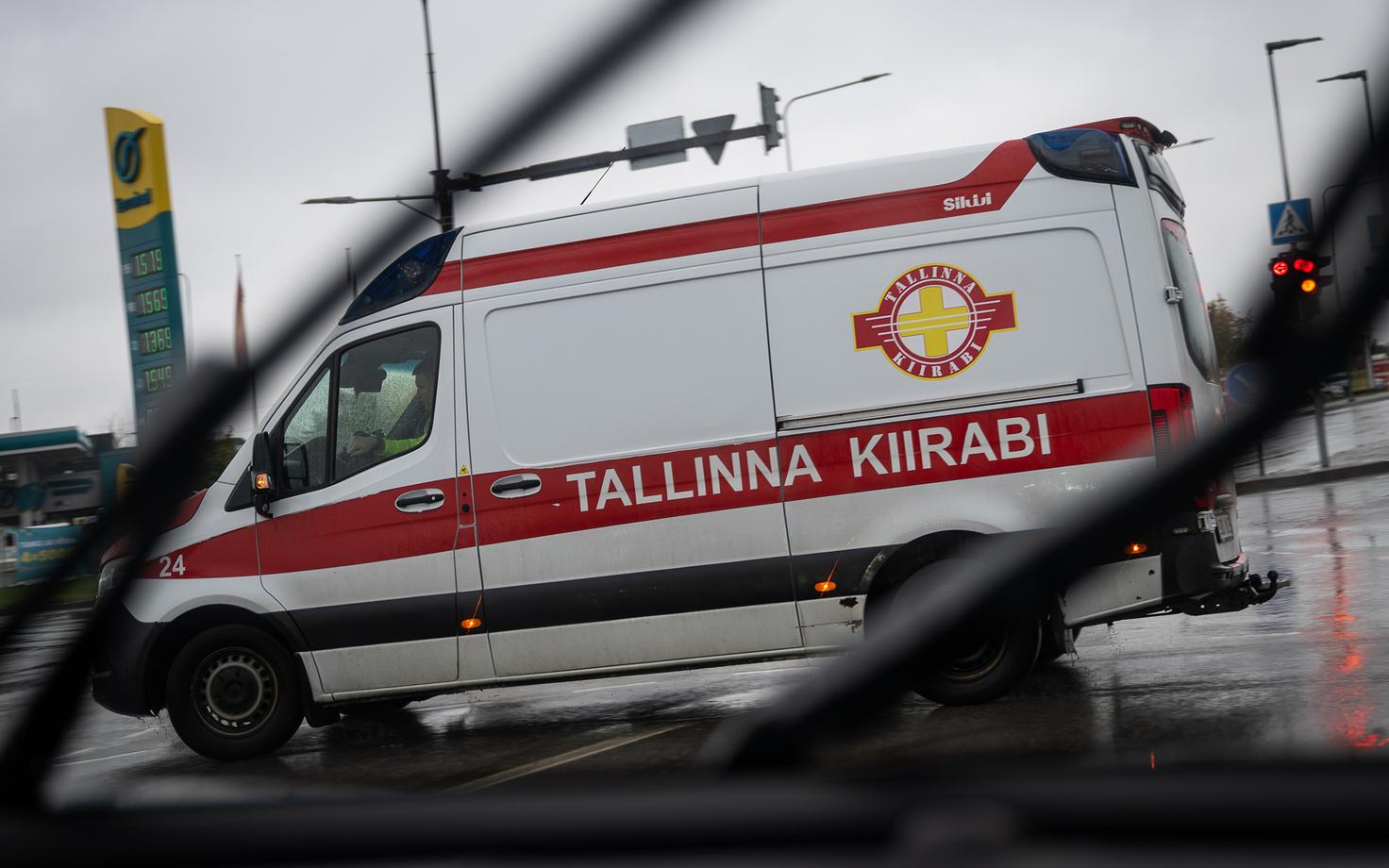
Tallinn Ambulance chief Raul Adlas says ambulance resources and hospital intake capacity have failed to keep pace with population growth in Tallinn and the surrounding region, contributing to delays in emergency care. The Health Board plans to add ambulance crews in the capital region in 2027 and 2028.
"The number of ambulance crews serving this area is relatively small. As a result, when call volumes increase, it becomes very difficult to respond quickly and some calls end up waiting in a queue," Adlas said.
He added the formation of queues is not directly linked to the number of ambulance calls but rather occurs when hospitals become overloaded.
"When that bottleneck begins to form, it spreads to ambulance services as well. If hospitals cannot immediately receive patients from ambulance crews, those crews end up waiting outside emergency departments. Calls then have to wait, ambulance teams from other counties are brought into Tallinn to help, queues begin forming there as well, and the snowball starts rolling. As a rule, this is caused by hospital intake capacity being too small," Adlas noted.
The highest number of calls in Tallinn typically occurs on Friday nights. On the busiest days, call volumes exceed 200 per 24-hour period. Workloads also increase during outbreaks of viral illnesses. Major public events in the city likewise generate additional emergency calls.

Roughly half of Estonia's population lives in Tallinn and Harju County. Outside Tallinn, however, there are no major hospitals in Harju County, making it necessary to transport patients to the capital. Adlas compared the situation to southern Estonia, where every county has a large hospital. The municipalities surrounding Tallinn have about as many residents as the counties of southern Estonia combined, yet places such as Viimsi Municipality do not have a major hospital.
As a solution, Adlas said the number of ambulance crews in northern Estonia should be increased. In addition, emergency departments need more staff and greater capacity to receive patients.
Taavet Reimers, deputy director general of the Health Board, said the agency's analysis confirms that there are indeed too few ambulance crews.
"By 2028, the plan is to increase the number of crews in northern Estonia by six," Reimers said. "In 2027, two additional ambulance crews will be added to the Tallinn area on top of the existing resources."
Reimers also agreed that emergency rooms should receive additional capacity. Current bed numbers were planned for a smaller population than now lives in Tallinn. Further analysis will determine how many additional places need to be created.

Ambulance network will be reorganized
On Wednesday, the Health Board also announced a reorganization of Estonia's ambulance network, dividing the country into four regions and allowing two-person ambulance crews to be deployed when necessary.
Nikita Panjuškin, head of the Healthcare Services Department at the Ministry of Social Affairs, said ambulance availability is currently uneven.
"There are regions where an ambulance arrives in an average of six minutes, but there are also places where the average wait exceeds 30 minutes," Panjuškin said.
Beginning in 2028, Estonia's current 10 ambulance service areas will be replaced by four regions: Northern, Eastern, Western and Southern Estonia.
According to Panjuškin, the plan is not to replace three-person ambulance crews on a large scale with two-person units. Instead, the smaller crews will complement existing three-person teams. "This will allow us to respond to more calls simultaneously and reduce the likelihood that all crews are occupied at the same time," he said.
Panjuškin said the number of physician-led ambulance crews will decrease, with some being replaced by nurse-led crews. The role of the remaining physician crews will also become more clearly defined.
"We believe a physician's primary role in emergency medical services should be to support nurse-led crews when they need consultation by phone or when a patient is in such an unstable condition that a physician is required. The vast majority of calls can be handled by specially trained nurses," he said.
Two new ambulance bases will be established in the Tallinn area, one in Hiiu or Pääsküla and another in Tabasalu or Muraste. They are intended to reduce the workload on Tallinn ambulance crews and make it easier to deploy crews across Tallinn and Harju County.
Additional ambulance bases will be established in Riisipere, Narva-Jõesuu, Sindi, Audru or Tõstamaa, and the Rõuge or Mõniste area. Where two alternative locations are listed, the final site will be selected by the winning service provider in the procurement process.
Until the end of 2027, ambulance services will continue under existing contracts. The changes will take effect on Jan. 1, 2028.
This article was updated Wednesday with details of the ambulance network reorganization plan.
--
Editor: Argo Ideon
Source: ERR radio news


