Estonia's defense minister: The Gulf of Finland has not become more dangerous
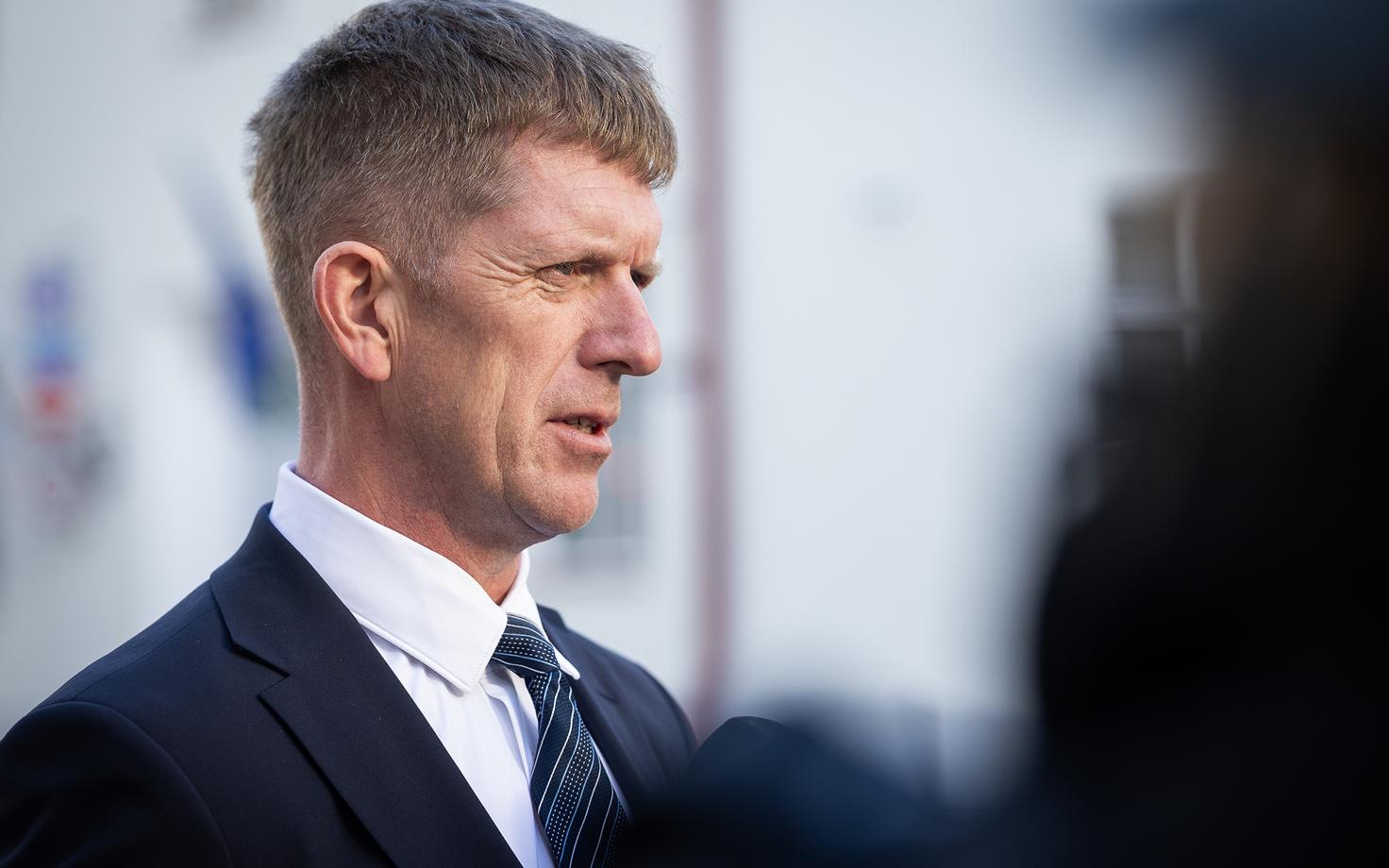
Defense Minister Martin Herem said recent drone attacks on Russian ships have not made the Gulf of Finland more dangerous, adding that cleaning up the aftermath of Ukrainian strikes can be seen as part of supporting Ukraine.
"In my assessment, it has not. These attacks have taken place mainly in the eastern part of the gulf and have clearly targeted vessels linked to the Russian Defense Ministry. I see no indication that the threat has increased in any way. Although the situation does not look good, I cannot say that the risk to passenger or commercial shipping in the Gulf of Finland and the Baltic Sea has increased at this point," Herem told ERR.
Ukraine first attacked a Russian warship on the night of November 10–11, striking a missile corvette belonging to Russia's Baltic Fleet. According to Col. Aron Kalmus, deputy commander of the Estonian Defense Forces' Division, the warship was hit several times and there were fatalities. An escort vessel eventually helped the corvette head toward St. Petersburg.
The second incident occurred Saturday when Ukraine launched a drone attack on the Sparta II, a Russian cargo ship used by the Russian Defense Ministry, in the Gulf of Finland. The ship was struck in Estonia's exclusive economic zone and subsequently drifted into Finnish territorial waters where the Finnish Border Guard launched a rescue operation. The crew was evacuated and efforts began to extinguish a fire aboard the vessel, with Estonian and Russian rescue ships also arriving at the scene. Russian rescue vessels eventually towed the ship from Finnish waters into Russian waters.
According to Martin Herem, Finland and Estonia acted in accordance with international maritime law.
"This is done even during wartime, when an enemy vessel has been hit and sailors are in the water. There is an obligation to help them; they are not left there. That is also required under the laws of war. We, however, are not a party to this conflict. International maritime law defines the areas where we are required to provide assistance, just as our sailors receive assistance in other areas. There is really no question about that," Herem said.
"Another matter is an oil spill or some other hazard resulting from Ukrainian attacks that affects our waters or coastline. But we have to deal with that, just as we would if it were a civilian accident," he added.
Ukraine defending itself
Herem said he had not spoken with Ukrainian officials about Saturday's incident in the Gulf of Finland. "I haven't spoken with them. But what should they have to tell us?"
"We provide Ukraine with more than €100 million annually in direct support for its war effort. Cleaning up some of the aftermath of its military operations costs a relatively small fraction of that and I don't think it's an issue," Herem said.
"It is not Ukraine that has put us in this situation, but Russia. These are Russian warships. Russia invaded Ukraine and these are its targets. Ukraine is defending its country and if we are prepared to support it with ammunition or anything else it needs to fight the war, we should certainly be prepared to provide support on a much smaller scale through other activities, especially those that are already our obligations under international law," Herem said.
"Frankly, I see no problem with supporting Ukraine in this way as well — if you can even call it support — by dealing with some of the consequences of its attacks," he added.
ERR asked Herem whether the attack would have been more successful from Ukraine's perspective if the ship had sunk.
"This ship has been transporting supplies for the Russian Defense Ministry. Whether those were weapons, vehicles, ammunition or something else, even uniform pants, I really don't know. Nor do I know what was on board this time. The fact is that they now have one fewer ship available for use. I can't say whether the cargo was destroyed. Would it have been better if the ship had sunk? That's where my concern for the environment comes in and I would say that a ship on the seabed is certainly worse than one in a Russian port being repaired or written off. I think it was a successful attack," Herem said.
Ukraine not coordinating its attacks with Estonia
Herem said Ukraine has neither coordinated its attacks in the Gulf of Finland with Estonia nor provided information about them and that the country should not be expected to do so.
"What would they coordinate with us? If they were to coordinate anything significant with us, first of all, that would effectively amount to cooperation. But we are not cooperating with them in attacking these targets. Second, they keep these attacks secret even from their own people. The more people who know a secret, the easier it becomes for the enemy to obtain that information. All these communication channels are vulnerable in one way or another. I don't think they should have to coordinate anything with us, but they must take into account that we have not made our airspace or waters available for their use," Herem said.
Herem added that Ukraine has not requested permission to use Estonian airspace or waters either.
--
Editor: Aleksander Krjukov, Marcus Turovski


