Estonia wants drone elective added to all high schools' programs
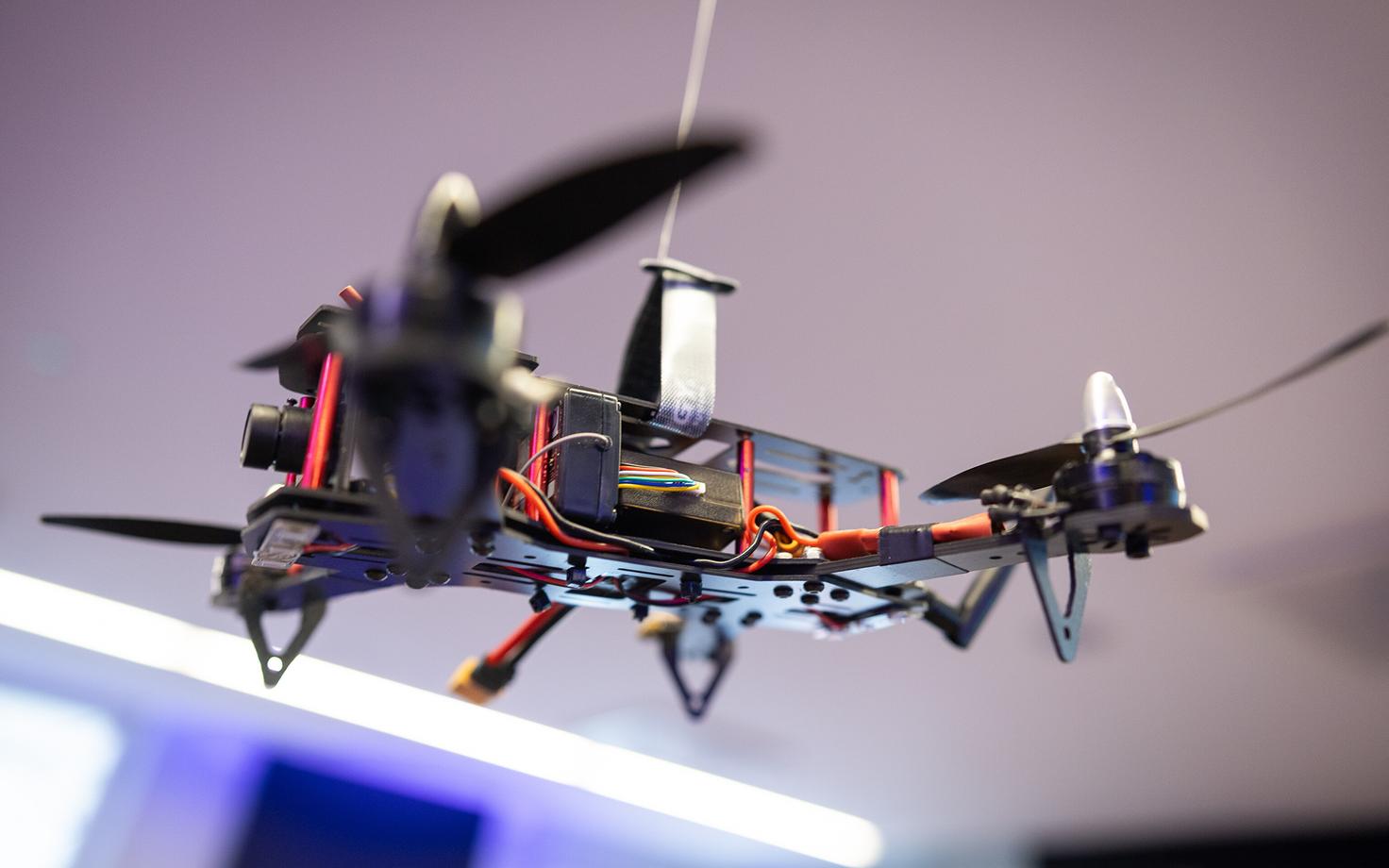
Drone technology has been introduced as an elective course in many upper secondary schools this year. The broader goal is to make drone education available in all high schools in the coming years.
This academic year, 53 upper secondary schools are offering an elective course on unmanned aircraft. One of them is Tallinn's Arte High School, which has nearly 1,100 students and also participated in last year's pilot program. Around 50 students completed the course at Arte in its first year. This year, the elective will begin in the second semester, but around 100 students have already expressed interest, said Karl Läll, the school's drone technology teacher.
"Interest in taking part has grown exponentially, making it difficult to keep up with demand, but that's a good problem to have. Drones have a wide range of applications, from filming wedding videos to the Environmental Board using them to map forests and illegal buildings. They're not just the domain of little green men," Läll said.
The course, developed in cooperation with the Ministry of Education and Research, the Estonian Aviation Academy and the Estonian Defense League (Kaitseliit), provides students with both theoretical and practical knowledge of unmanned aircraft over 35 academic hours, said Aare Jamnes, head of the national defense education bureau at the Defense Resources Agency.
"First comes the theory, followed by an exam administered by the Transport Administration and then a training day where students get hands-on experience," Jamnes added.
An online course has been developed for the theoretical component, which students complete at school, for example, under the guidance of a drone technology teacher. The practical training day, which includes flying in a simulator, operating a drone and conducting a reconnaissance flight, is led by Defense League instructors. Although more instructors are being trained, there are still not enough to offer drone education at every upper secondary school, Jamnes said.
"With 53 schools and one training day per school, that means 53 training days over two and a half months. Depending on the spring weather, that's two or three training days a week and you need about 10 instructors for every 20 students. That's quite a large number. Since school days are also workdays, getting instructors time off from their regular jobs is another challenge," Jamnes said.
However, some schools, such as Arte High School, have also purchased their own drones, allowing students to practice flying them while still studying the theoretical material.
"Schools can offer the elective course without having any drones of their own. We want to give our students a little more than the required minimum. This year, we also plan to introduce drone simulators so that, in addition to physically operating drones, students can gain some initial experience using simulators," Läll said.
Jamnes also emphasized that schools do not need to purchase drones to offer the course. The instructors bring all the necessary equipment with them for the practical training day.
"At the national level, we currently have enough drones to run the course. We've recommended that schools and local governments looking to invest in something should consider equipping computer labs with drone simulators. The more minutes or hours students can spend practicing on simulators, the more likely the actual drones are to remain intact when they take them outdoors," Jamnes said.
--
Editor: Marcus Turovski, Mari Peegel


