Experts look to math teaching changes to ease Estonia's engineer shortage
Despite growing interest in engineering, Estonia faces a shortage of more than 800 young engineers in the next decade as 40 percent retire. Changes to math teaching may help.
Interest in engineering has grown sharply, but according to OSKA, the Estonian Qualifications Authority's labor market forecasting system, the sector will still be short more than 800 young engineers over the next decade as 40 percent retire. There are no quick solutions, but efforts are being made to alleviate the shortage by changing how mathematics is taught.
Interest in studying at Tallinn University of Technology's (TalTech) School of Engineering has increased by 25 percent over the past three years. According to Fjodor Sergejev, dean of the School of Engineering, students are enrolling in a variety of programs, from energy and construction to mechanical and industrial engineering, but there will not be enough graduates to fill the gap.
"We need replacement workers because many engineers from previous generations are retiring and need to be replaced, but we also need to ensure the development of the sector, and for that we need even more engineers. Even the substantial demographic support we currently have is unfortunately unable to meet all our needs, because the replacement demand is indeed very high, in some fields even numbering in the thousands."
Cathy-Liis Põlluveer, president of the Estonian association of engineers (Eesti Inseneride Liit), also acknowledged the shortage: "We currently have a situation where it depends somewhat on the field, but when an engineer, particularly an experienced engineer, is being sought and a recruitment competition is held, there is practically no queue of applicants or diversity among candidates. Instead, engineers are being sought like needles in a haystack."
According to Anneli Leemet, an analyst at OSKA, demand will grow most for electrical and energy engineers, mechanical engineers and electronics engineers. Leemet said the issue is not only meeting the numerical demand but ensuring engineers have a diverse range of skills.
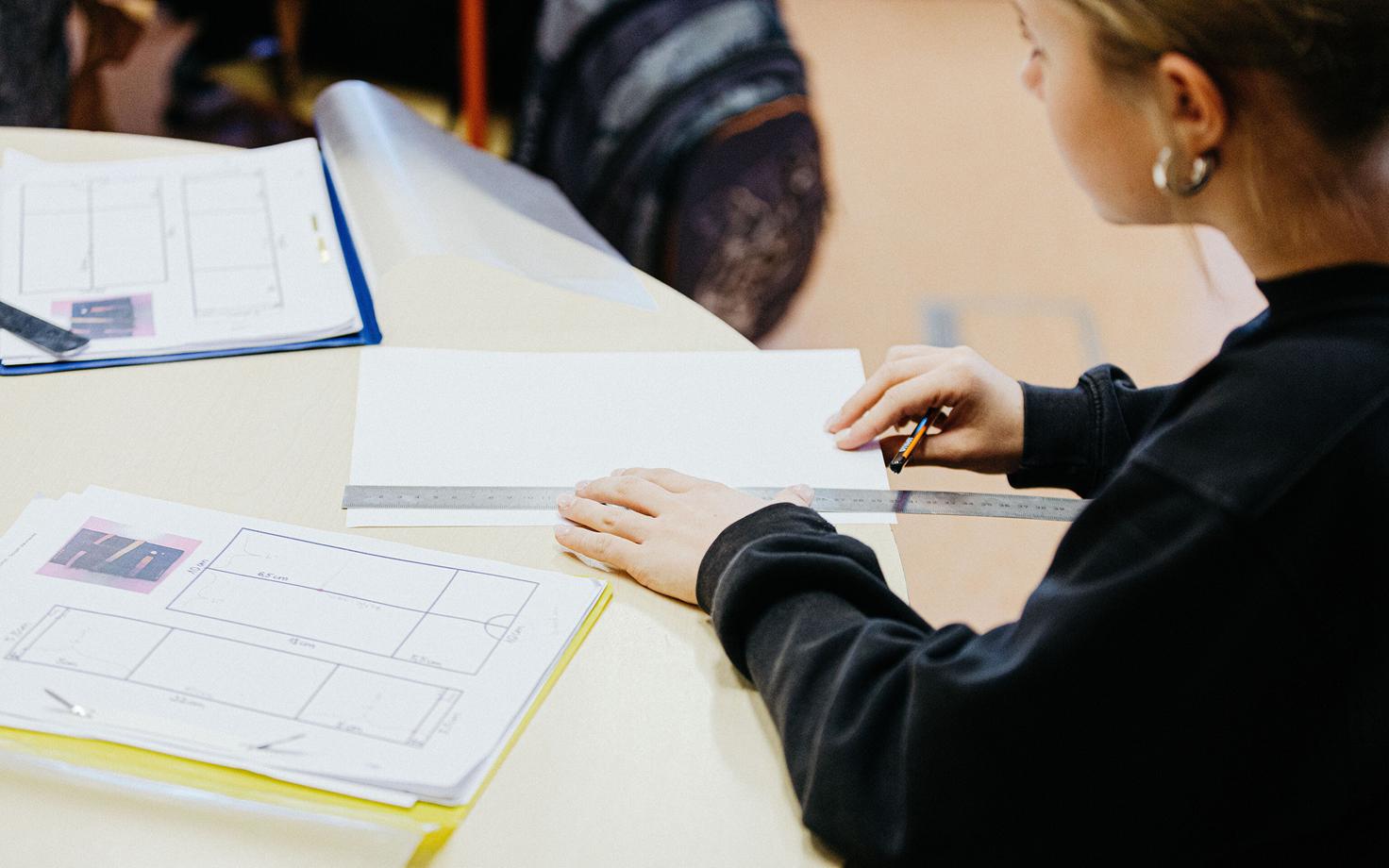
One possible solution experts see is strengthening mathematics education in basic schools (grades 1–9) — making mathematics teaching more relevant to everyday life, more integrated with other subjects, and delivered in a way that supports all children's motivation to learn. According to Tiina Kraav, a lecturer in mathematics education at the University of Tartu, there are no quick solutions, but mathematics teaching is being continuously developed.
"Making mathematics more interesting to learn, making mathematics learning more visible, making mathematical thinking more visible to students, making mathematics learning more creative, improving how problem-solving skills are taught in the classroom, getting students to talk about what they think and how they think when solving mathematics problems – all of this will certainly help in the longer term," Kraav said.
Põlluveer believes subjects that help connect natural sciences and mathematics could be beneficial.
Priit Laats, a teacher of technology education, arts and technology at Tartu Raatuse School, confirmed that schools are increasingly moving toward theme-based learning: "For example, in the first stage of basic school, there is integrated learning. It is theme-based, with Estonian, mathematics, nature studies and creative subjects all together all the time. In fact, other grades should already be structured in a similar way. But again, who is going to develop all of this? It is a huge amount of work. If I take how I, in turn, support mathematics, we introduce 3D modeling as early as fourth grade: the spatial world, shapes, symbols, symmetry, reflection, all the faces and planes – it is all mathematics all the time, and we do this right through ninth grade."
OSKA will publish a new cross-sector study of labor and skills needs in engineering in early November, which will show that competition for hybrid competencies is increasing in the labor market. This means engineers must have in-depth specialist knowledge combined with digital, data analysis, artificial intelligence, business or management skills.
--
Follow ERR News on Facebook and Twitter and never miss an update!
Editor: Andrew Whyte, Mait Ots


