Watchdog promises green claims directive won't lead to mass destruction of goods
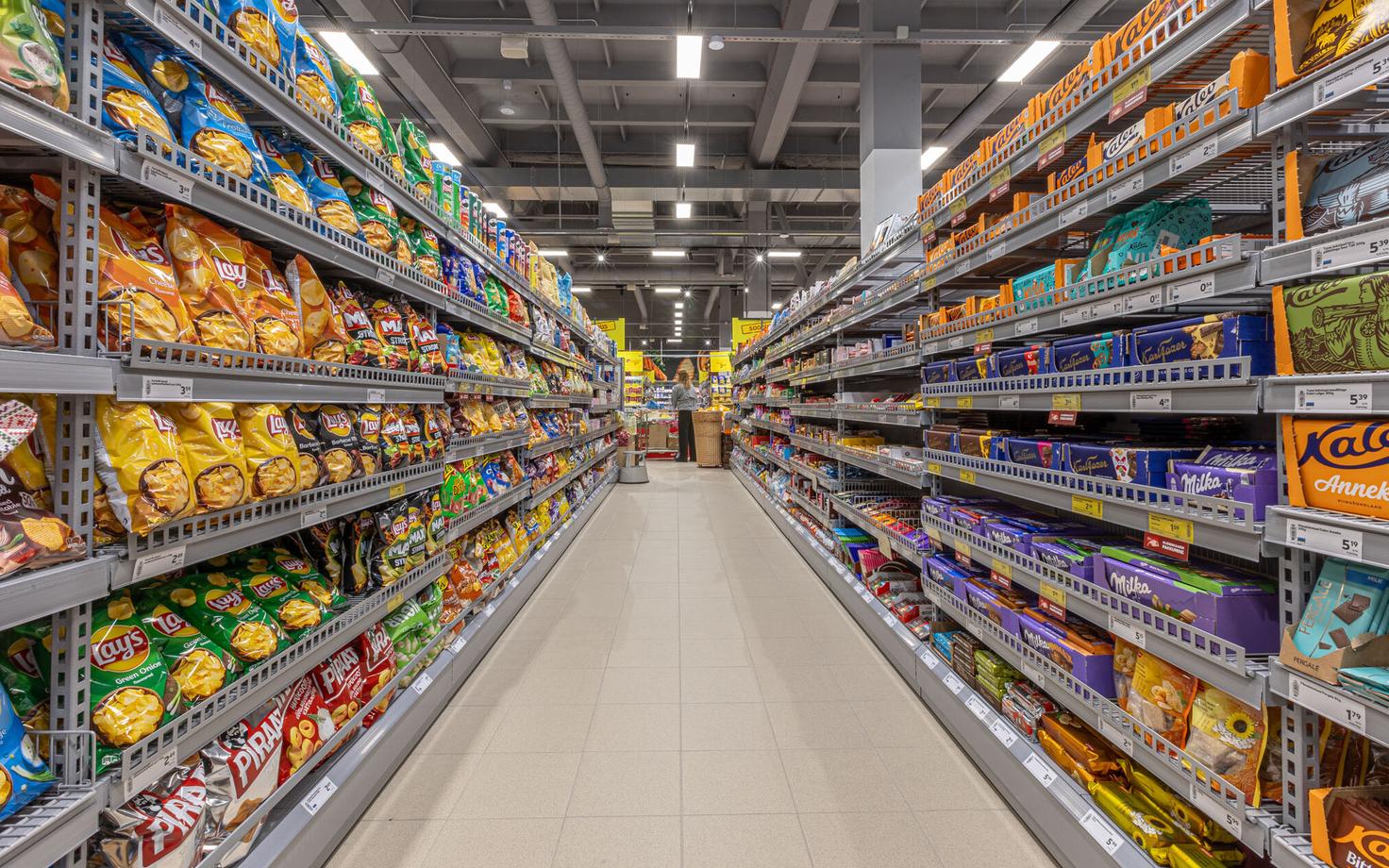
Retailers need not fear having to send products that fail to meet green claims directive requirements to landfills, TTJA said, adding that selling off each item will be assessed case by case.
Store shelves will look entirely different starting this fall: terms like "green," "eco-friendly" and "sustainable" must be backed by independent third-party certification. Unsubstantiated environmental claims will be banned.
Nele Peil, head of the Estonian Traders Association, warned that ongoing uncertainty over the rules and rigid enforcement could harm the retail sector and, in the worst case, lead to products being destroyed. The main question, she said, is what to do with goods already placed on the market.
Peil noted that the situation is a familiar one: a directive has been adopted, but confusion over its implementation persists.
Merike Koppel, head of the business department at the Consumer Protection and Technical Regulatory Authority (TTJA), acknowledged that similar concerns exist across all member states. The agency's main message to businesses, she said, is to approach the matter with common sense, while assessing each product and situation individually.
"Our goal is not to start asking for products to be destroyed or removed from shelves. That is the general approach, but of course we will look at every case separately," Koppel explained.
She stressed that solutions will depend on the specific good or service in question and that there is no single black-and-white answer that would fit all cases.
In the past, there were discussions about making exceptions for small producers, Peil said, but the association opposed the idea. "Being small does not mean you can mislead consumers. The requirements must apply equally to everyone," she stressed.
Nor is adding new labels to products that no longer meet environmental standards a viable solution.
"That is currently under discussion, but I cannot imagine how a retailer could attach a label to tens of thousands of products stating that a claim is inaccurate. A retailer cannot unilaterally place such a label on a manufacturer's product. The wording would have to be coordinated separately with each producer. The workload involved and the inevitable price increases that would come with it simply would not be worth it," Peil said.
What, then, about green advertising slogans and images?
Beyond specific eco-labels, the issue is highly complex from a marketing perspective.
Koppel admitted it will be a very difficult challenge as many products feature appealing nature imagery or promotional slogans that are hard to interpret.
Peil offered the example of toilet paper packaging featuring a squirrel in a forest or an agricultural product simply labeled as "loving nature." Koppel agreed that such examples underscore the need to assess cases individually.
The authority will not conduct blanket inspections based solely on images or keywords but will evaluate substantively whether a particular design misleads consumers.
Koppel added that while emotional statements may fall into a legal gray area, overly broad claims such as "our product is green" or "we are green inside and out" will certainly be prohibited in the future, as they cannot be factually substantiated.
"From a marketing standpoint, we need to rethink what we can actually claim about our product or service," she said.
For the TTJA, the directive will significantly increase the workload, but no additional staff will be hired. The agency will instead focus more on advisory work and scale back activities in other areas.
Peil does not hide the fact that the new requirements will mean higher prices for consumers. "Any additional transparency requirements or higher-than-usual standards tend to raise product price. Retailers purchase these goods and at some point price increase notices will likely come from manufacturers," she said.
Still, both the Estonian Traders Association and the TTJA agree that in the long term, the market must become clearer.
--
Editor: Aleksander Krjukov, Marcus Turovski