New report reveals shortcomings in Estonian MoD's handling of Datasel transactions
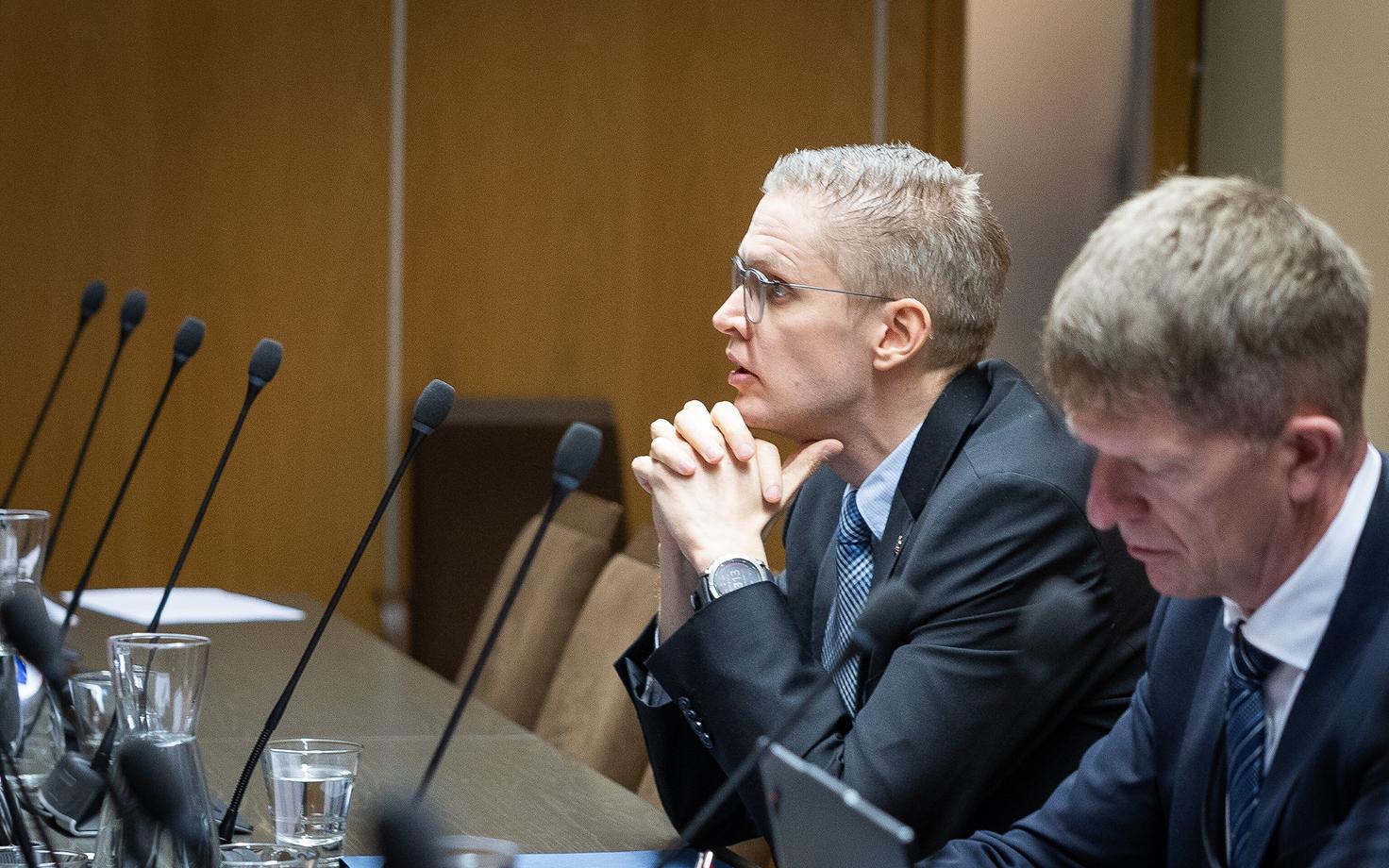
A Ministry of Defense review of contracts with ammunition supplier Datasel found shortcomings in background checks, risk assessments and documentation, but no evidence of deliberate concealment or deletion of records.
Ministry of Defense Permanent Secretary Kristjan Mäe told a meeting of the Riigikogu Anti-Corruption Select Committee that 10 people from the Ministry of Defense and the Estonian Center for Defense Investments (RKIK) had contributed to the report, reviewing a total of 428 gigabytes of documents from the ministry's and RKIK's document management systems, classified information registers, email inboxes and various official information platforms.
According to Mäe, the report focused on gathering communications related to Datasel. "The main objective of compiling the report was to collect memorandums, minutes of decision-making meetings, contracts, emails and reports concerning the companies that have come under scrutiny in connection with aid to Ukraine, in order to assess whether the documents and decisions made complied with the procedures in force," Mäe said.
"The analysis did not focus on identifying potential legal violations or determining the responsibility of individuals. Those matters are for investigative authorities to address. I want to emphasize that the contracts financed through the European Peace Facility were concluded at a time when the Ukrainian armed forces had an urgent need for artillery and other ammunition and European Union member states were expected to respond as quickly as possible," Mäe said.
The permanent secretary said there were few potential contractors on the market capable of supplying Ukraine with suitable ammunition within a short time frame and Estonia had no previous experience working with them, which also meant greater risks. However, he said the risks were not significant enough to justify refraining from signing the contracts.
Mäe said that, according to the European Peace Facility's final report, RKIK successfully delivered a total of 93,268 rounds of ammunition to the Ukrainian armed forces using European Peace Facility funds alone, with a total value of nearly €145 million.
Mäe acknowledged that the Datasel case had exposed shortcomings that needed to be addressed.
"The defense minister's responsibility is to ensure that the processes for providing aid in the future support speed, reliability and effectiveness. Agencies under the Ministry of Defense had no previous practical experience concluding transactions under such market conditions and within such tight time frames or carrying out the decision-making processes preceding those transactions. The decision-making process for urgent transactions was largely developed as the work progressed," Mäe said.
According to Mäe, the review team sought to establish the roles played by various individuals in the contracts that were signed, but it was not possible to fully reconstruct all communications between those involved.
"However, we will cooperate fully with investigative authorities in this regard if necessary. I cannot publicly discuss all the contracts today without violating the law or disclosing trade secrets. That is precisely why I cannot present the report in its entirety to the public, but I can confirm that committee members will be able to review both the full report and the attached contracts if they wish," Mäe said.
Shortcomings in documentation
Mäe provided an overview of the main shortcomings identified by the working group.
"The justifications for selecting contractors and the background checks conducted should have been more thorough and were not systematically documented. The relevant documents were not always retrievable or linked to specific contracts and decisions. RKIK lacks the legal basis and the necessary access to databases to conduct independent background checks. Risk mitigation in exceptional procurement procedures requires a stronger framework and higher-risk transactions must be subject to more stringent controls. Minutes of decision-making meetings do not always reflect the substance of discussions or the reasoning behind decisions," Mäe said.
"In more sensitive matters, it is not always possible to establish what was discussed or who participated in the decision-making process. The quality of memorandums submitted for decision-making meetings has been inconsistent. The memorandums do not always contain sufficient background information, the facts needed to make decisions or descriptions of risks. Decisions on matters not included on meeting agendas have been made without sufficient written justification. Reports on inspection-related business trips have not been consistently registered. Consistent compliance with information management and information security requirements has not been ensured. Important work-related information, instructions and decisions communicated through various channels have not been consistently documented. Senior executives have not consistently forwarded important emails for registration," Mäe continued.
"In summary, we can say that the documentation and information related to the Datasel contracts were not fully registered, retrievable or verifiable. This also complicated the working group's efforts and the review of the transactions," he added.
However, Mäe emphasized that the shortcomings were not so extensive as to make it impossible to verify the legality of the transactions.
"The existing documentation and information could be verified and documents that had not previously been registered were registered or systematically archived during the working group's review. The working group found no evidence of deliberate concealment or deletion of documents or correspondence," Mäe said.
"The establishment of contact with contractors, their selection and background checks were not systematically documented in the Datasel case. The first identified communication with Datasel's intermediary dates back to December 1, 2023," Mäe said.
RKIK Deputy Director General Asko Kivinuk said this was when intermediary Erik Malmsten sent the first calendar invitation for a meeting to RKIK's director general.
Mäe said the working group believed that more thorough, contractor-specific risk assessments would have been warranted for high-risk transactions.
"The decision-making process and the conclusion of contracts generally complied with the requirements in force. The decision-making process preceding the contracts, the negotiations and the contract terms were consistent with RKIK's authority, its procurement procedures, the procurement procedures governing the Ministry of Defense's area of responsibility and applicable legislation," Mäe said.
"In the case of the five contracts concluded with Datasel, this was not a single failed delivery but rather a series of supplier-specific risks arising from multiple contracts that gradually materialized over the course of 2025. These involved the company's actual delivery capacity, the availability of components and its ability to meet delivery deadlines. Advance payments were made separately under each contract, in accordance with the deadlines stipulated in the respective agreements. Because the payments were made within a short period, RKIK was unable to identify the contractor's delivery delays or the nonconformity of the goods by the time subsequent payment obligations fell due," Mäe said.
--
Editor: Aleksander Krjukov, Marcus Turovski


