Solar parks driving electricity price down but could result in higher transmission charges
Sunny summers are bringing zero and negative prices to the electricity market with increasing frequency, raising questions for renewable energy developers about how they can recoup their investments.
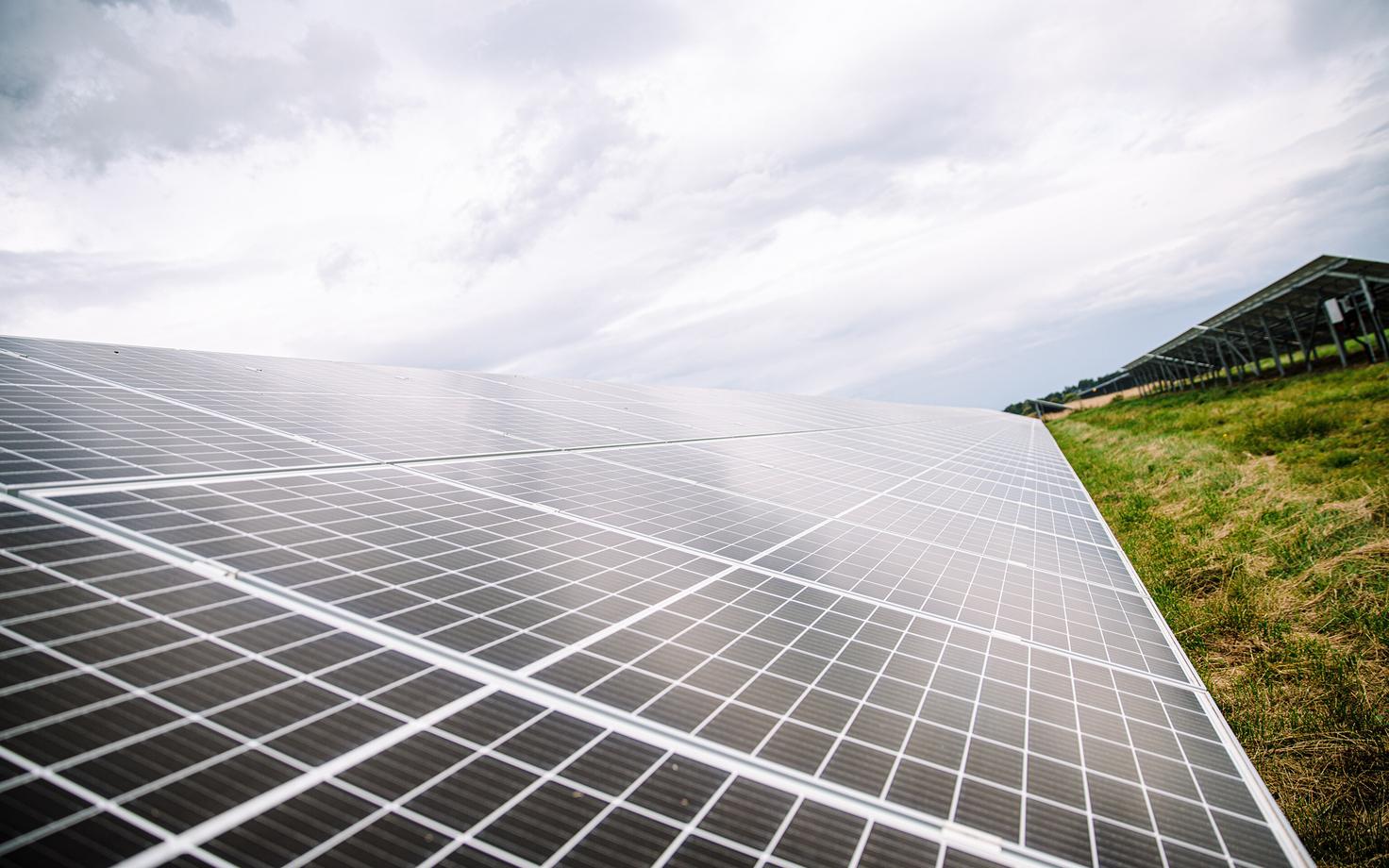
Southern Estonia's largest solar park has begun operating at the former Raadi military airfield. With a capacity of 74 megawatts, the park could theoretically meet half the electricity needs of Tartu's households. However, summer sunshine and falling electricity prices pose a significant profitability risk for the producer.
"With projects like these, you certainly have to think very carefully about when to generate electricity, when to sell it and when to store it. There will certainly be quite a few instances when production has to be curtailed," said Kristo Seli, CEO of Estiko Group.
According to researchers, Estonia's electricity grid faces a paradox: While summer production drives down wholesale electricity prices, connecting additional power plants to the grid brings new costs for consumers.
"When we add power plants or solar parks and they generate more energy, that should bring electricity prices down. At the same time, additional equipment is being added to the grid, making it more complex, and that could lead to higher network fees," said Ivo Palu, a professor at Tallinn University of Technology's (TalTech) Department of Electrical Power Engineering and Mechatronics.
The main problem is the mismatch between when electricity is generated and when it is consumed.
"We can't take the sunshine from Midsummer Day and bring it with us to Christmas. That would require different kinds of solutions," said Toomas Plank, director of the University of Tartu's Institute of Physics.
Although energy storage is increasingly needed to balance the grid, the government does not plan to impose mandatory requirements on developers, instead leaving it to market prices to drive investment.
"It also makes much more economic sense to build hybrid parks. When the sun is shining, you can generate cheap electricity from solar panels, store it and then sell it on the market when prices peak. Both the developer and, in the long run, the consumer benefit, with consumers getting lower electricity prices," said Minister of Energy and the Environment Erkki Keldo.
Estiko plans to build a large-scale battery storage facility at Raadi by the middle of next summer. The Raadi project thus demonstrates that the future of solar energy lies in hybrid solutions that help keep electricity prices reasonable even when the sun is not shining.
--
Editor: Marcus Turovski, Marko Tooming


