Union wants state-run school teachers' salary advantage retained
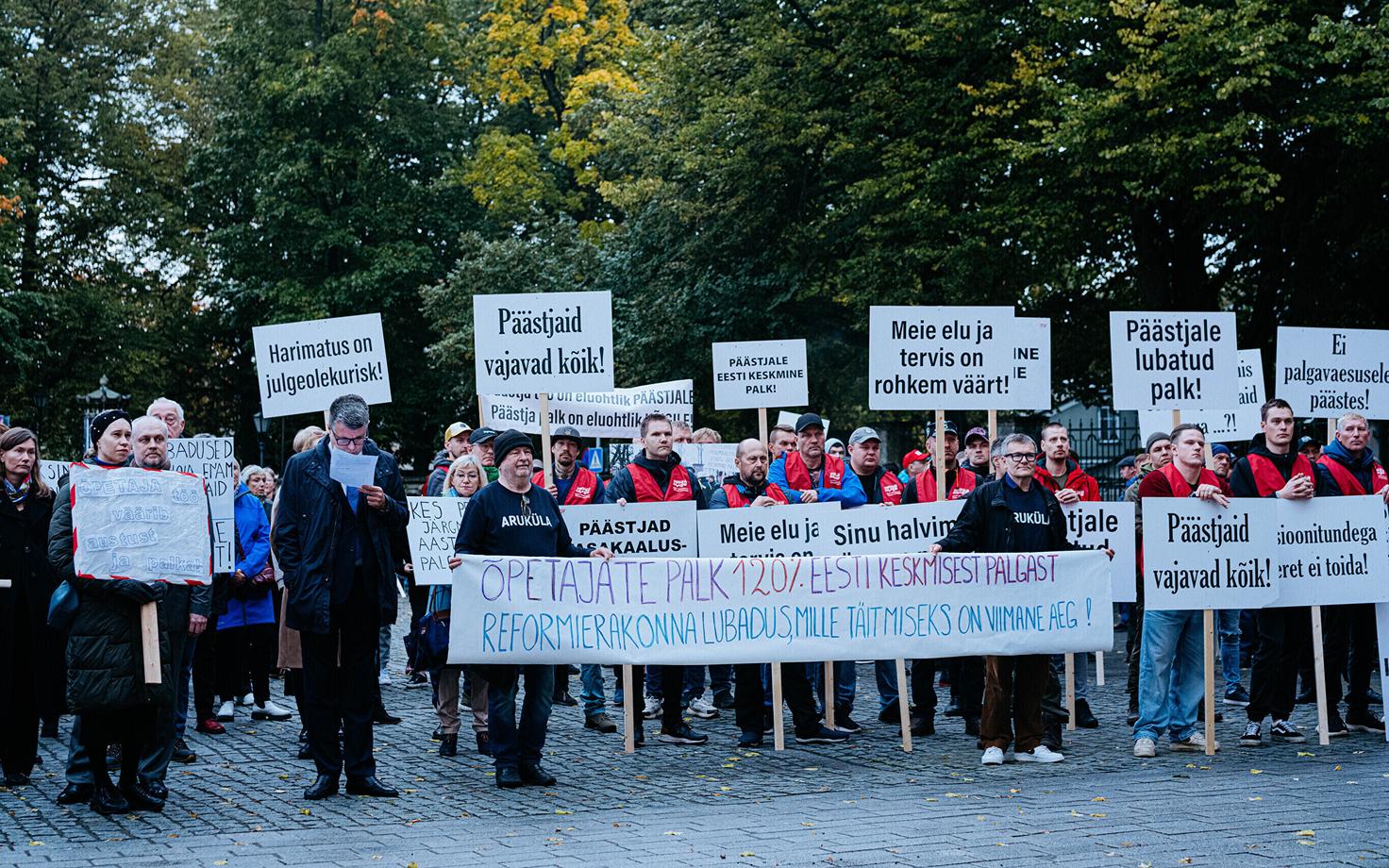
The Estonian Educational Personnel Union (EHL) and the Ministry of Education and Research will begin negotiations next week on a collective agreement for the country's state-run general education schools.
According to EHL Chair Reemo Voltri, the desire to reopen the agreement was prompted by the need to preserve the previously secured salary premium in light of the general pay increase.
"The current collective agreement for teachers at state-run general education schools sets out salary figures based on this year's minimum salary. The national minimum salary for teachers is €1,970, while the collective agreement for state schools sets the minimum €100 higher, at €2,070. Since the general minimum salary will rise by at least 3 percent from the new year, state school teachers believe that the minimum salary agreed in their collective agreement should also increase by at least the same amount, or more," Voltri explained.
Voltri said the timing of the notification was dictated by law. "Under the Collective Agreements Act, a fixed-term agreement must be terminated with at least three months' notice if you do not want it to continue; otherwise, it becomes indefinite. That's what we did and next week we will begin new negotiations with the aim of reaching an agreement on a collective agreement for next year," he said.
The union's ideal outcome would be a more stable solution. "Our goal was and remains to secure a multi-year agreement that sets out very clearly the steps we will take going forward. Ideally, we would discuss the salary concerns and proposals of all teachers so that we would not have to hold salary negotiations every year, but could reach an agreement covering several years and focus on other matters," Voltri said.
However, Raino Liblik, head of the Ministry of Education and Research's state schools department, stressed that the push for new terms comes primarily from the union and is not necessarily a joint initiative by all teachers at state schools.
"Perhaps it should be clarified that it is not teachers who want the agreement reviewed, but the Estonian Educational Personnel Union. I would argue that a great many teachers are not union members. This is more the union's wish, as it is seeking new terms," Liblik said.
According to Liblik, the substance of any potential changes to the agreement is a matter for negotiations and it is still too early to say how those talks will proceed.
"I believe the main question is how the increase in the minimum salary for teachers could be reflected in a possible future collective agreement," Liblik said.
Asked whether the state was prepared to raise state school teachers' salaries by the same amount as the general increase in the minimum salary, Liblik was cautious.
"I wouldn't speculate at this point because we need to look at what options we have and under what conditions. That's what the negotiations are for — they have been sent an invitation and we'll see how it goes. I think the operator of the state schools has made considerable efforts to ensure that teachers have good working conditions in schools. In that respect, we do not need to make any major adjustments," Liblik said.
Liblik also dismissed concerns that state school teachers could end up worse off than employees of schools run by other operators. "That's not going to happen. If we look at the current increase in the minimum salary, it is still very small," the ministry representative said.
Representatives of EHL and the ministry will meet next week at the Ministry of Education and Research's Tallinn office at Tõnismäe 11.
--
Editor: Marcus Turovski