Outgoing president: My chances to serve Estonia will be even better as ex-head of state
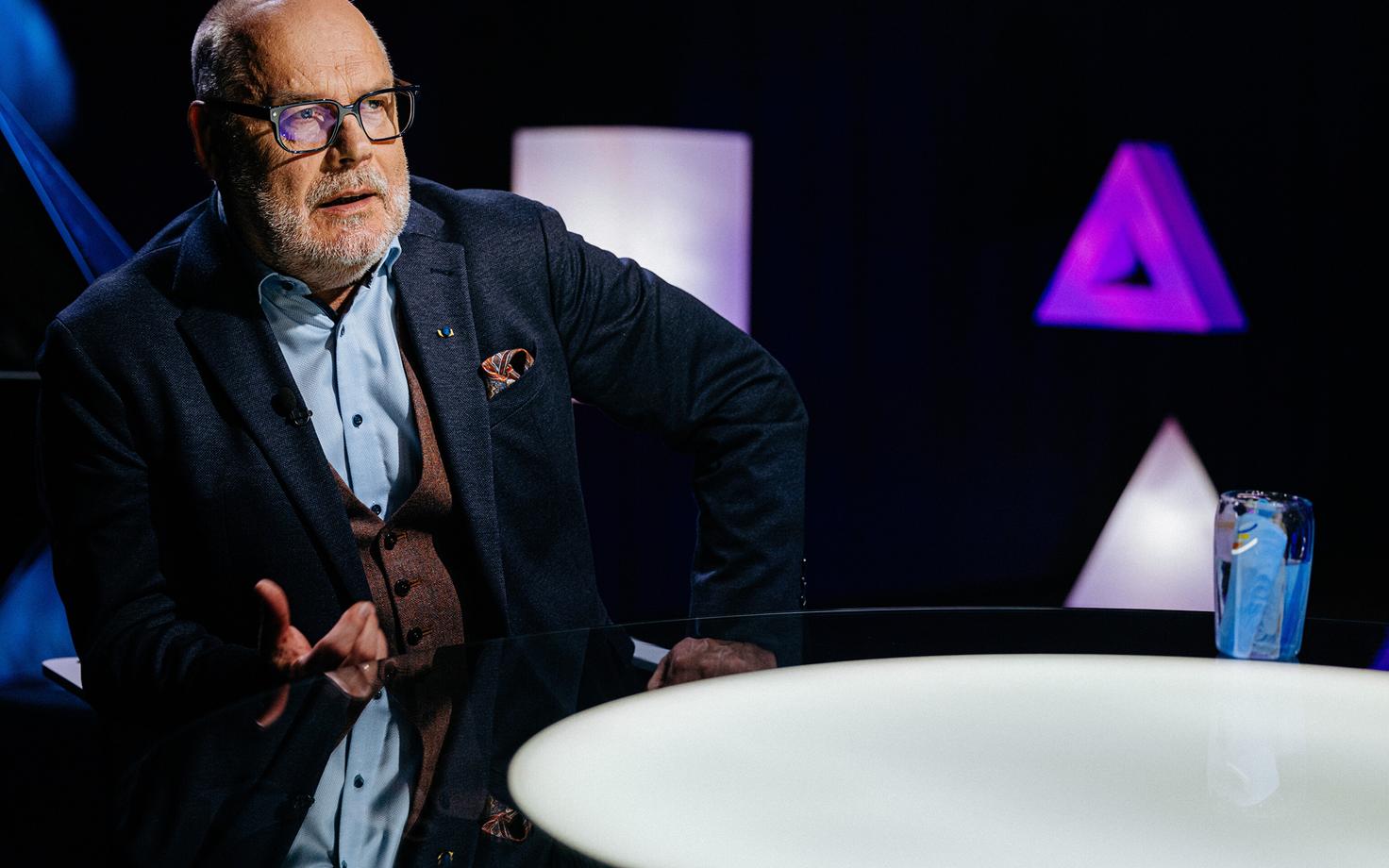
President Alar Karis tells ERR in an interview that while he plans to take some time to reflect after leaving office, his calendar is already beginning to fill up and he intends to continue working on issues related to AI and technology.
One more week and you'll be at your country home by the Piusa River where Sirje Karis is already waiting for you and you'll start working your way through all the books you left unfinished or didn't get around to reading at all over the past five years. What can the president still accomplish in these final seven days?
The final days are a time to thank the people you've worked and traveled alongside. I've also recently completed my farewell visits to neighboring countries, the last of which was to see the king of Sweden. That's part of leaving office. A portrait has also been completed and I'll be shown it during my final week. It will be hung in Kadriorg.
So this is a big week of giving thanks for you?
In many ways, yes. You should thank people all the time, not just during your final week, but it's part of being an outgoing president — looking back a little and remembering the people you worked with.
From the outside, it seems that you grew increasingly comfortable in the presidency and that you grew into the role organically. Your most recent Independence Day speech this year was certainly one of your most memorable and could even be read as something of a testament. Are you a little sorry to leave, especially considering it was your own idea that a president could serve a single seven-year term? Perhaps the best years would only be starting now.
It's hard to say whether they would have been the best years because routine sets in whether the term is five years or seven. A lot of things repeat themselves. But yes, you look back a little and also think about what you could have done differently. The time isn't really ripe for that yet, though.
I've often held positions that I've left voluntarily rather than because I was forced to, so this isn't particularly painful. It's simply one chapter coming to an end and time will tell what the next one brings.
The arrival and departure of presidents always attracts a lot of interest. When did you actually know that you wouldn't seek another term? You said when you took office that it would be a one-time thing. Did you never reconsider, with your Victory Day speech simply making the decision official?
I left the door open a little. I said that a small miracle would have to happen for me to agree to run again. In the spring, political parties also started coming to see me and suggesting that I continue. So I gave it one more thought.
You have to announce that you're not running at the right time: You can't say it too early, but you can't say it too late either because the new president needs enough time to prepare for the job. Announcing it too early can also cause problems. I think Tony Blair said about a year in advance that he would no longer be party leader and after that nobody talked to him anymore. Everyone started looking around him to see where the new jobs would be.
So the miracle didn't happen?
I wouldn't want to make too much of that miracle; it was more of a metaphor. But I really did reconsider one more time before announcing my final decision in an understated way at the parade.
There's an old saying: lose an illusion, gain an experience. What illusions have been shattered for you over these five years and what have you personally learned from the experience?
I'll pick up on the word "experience." The biggest thing — I wouldn't call it a disappointment — was discovering that experience isn't really needed much in this job. You can share it with people who aren't directly involved in politics or who don't affect your day-to-day life as president. But generally, everyone has their own ideas and perhaps someday it will be possible to talk about how much that experience was put to use and how much it wasn't.
Why, then, is nobody interested in what a person has been through in life and the experience they have accumulated? Is everyone playing their own tune?
Everyone is in their own bubble with their own ideas and everyone wants to put those ideas forward. In my view, the biggest problem today is that no one has time to think and, unfortunately, no time to listen either. Put those two things together and no one knows what to do with experience.
Who's taking that time away from us? Weren't you able to set aside Mondays or Tuesdays when the president could read in his office without being disturbed?
I was, but then someone walks through the door and says, "I see you've got a gap in your calendar today." Everyone makes the case that their issue is important and in fact it is important — the president doesn't really deal with trivial matters. But there are so many of them and I have to say that I wasn't always able to create those gaps for myself.
I stole a few days here and there, for example in the summer when everything is quiet. But as for the president having a week or two of vacation, the Estonian president doesn't get that, although our neighbors do.
It seems to me that this came as a surprise to you: It's a job where you get into the carriage and it just keeps hurtling along with no other option. A university rector, at least, has somewhere he can reflect on things, gaze at the stars and listen to his heart.
A rector is still the master of his own time. He makes his own decisions, takes responsibility for them and knows what he's going to say and where. A president doesn't have that freedom. He serves the country in the most literal sense and has to do what the president of Estonia does. That's inherent in the office. Whether getting into a carriage is the right metaphor is another question, but you certainly have to keep moving all the time.
Despite having no time and everyone waiting at your door, Toomas Mattson undertook the task of compiling your writings from quite a long period into a major volume for the "History of Estonian Thought" series. It's a very substantial book, perhaps the largest ever published in the series.
Among Estonia's presidents, only Lennart Meri has previously been represented in the series, with several volumes of his speeches and his political testament. Now you're in it as well. When you looked through the series during your spare moments at Kadriorg, did you ever wonder why it doesn't include the statesmen and politicians who have been given a mandate by the people to exercise public authority?
I did. I have a bookshelf in the Blue Room. It doesn't contain every volume, but there's a very long row of them. I look them over from time to time and there are historical figures from the Estonian state represented there. I wasn't particularly keen on doing this myself because it's a very serious series and the thickness of a book alone isn't enough to warrant inclusion. Since people thought I should be included, I agreed, but I said I wouldn't interfere: Go ahead and do it and make the selections yourselves. Even in 1,000 pages, it doesn't contain everything I've ever written or said. It's a selection.
More volumes can always be added. Historically speaking, the series does indeed include a lot of people, but I'm thinking about the present day — the people who are active now and determining the country's future. We don't see them publishing books or thinking about these issues on a somewhat higher intellectual level.
Siim Kallas just had a book published in the same series, so perhaps we'll start seeing more now. Maybe I wasn't self-critical enough — although I'm relatively self-critical — to say that I don't belong in this series yet. Let someone compile a volume after I've passed into eternity. But this is how it turned out. The book has been done a little differently. We live in the age of artificial intelligence, so AI-generated summaries have also been included. It's simply a sign of the times. Since Toomas Mattson wanted to do it this way, I gave him free rein.
Your colleague Alexander Stubb in Finland published a very substantial book-length essay at the beginning of the year. Its title could perhaps be translated into Estonian as "The Triangle of Power" or "The New World Balance." What I have in mind is that an active politician is also participating in intellectual debate and contributing new ideas. What would we need to reach that level here as well?
That brings us back to the fact that before Stubb became president, he had time. He made the time to write and put his thoughts down on paper, producing material that could be published as books. He gave me an autographed copy of his book, with a rather large inscription and I leafed through it. It contains many interesting ideas that, as an active politician and president, he might not express quite so openly and boldly. In that sense, it's an interesting book to read.
Was this cleared with Hando Runnel — publishing AI-generated material in the "History of Estonian Thought" series? There's actually quite a substantial amount of AI-generated text in it. What did the poet say?
The poet didn't say anything to me, but I assume he gave his approval. You can always debate whether an AI-generated summary needed to be included after every article; perhaps one at the end would have been enough. But as I said, I gave the editor free rein, so I assume he obtained the necessary approvals.
Have you ever derived any profound literary or intellectual pleasure from an AI-generated text — thinking, "Now that was a good piece of writing"?
In a negative sense, yes. You look at it and see just how ridiculous a text can be. I used AI myself a couple of years ago for a speech marking the Ministry of Foreign Affairs' anniversary: I had AI write the first part and watched to see how the audience reacted. During speeches, people usually just sit and listen, but then I told them that part had been written by AI and that now my own text would begin. Everyone is experimenting with it, including with music. This is a period of experimentation when everyone is trying to figure out what the downsides are and how it can be put to positive use.
What's your overall sense of it? Have your five years in office also been characterized, in some sense, by the explosive emergence of AI? It's everywhere now. You've always been optimistic about progress — new opportunities in science and technology, grabbing the bull by the horns and forging ahead. Are you still an optimist?
I am. We know from history that the Luddites, the machine breakers, didn't get very far. I've had a similar experience in my own fields of developmental biology and molecular genetics. In the 1970s and 1980s, the fear was so great that scientists even gathered in California and asked: What are we doing? We're capable of playing God — where will all this lead? Scientists and politicians then came together, regulations and laws were introduced and ethical issues were examined because technology makes far more possible than what is actually put into practice. Technologies generally have limits; they don't develop endlessly.
What's frightening today is that everyone has this new technology in their pocket. It's precisely the speed of it that creates a certain amount of anxiety.
In your 2025 Independence Day speech, you called for a major leap forward in education: bringing AI into schools and having all students and teachers experiment with it. That has nevertheless drawn considerable criticism. It hasn't all gone smoothly and there are many questions surrounding it. Does AI actually help anyone learn or become more knowledgeable or does it end up doing the work itself and put an end to learning?
I believe there are many different sides to it when it comes to teaching children and training teachers as well. But what can we do? We can ignore it, we can switch it off or we can try to find as many positive uses for the technology as possible because it isn't going anywhere. There may be a stock market crash in the business world, but the technology itself will remain. We have to determine what it can do and — most importantly — where it doesn't need to be used. AI doesn't have to be used in schools either.
Is there anywhere it shouldn't be used? Is there anything you would consider off-limits? There's been discussion here that AI thinks better, solves math problems better and will build our houses for us — and in the end, it'll be a better lawyer too.
In some ways, perhaps the fine arts. But we know from history that electronic music has been made before as well. We're seeing the strongest backlash from people in creative fields because they see soulless music, soulless poetry and soulless works of art being produced. Today, even speeches are being written using AI.
But a presidential speech is still the real thing?
It's still the real thing. AI hasn't been used in them. Even if you do use it, you still have to go over the result using your own brain. It's very difficult to say because everything is developing so quickly. A year earlier, I had already said in a presidential speech: Look at what's in your pocket and learn how to use it. There wasn't much reaction at the time, so I had to get more hands-on myself and get something started.
You were recently in New York and gave a speech at the U.N. I understand that you also briefly crossed paths there with Jaan Tallinn who has prominently warned us about the risks and dangers, including fears that the world could soon come to an end. Did you ask Mr. Tallinn what he's afraid of?
Everyone has fears, Jaan Tallinn especially, because he has been involved in this himself and knows how it works. But as with genetic engineering, those fears may not come to pass. I spoke about AI at several events and this particular one brought together some of the more pessimistic voices. I tried to bring some positive light into the room. That's how it is: There are views on both sides and eventually we'll find a middle ground where AI is used sensibly. And as I said, it doesn't always have to be used.
I could talk at length about my past laboratory work where expensive machines were purchased and people tried to run scientific hypotheses through a particular machine. A great deal depends on the teacher, just as it did before AI and just as it does in the age of AI. That's why we started with teachers: to give them an understanding of what AI is today.
We all value our teachers and the work they do is extremely important. As president, your primary tool is your voice; the president's office doesn't have a large budget. But teachers have faced serious financial difficulties and they've made those concerns very clear over the past five years.
Looking at it from the outside, it's difficult to understand how, on the one hand, there isn't a cent to spare, while on the other, tens of millions go somewhere and nobody quite understands where the money went. How do those proportions look from Kadriorg? There's never enough money for teachers, cultural workers and others, while somewhere else the amount of money being spent just keeps growing.
With large sums of money, there are often strings attached: The money can only be used for the purpose for which it was allocated. What often happens is that the goal becomes spending the money no matter what and the result is that it isn't spent very wisely.
When it comes to teachers, I may be somewhat biased because my daughter is a teacher and I hear about their concerns. Salary is understandably important, but I see the real problems as lying elsewhere. The workload is enormous, especially for a young teacher and it isn't just about preparing lessons. There are also parents whose expectations for their children are extremely high and all of that gets channeled through the teacher. I think workload is the primary issue and should be addressed first and then salaries need to be reviewed. In reality, salaries are never quite enough because our desires and aspirations grow even when our salaries aren't particularly low.
Thinking about teachers and your idea of a "wise nation," which you've championed from the very beginning, you've said that you know only one path forward in life and that's the path of education. On the other hand, in your last major speech you said that, from the outside, Estonians may appear energetic and capable and the country may seem to be functioning well, but our souls are cold and there is a great deal of hidden loneliness and isolation. People don't feel included in society. Leaving the numbers aside, where does this profound sense of loneliness come from?
There is a sense of being left behind in Estonia, but not only in Estonia; it's the same in other countries. Perhaps it comes from the fact that somewhere we have people making decisions about the country who march to their own beat and forget that our people are out there and that our people aren't all alike. It's biodiversity — people are very different. If you move forward only with those who are at the forefront, who think ahead and love technology, then they'll do well in life. But there are people who aren't doing well, not because they can't be bothered to do anything, but because they've been caught in life's gears. We see this regionally as well. There's always someone who will pick them up and start influencing them, including through social media.
Focusing on just one segment of society isn't always the best approach, although I see politicians saying that of course they're engaging with everyone, going here, there and everywhere. Unfortunately, this indicator has continued to decline.
Perhaps this is the president's role: When it comes to foreign policy and standing up for Estonia, we aren't alone. We have many friendly countries and their presidents who do a great deal for us. But domestic issues in Estonia are something only the Estonian president deals with and I've tried to hold the pieces together as much as possible so that it doesn't all fall apart.
What gives us inner strength and restores us? Do you have your own prescription for coping with the sadness that can sometimes overcome us, especially now, with fall approaching?
November is probably the bleakest month when it's dark and there isn't any snow yet. But I think people actually tend to have these problems in the spring when everything is beautiful but they may not feel like doing anything. Everyone should find something to do. Sometimes our relationship with time seems paradoxical: A person feels lonely, yet has no time. The worst thing is to feel lonely among other people. But being on your own, taking that time and thinking — I find that restorative. Or reading a book and putting on some music. That certainly lifts my spirits.
Although I do let things affect me and take them to heart. I don't show it, but sometimes even the smallest thing can bring a tear to my eye.
Here's another trend from these five years: Thousands of children who might otherwise have been born haven't been, the numbers keep falling and people are sounding the alarm. The trend remains negative and we know this is a broader phenomenon. But looking specifically at Estonia, what do you think is the best explanation for why this is happening?
People have tried to explain it in all sorts of ways, but I don't have a particularly good answer either. Estonians might take some comfort from the fact that things are even worse in Latvia, but the problem is actually serious: The population keeps shrinking. It's easy for me to talk — I have three children and six grandchildren — but you can't force anyone to have children. The desire has to come from within and the broader environment should encourage that inner desire. One thing I definitely don't want to do is blame everything on the war in Ukraine. It's a combination of many things: anxiety about the future and perhaps the future of AI affects some people as well. These kinds of troubling factors always tend to coincide.
Another reason is that we want to live well at last. We want a life free of worries where we don't have to worry about what will happen to our child or whether they'll get into the right school or kindergarten. Perhaps it's easier to get a cat and a dog and then life is a little less stressful. This is a feature of an affluent society and it's a general problem in the Western world: We want to live better and better and we don't want to worry anymore. We're even talking now about how students shouldn't have to work all that hard at school. But learning requires effort and you have to make that effort because at some point you encounter real life and the rules there are entirely different. You have to be prepared for that.
You're a grandfather several times over yourself and your youngest grandchild was born just this spring. It's important for parents to have a support network — someone they can call and someone who will come and look after the baby. As grandparents, have you and your wife had a chance to bounce the little one on your knee? Have you had time to babysit so the parents can go to a concert or spend a little time reading?
There will probably be more time for that now because both my children and my grandchildren have largely grown up relatively independently. In one sense, that's good for children: They enter the world early and have to learn to manage on their own. Their mother and father have always had a lot of work. But this spring, my daughter — the same one who's a teacher — had a baby who turned seven months old yesterday. We've been to see them and perhaps now we'll have more time to worry as well.
As you get older, you start worrying more about your children and grandchildren. Life experience teaches you everything that can go wrong: When you're watching a small child, you notice a sharp corner over there, something else over here. It wears you out and you don't quite know how to play with them in the same way. I had my children when I was young and back then there wasn't time to think about those kinds of fears.
Let me return to the subject of books. I don't know whether you even managed to visit the National Library of Estonia as president. I think its doors had only been open for a matter of months when you took office and they've been closed (for renovation — ed.) ever since. I mean as a user. Aren't you the first president since Estonia regained independence who hasn't been able to set foot in it?
I've been there several times. The building isn't completely finished yet, but events are being held there. I've been given several tours and the archives are there as well. It's an impressive building. When I used to go there in the past, it somehow felt depressing and dark; even the ceiling was dark. Now everything is white and bright and the atmosphere is completely different.
It was supposed to reopen several years ago, so we should all be using it by now. I remember asking you five years ago whether we would celebrate the Estonian National Symphony Orchestra's centenary in a new concert hall. The Tallinn-Tartu rail project is dragging on just as it was five years ago. When you put all of that together, doesn't it seem to you that things have ground to a halt? Everything gets started and then it drags on and gets bogged down, the doors stay closed and people have to go somewhere else.
The comforting thing is that it's like this everywhere. Look at the Sydney Opera House: That project dragged on, too, ended up costing several times more than planned and the architect, who actually designed a magnificent building, even fell out of favor. Now we look at it as a great wonder. That's how these things go. As for the railway, I said back in 2016 that it wouldn't be completed on schedule, that it would end up costing several times more and that we should think about where the money would come from. Now 10 years have passed. I'm not trying to play oracle; you only have to look around to see that things aren't moving. We tend to argue over many things, we can't agree on anything and eventually people get tired and projects are put on hold. That's especially true of the concert hall, the opera house and the library as well.
I believe the library will eventually open and all the books will be brought together there nicely. I'm the kind of person who buys a book if I want it. I'm not much of a library person. I have sometimes used online libraries for specialist literature, but if I really want to read something, I want to have it on my shelf at home.
That's a privilege you have; not everyone can afford that. Books, incidentally, are becoming increasingly expensive. Even the book I have here now is from the library because its retail price is fairly steep. That's not to say it isn't worth paying for.
I certainly don't want to come across as being against libraries — quite the opposite. I've visited many small communities that have small libraries. They're wonderful places and people don't just read books there; they discuss books and do all sorts of other things. They're extremely important institutions.
Speaking about the Estonian National Symphony Orchestra five years ago, you said something along the lines of, "I'll try to make the case for that hall as well." Nothing has come of it and apparently nothing will for some time yet. More broadly, over these five years we've moved toward a world of power politics; it's been a time of war. It feels as though noble ideals and faith in the power of words get pushed aside when the strongmen arrive and start carving up the world. What's your own sense of it? How much can words actually accomplish in today's world when, generally speaking, power seems to be what counts?
I believe power has always mattered. Perhaps it simply wasn't as visible before as it is today. It's inevitable that the big countries lead the world, even though most of the world's countries are smaller states. The question is how that power is exercised. This isn't the best of times. It's more of a confused period in which the old world order no longer really applies and a new one hasn't yet been devised. That means countries the size of Estonia have to be extremely vigilant. But that doesn't mean you always have to speak loudly and forcefully everywhere. Diplomacy can also be conducted differently and sometimes more effectively than going on CNN every other week and repeating the same message. We have to combine all the options available to us.
As I understand it, you've even turned down some CNN interviews recently, believing or proceeding on the assumption that your words wouldn't carry much weight anyway?
No, I didn't say that my words don't carry weight. It probably comes from my scientific background: I want to say something new each time rather than repeat what's already been said. Although I know that in politics, constant repetition is itself a source of power.
But I'm not alone. In foreign policy, the balance of responsibility actually lies with the prime minister. The prime minister attends NATO meetings and European Council meetings, especially now, since the war in Ukraine began. So I've tried to find another kind of policy, another way of making Estonia bigger.
That alternative policy remained somewhat mysterious to the public. It was never entirely clear what it was supposed to mean. Is there something about your presidency that still weighs on you — that you tried, as president, to establish yourself and find your place on the foreign policy stage, but that effort ultimately failed?
I don't believe anything failed. This is where education comes into play again: You can say the same thing in very different words. The music is the same, the melody is the same, only the lyrics are different. I never got the sense that this was understood. But I wouldn't call it a failure. What I did — taking people from the cultural sector out into the wider world together with businesspeople, for example — created an entirely new way of thinking. They met abroad and wondered why they hadn't met more often back in Estonia because bringing them together generates so many good ideas.
This kind of soft diplomacy has somehow been pushed into the background, even though, to be fair, its impact can sometimes be considerably greater.
So during those visits, you were able to make connections behind the scenes and advance Estonia's interests in ways the public perhaps never fully saw?
The public does see it, but the public isn't particularly interested. When the president travels to other countries with people from the cultural and business sectors, opens doors for them or helps open those doors — something they're all grateful for afterward — it doesn't make headlines. Journalists aren't interested because there's no conflict and you have to accept that. It wouldn't be difficult to go abroad and start squabbling in public — with our prime minister and foreign minister, for example — but then you have to ask what that would mean for Estonia. There are plenty of countries where the prime minister and president don't get along in public.
Instead, we should look at countries whose systems are structured similarly to ours, such as Germany and many others. Nobody would say that Steinmeier, who has served twice as foreign minister, knows nothing about foreign policy, yet he conducts himself in a way relatively similar to the president of Estonia.
These five years also saw the unveiling of a monument to Konstantin Päts behind the Estonia Theater where you also gave a speech. The 150th anniversary of Päts' birth also fell during this period, but you didn't attend the Bank of Estonia's major event commemorating Päts. Peep Jahilo, then head of the Office of the President, attended to represent you.
I won't go into what kind of figure Päts was, but how much have you thought about Päts and Tõnisson and all those other names who were here in Estonia on the eve of World War II? When the war in Ukraine began — and it did come as a major shock — how much did you think about what could actually happen and have you ever felt fear in your heart during this period?
Not fear as such, but understandably, as head of state, you find yourself thinking about these things and looking at the parallels with the past and with the war in Ukraine today. We cannot afford a war like the one in Ukraine. I've often said: Take a pair of scissors, cut out the areas that are currently under Russian control and place them over a map of Estonia. Then you'll see that we cannot fight a war like that because Estonia would simply cease to exist. So we have to be a little more clever and think about how to prevent such a war.
As for Päts' era, my mother was born during Päts' time and there was plenty of talk about Päts at home, including idealized stories. But every president belongs to his own time and Päts belonged to his, with his own flaws and virtues. He was the president of our country. You can't simply ignore him, but nor can you accuse him of selling Estonia to Soviet Russia. These things aren't that simple.
Estonia's presidents have maintained a certain distance from Päts. I'm thinking again of that major ceremonial event at the Bank of Estonia: Was it preferable to send the head of the president's office rather than attend yourself?
I wouldn't say that's how it was. I only just read in the newspaper that I had avoided attending the opening of a factory. These things aren't that simple. It's easy to write a headline, but there are other obligations that require you to be somewhere else and do other things. I haven't avoided anything. I'm not afraid of uncomfortable meetings or events and an event at the central bank isn't an uncomfortable event.
That brings us briefly back to foreign policy. In foreign affairs, we like engaging with like-minded countries. It's pleasant company; we all think alike. But in my view, we need to pay more attention to those with whom we have some disagreements as well. Things may look different from their perspective, but we need to listen and then explain how we see the world.
In the spring, you said we'd heated the sauna too hot. Now that you're about to hand over the presidency, how would you assess the situation? Has the temperature in the sauna come down or are all our backs still red?
It's more like a smoke sauna: You keep heating it for quite a while and it stays warm for a long time too. But I think things will heat up again when we have the Riigikogu election in spring 2027. I've called for civility, although I know civility isn't much of a match for aggressive politics. But if you're taught at home to be polite, that should stay with you.
What comes next for you? Looking at Estonia's recent presidents, they've all sought, in one way or another, some kind of international role, without much success. Will you head to the Piusa River, reflect on your experiences by the Härma sandstone outcrop and write your memoirs? Or might there still be someone interested in all the experience you've now accumulated?
I think there will be. I also need time to sit and think and that's precisely what I've been missing in this job. I'll certainly make use of that time, but my calendar is already filling up. This summer, I joined the U.N.'s "AI for Good" commission, which brings together all the giants who are concerned about the future right now, whether Microsoft, OpenAI, Google and so on. I'll try to bring to it the experience we're gaining here from our AI Leap initiative and, in turn, bring international experience back here. Technology and innovation in general continue to interest me, as does their intersection with politics.
I'm fairly convinced that as a former president, I may actually have better opportunities to serve Estonia than I do now as president.
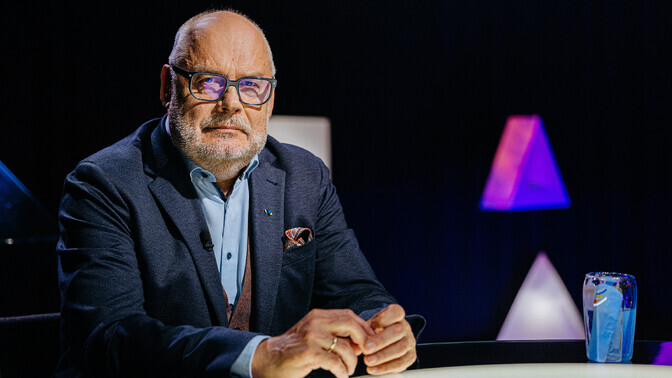
Your painted portrait will also be unveiled at the presidential palace this week. This isn't the first time you've had this kind of official portrait painted; you've long had one at the University of Tartu from your time as rector. You won't be staying to look at this portrait — the people who come after you will. In what situations might they look at it and what advice might your portrait offer them?
I haven't seen the portrait myself yet. Just as I didn't interfere with the book, I didn't interfere with the portrait either. I don't like interfering with the work of professionals: They do their job and ultimately it's their name on it. This is the third painting of me and they're probably all very different. I expect this one will be different as well. Since all of this is, so to speak, for after I'm gone and I'll probably visit Kadriorg very rarely in the future, I imagine some tour groups will look at it. The portraits of the presidents at Kadriorg are also very different from one another.
We're coming to the end of our conversation and you'll soon be able to get on with your week, but we still have Alar Karis' cultural recommendation to hear.
That's always the hardest question: what book to recommend or what work to suggest listening to. I've always said that you should try to seek out variety, especially in today's world where so much of what we read and listen to is presented to us. Don't assume that because you've finished one book, you should pick up another one just like it. Find opportunities to read very different things. The same applies to music. It will be better for us and for our peace of mind and we'll gain a better sense of the world around us.
We should listen to young people who are only just beginning their cultural journeys as artists, composers or performers. We've seen the caliber of artists Estonia has produced; some have already become internationally renowned.
--
Editor: Marcus Turovski, Kaspar Viilup
Source: "Plekktrumm"