Teachers to hold nationwide warning strike September 22
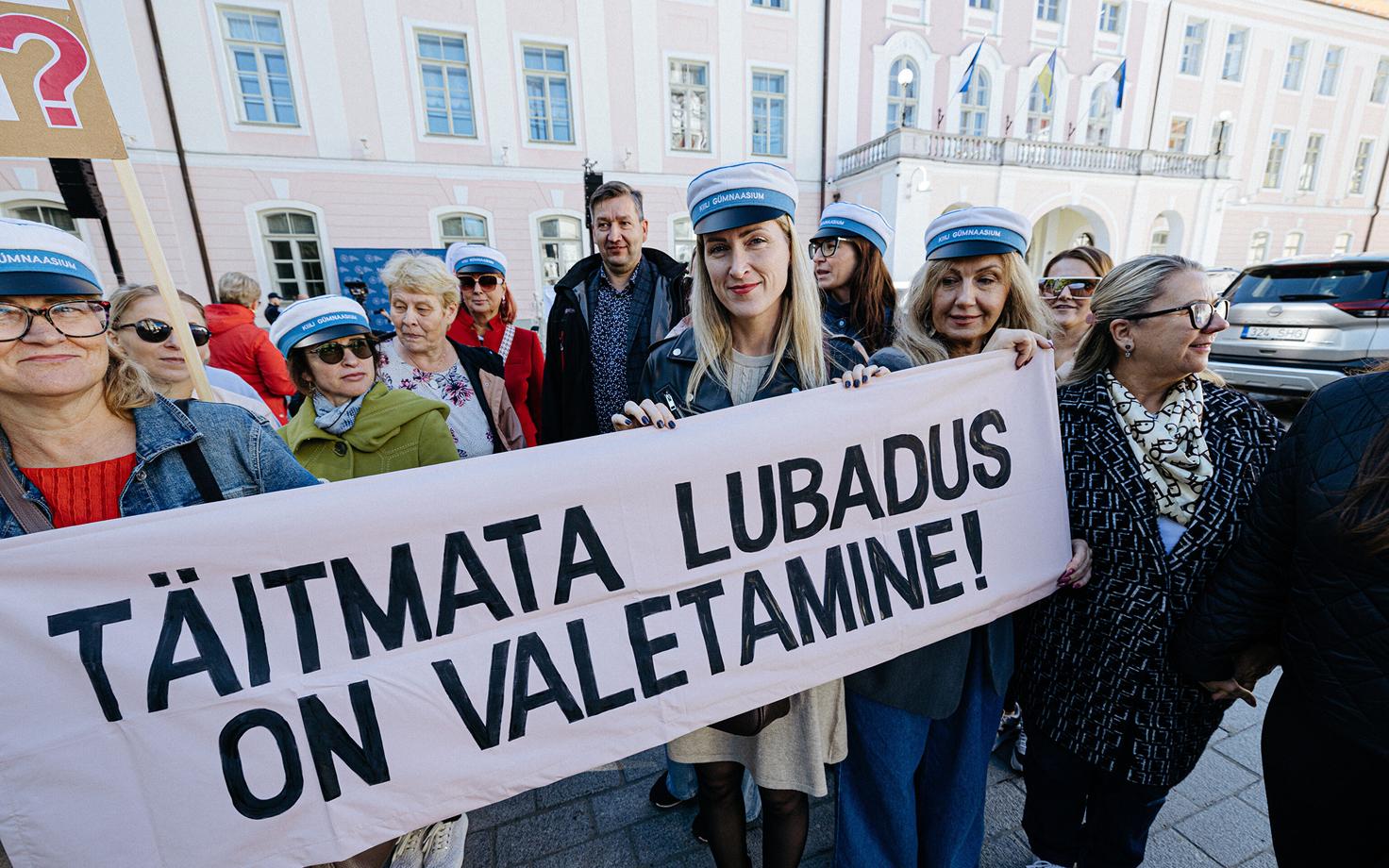
A nationwide warning strike by education workers will take place Tuesday, September 22, the union representing teachers has announced.
The one-hour strike will be held at preschool institutions from 8 a.m. to 9 a.m. and at general education and vocational schools from 9 a.m. to 10 a.m., with staff halting their work duties for one hour. It will take place across the country, though it was initially announced by the local Tallinn teachers' union.
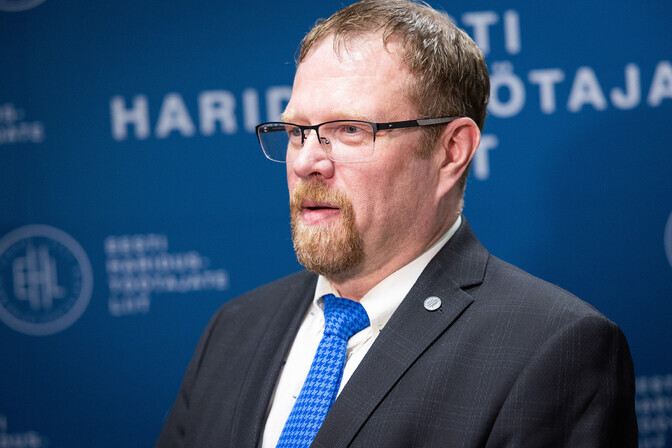
Reemo Voltri, chairman of the Estonian Education Workers' Union (EHL), said the action was a last resort, and that negotiations had not brought salary targets closer.
"Since our negotiations have not been successful enough, the teaching staff has found that words alone are not enough and that they do not want to listen to us through negotiations and speaking meetings," Voltri said. "Consequently, we decided that since the state budget is still being drawn up, now is the time to hold this warning strike."
The union is demanding that the minimum salary for teachers at general education and vocational schools rise to at least €2,312 in 2027, the projected level of Estonia's average wage. The salary of kindergarten teachers must be at least 90 percent of that, or €2,081, it said, referring to monthly gross pay.
According to Voltri, the government has indicated it is highly likely the promised goal will not even be approached at this point. "Then the teaching staff felt that we needed to respond to this somehow quickly. We decided that we needed to respond now and immediately," he added.
Education workers have stressed the governing parties have repeatedly promised for years to hike teachers' salaries to a competitive level by 2027, yet not done so.
"In reality, over the past few years the minimum salary for teachers has fallen 6 percentage points behind the national average salary, and even during the latest salary negotiations we received no assurance that teachers' salaries would rise at all next year," the union said.
Schools to decide how strike hour is handled
Voltri said striking teachers cannot decide on their own initiative how the institution organizes its day.
"If it is known that the majority of employees are going on strike, one must think very critically about whether it is possible to ensure the safety of children and young people or whether it is more reasonable to inform children and parents that the institution will open later that day," Voltri said.
Schools are still preparing their plans. Jüri Käosaar, principal of Tallinn Gustav Adolf Gymnasium, said on Thursday it was not yet known how the strike would be organised at his school.
"The draft version is that since our school day starts a little later on Tuesday anyway, students will probably come to school at 10:01 and we will start classes at 10:01," Käosaar said.
Union chief: education cuts a threat to internal security
Asked about the debate over defense spending, which has led to cuts elsewhere, Voltri said educators understand the need for national defense but that internal security must not be neglected.
"If we no longer have good and qualified teachers or educated people, there is no hope for any economic growth. Soon there will no longer be any point in protecting anything from a foreign enemy if people leave due to lack of education and economy," Voltri said. "Defending the country is important, but the use of money must be transparent and purposeful."
The EHLsays it hopes the government will heed the warning strike and that further, longer protest actions will not be needed.
Teachers joined rescue personnel in picketing the Riigikogu Monday, protesting low public sector wages.
Editor's note: This piece was updated to include comments from union chairman Reemo Voltri and details on strike-day organisation in schools.
--
Follow ERR News on Facebook and Twitter and never miss an update!
Editor: Valner Väino, Andrew Whyte


