Tallinn unhappy with plan to add fewer emergency medicine crews
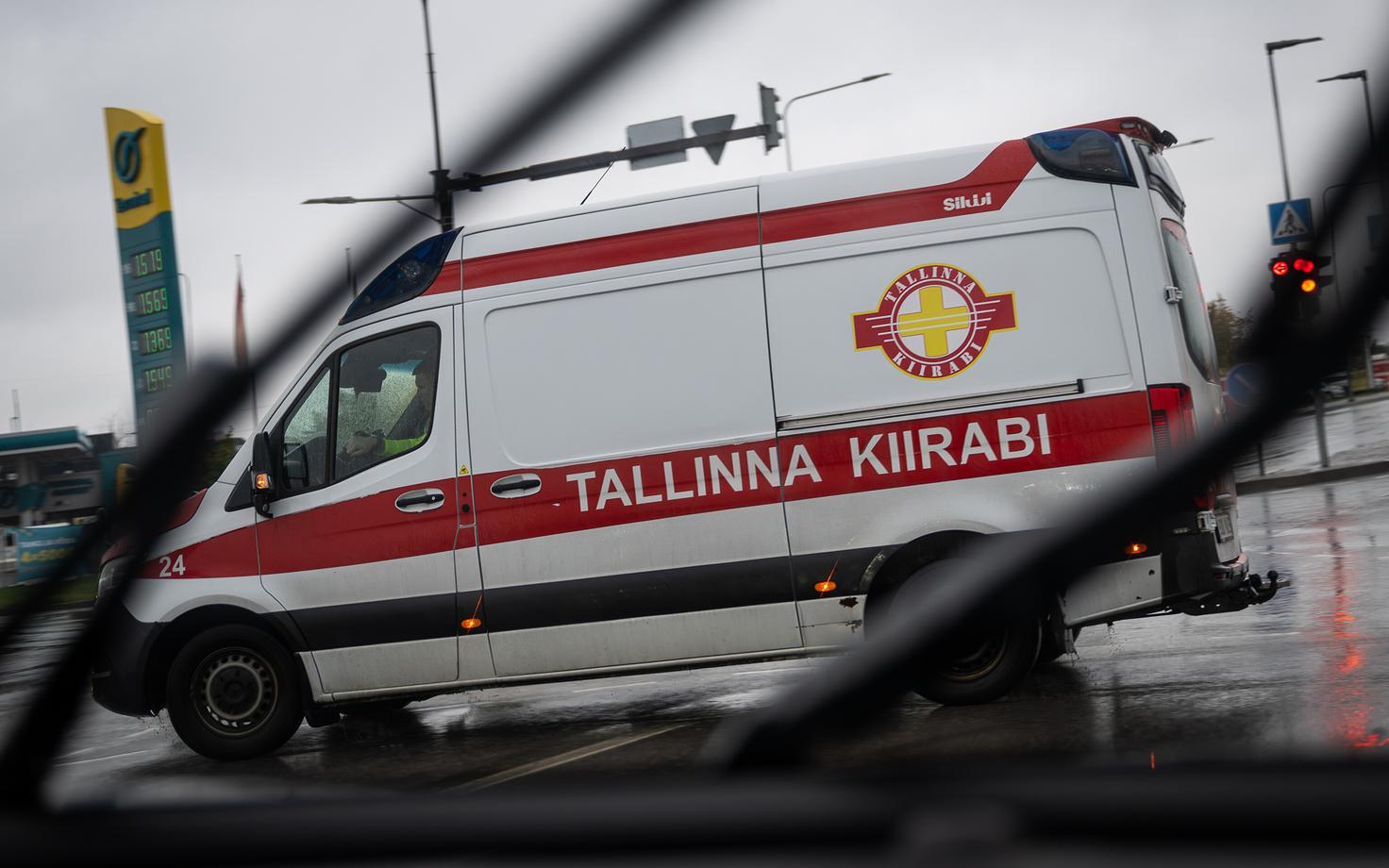
According to the City of Tallinn, the state plans to allocate too few ambulance crews to Tallinn and Harju County, which could reduce access to emergency medical care during peak demand or a major accident.
The Ministry of Social Affairs is moving ahead with a reform of the ambulance network together with the Estonian Health Insurance Fund and the Health Board. The reform will review the entire ambulance network, including the locations of ambulance crews across Estonia.
A proposal put forward this summer called for adding seven ambulance crews during the day and three at night in Tallinn and Harju County as the area's population has grown significantly over the past decade.
At the same time, the number of crews would have been reduced in southern Estonia where the population is smaller than it was 10 years ago.
"Over the summer, we received quite a lot of feedback from stakeholders in southern Estonia and from the leadership of the Estonian Ambulance Association, emphasizing the need to retain all existing capacity in southern Estonia. We therefore reassessed the initial proposal, took the feedback into account and adjusted our plans," said Nikita Panjuškin, head of the Ministry of Social Affairs' healthcare services department.
Under the new plan, the number of crews in southern Estonia would remain unchanged, while fewer crews would be added in Tallinn and Harju County than planned this summer. During the day, for example, four crews would be added instead of seven. At night, just one ambulance crew would be added instead of three.
Tallinn's city government, however, is now dissatisfied with the plan. Tallinn Deputy Mayor Riina Solman said that under the new plan, Harju County would have half as many ambulance crews per capita as the rest of Estonia.
Solman said this could reduce access to emergency medical care in the capital, particularly during peak demand, crises or major accidents. She noted that the capital has large numbers of tourists, as well as an airport and ports, meaning it should also have greater ambulance capacity.
"We are not saying that we should somehow leave other regions in difficulty. We simply have to take population shifts into account, which means there need to be more ambulance crews. It seems to us that Minister [of Social Affairs Karmen] Joller is currently working very hard to reduce the Health Insurance Fund's deficit, but in reality the problem is being shifted onto the northern region and the Tallinn area — in other words, Harju County and Tallinn. We are once again expected to somehow manage with our own resources, but this is going too far," Solman said.
Nikita Panjuškin said the state's resources — including money, personnel and equipment — are limited. If Estonia wants more ambulance crews, it would also need to train more ambulance nurses with specialized training, he said.
He added that the capital is indeed planned to have half as many ambulance crews per capita, but responding to an individual call also takes considerably less time in the capital.
"For example, an ambulance crew in Võru County may spend several hours taking a critically ill patient to Tartu and then returning to its service area. In Tallinn, however, an ambulance crew using lights and sirens can reach North Estonia Medical Center in 10 to 15 minutes. This means that when allocating ambulance resources, we need to consider not only the number of residents per crew, but also other characteristics of the region, such as distances and crews' actual workloads," Panjuškin said.
--
Editor: Marcus Turovski, Urmet Kook


