Triin Tomingas: Who actually decides where European Union money goes?
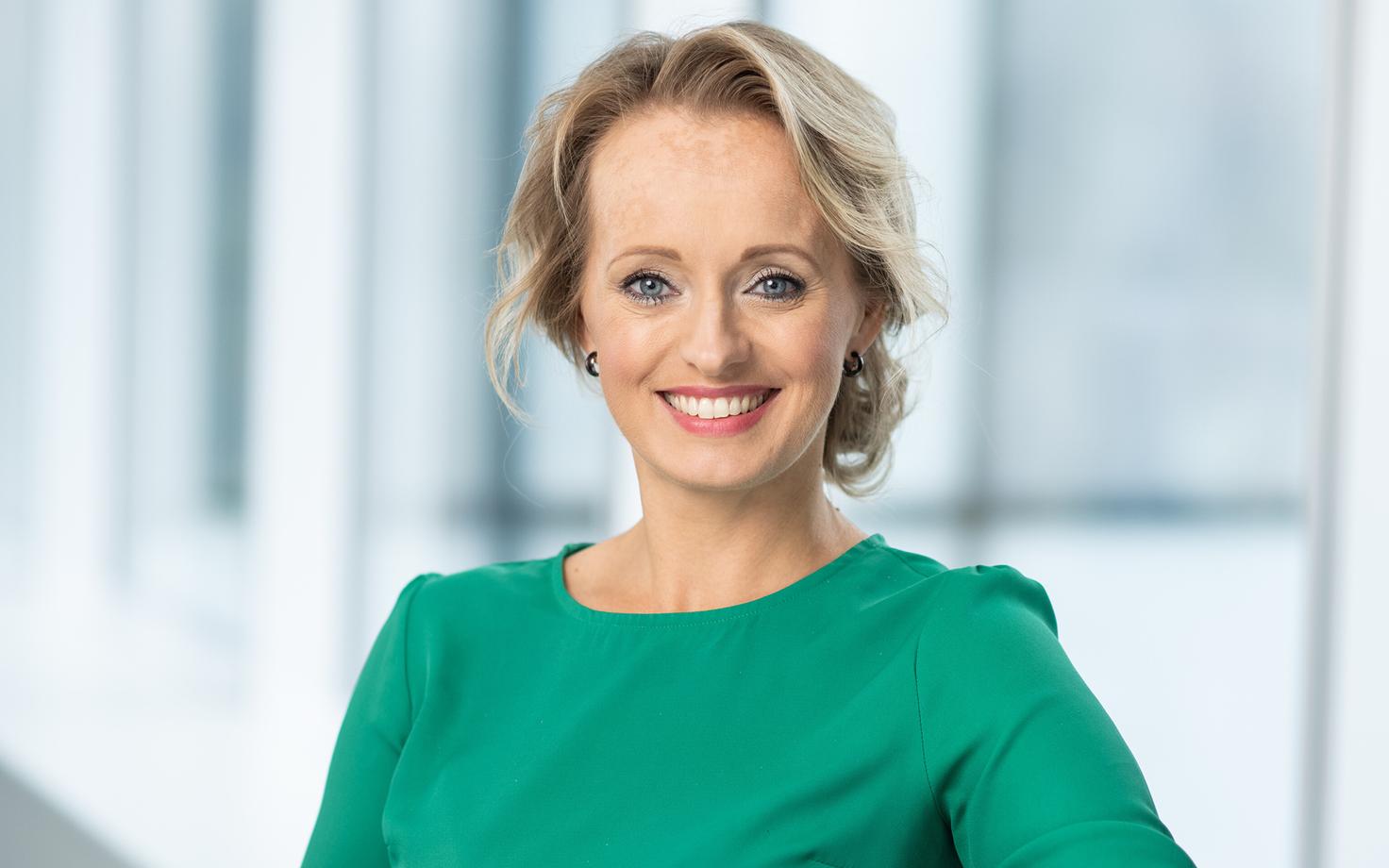
The role of the Ministry of Finance is not to decide which choices a minister should make. Our task is to help the government make decisions, considering that it is not possible to satisfy all wishes with European Union support funds, writes Triin Tomingas in response to Hendrik Johannes Terras.
In recent weeks, a heated debate has begun around the money of the European Union's next budget period. Public discussion and opinions are entirely welcome, especially from various interest groups and partners, to influence political choices.
Regrettably, alongside substantive questions, recent days have been colored by puzzling claims as if officials of the Ministry of Finance were the ones who make the final decision on the distribution of funds. As if the government had only to approve an officials' working version. And as if officials had already taken away something that had been promised to someone.
None of these claims is true.
The Ministry of Finance has worked for a year together with numerous partners to prepare input for government discussions. The decision is made by the government after internal political debate, held within the framework of ongoing state budget discussions.
No money has been taken away from anyone
For the European Union budget period 2028–2034, the European Commission has proposed a total of €6.5 billion in support for Estonia. Of this, about €5.5 billion can be allocated now, this autumn, and the remainder must stay in reserve according to EU rules.
At the same time, ministries submitted funding requests totaling €11.4 billion — meaning more than twice as much money was requested as is planned to be allocated now. This is not a political judgment, but mathematics.
If wishes exceed the budget more than twofold, then unfortunately there is simply not enough for everything requested. No matter how well‑justified, necessary or dear any request may be. This cannot be called cutting. No field is having funding taken away; rather, it is simply not possible to give everything additionally requested. In this situation, when demanding more money consistently, it would also be fair to propose which field's expectations should then be reduced even further.
Considering the large expectations of fields, it is important to find balance points during political discussions that meet the EU funding framework and requirements and — even more importantly — help address Estonia's challenges in a balanced way and support the achievement of our long‑term goals.
What has the Ministry of Finance done?
Preparation for the next EU budget period began already in autumn 2025. We organized discussions with ministries, interest groups and partner organizations. We involved about 70 umbrella and partner organizations and hundreds of people. We listened to local leaders across Estonia. We met with parliamentary factions and held a public discussion.
To allow the wider public and interest groups to express their views and participate, we published the ministries' applications on the Ministry of Finance website in spring, together with a feedback link, which was actively used.
Ministries submitted their funding requests, interest groups spoke about their needs, the public could participate, and experts provided input. Then this information had to be compiled and examined to see what could be done with the available money, considering all the rules that accompany EU support. This work was thorough preparation so that political discussion could take place.
An official may say that based on available data, the proposed distribution is one possible solution. An official may give recommendations or show the financial impacts of different choices. An official may propose how to better achieve Estonia's long‑term goals under conditions of limited funds. But an official does not decide whether Estonia should prefer one political goal over another — that is decided by the government.
A decision is not made before a decision
Therefore, it raises questions why officials' preparatory work and discussion material prepared for the government are presented as an already made political choice, that "they" decided.
The role of the Ministry of Finance is not to decide which choices a minister should make in their field or which priorities to set; our task is to help the government make decisions, considering that it is not possible to satisfy all wishes with EU support funds.
Once the strategic and financial framework is jointly agreed in the government, further choices in each field remain with the ministers, who together with their officials and partners can set financial priorities, design measures and their conditions.
If wishes amount to €11.4 billion and money in the first stage is about €5.5 billion, then choices must be made. This cannot be avoided even with the best communication, but confusion can be avoided about who makes these choices and when — and under what conditions, both in terms of wishes and possibilities.
The Ministry of Finance led the preparatory work and proposal; ministers make the political choice, and the government decides on the whole. Only then do negotiations with the European Commission begin, where Estonia's wishes and plans for using EU support must be discussed in detail and agreed upon. During this process, the entire package is also subject to change and returns to the government before final agreements are made.
Estonia must stand up for itself in Brussels instead
All circulating figures about the EU's next budget and Estonia's support opportunities are in reality still only a proposal — the European Commission's proposal — over which heated debates are ongoing in Brussels.
All countries have different interests. Many demand a reduction of the budget, while we expect greater attention and funding for the Union's eastern border. It is difficult to predict what the final agreements will look like and when they will be made.
Whether we will still be talking about €6.5 billion for Estonia or whether the sum will be different — we actually do not know. Therefore, it is much more important to make a joint effort in Brussels during budget negotiations to stand up for Estonia's interests so that the final agreement meets our expectations as much as possible and, in a positive scenario, allows us to fund priority needs in a larger volume than now. If instead our attention and energy in Estonia go to "pulling the blanket," that will not increase our opportunities.
--
Follow ERR News on Facebook and X and never miss an update!
Editor: Kaupo Meiel, Argo Ideon


