Ministry hopes to choose location for Estonia's nuclear power plant by spring
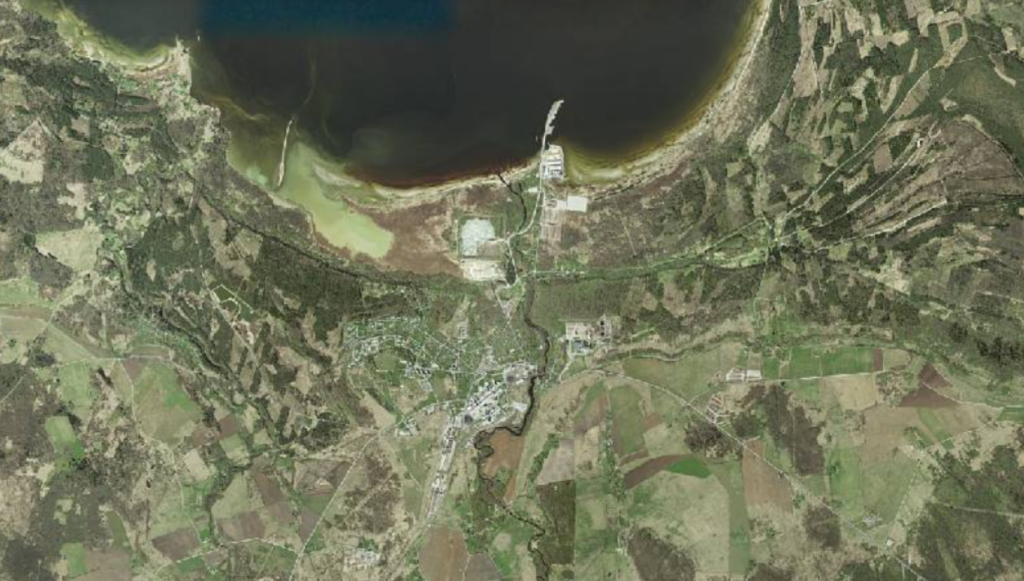
In Estonia, a nuclear power plant can only be built on the coast to ensure sufficient cooling water, but dozens of other requirements must also be met.
The International Atomic Energy Agency's guidelines set out numerous conditions that must be considered when selecting a site for a nuclear power plant. A Ministry of Economic Affairs and Communications table lists 40 criteria, Agnes Lihtsa, an adviser on national spatial plans in the ministry's land and spatial policy department, said.
"These are not only nuclear safety requirements, but also geological criteria, hydrological criteria such as the availability of cooling water, as well as what natural or environmental assets would be affected by the project, and socioeconomic criteria," Lihtsa said.
She gave examples of the factors that need to be considered when selecting a site. According to Lihtsa, six potential sites are under consideration, located in the Kunda and Lüganuse areas.
"The most important factor is the availability of cooling water and in Estonia the only place we can get it is from the sea. We don't have a single river with sufficient flow to provide the necessary cooling water, so it has to come from the sea," Lihtsa said.
Even along the coast, there are not many suitable locations, Lihtsa said, as a nationwide spatial analysis conducted in 2023 found.
"Based on the various criteria, the Kunda area and the Lüganuse-Toila area emerged as possibilities. Both are on the coast and each has three potential sites."
Geological conditions are also important, Lihtsa said. "The bedrock on which the plant is built has to be very stable," she said.
Proximity to transmission lines is important so the plant can be connected to substations. There are currently two potential connection points: one substation near the city of Rakvere and another in Püssi. Proximity to ports must also be considered to allow for the delivery of nuclear fuel, for example, or components needed to build the plant.
People generally do not want a nuclear power plant in their backyard, so officials are trying to find a site with as few nearby residents as possible. In August, the ministry also held public information meetings in the municipalities covered by the planning area to gather broad feedback and it received plenty, Lihtsa said.
"Local residents were mainly concerned about how the location of a nuclear power plant would affect property values, groundwater or the natural environment they are accustomed to," Lihtsa said. According to her, the feedback covered the full spectrum, "from simply saying they don't want it to detailed letters dozens of pages long."
The proposals are still being analyzed, but it is already apparent that the process for assessing the potential sites and making a selection will need to be explained in greater detail.
"We will probably need to spell out our methodology even more clearly so that everyone has the same understanding of how the comparison works, how the different sites are assessed and how the preferred site is identified."
The Ministry of Economic Affairs and Communications hopes to have progressed far enough with its analyses by spring to identify a preliminary site.
--
Editor: Mirjam Mäekivi, Marcus Turovski


