Estonia to see partial solar eclipse on August 12
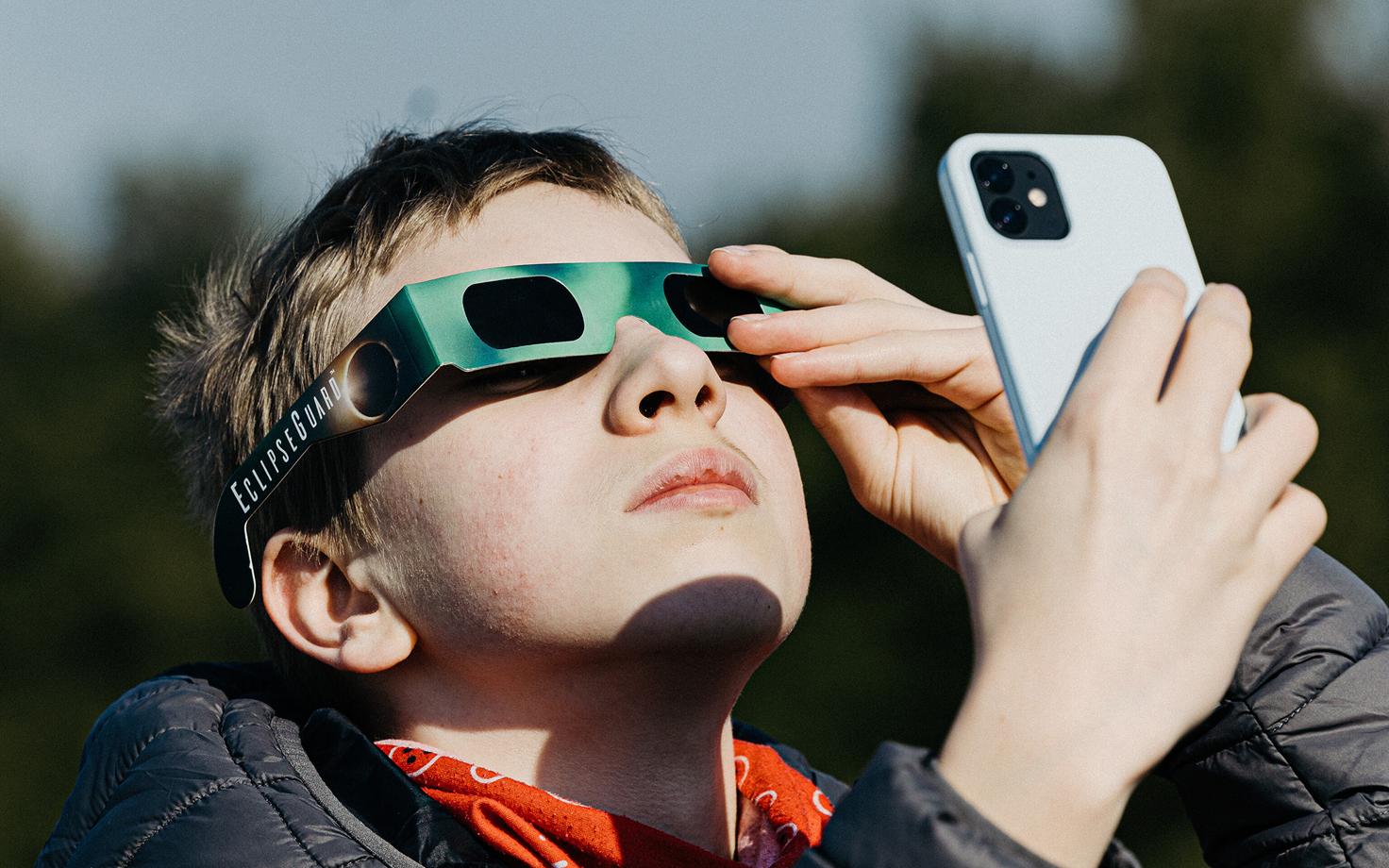
On August 12, a partial solar eclipse will be visible from Estonia just before sunset, but viewers will need a clear western horizon to catch the event.
At its maximum, the moon will block more than 80 percent of the sun's surface, said University of Tartu astronomer Tõnis Eenmäe.
The sun will not disappear completely from view, but the light will take on an unusual pale, silvery hue.
"People will definitely notice that the light is different somehow, and animals will likely sense it the same way," he said, recalling a total eclipse he once witnessed in Turkey that prompted nearby sheep to gather around their shepherd as darkness approached.
A solar eclipse occurs when the moon passes between Earth and the sun, partially to fully blocking its light. In Tallinn, the August 12 eclipse will begin at 8:02 p.m., peak at 8:53 p.m. and end at 9:19 p.m. as the sun sets.
At maximum eclipse, the sun will appear as a thin crescent just above the horizon.
Because of the low angle, trees, buildings and other obstacles could easily block the view. Eenmäe recommends choosing an open spot facing west, such as a coastline, lakeshore or field.
How to watch safely
Even near sunset, viewers should not look directly at the sun without proper protection. Eenmäe recommends certified eclipse glasses or solar filters.
Other items can also be used to view the eclipse directly or indirectly, such as welding glasses or helmets with a sufficient shade number*, or a simple pinhole projector made from cardboard.
Regular sunglasses, binoculars or telescopes without solar filters should not be used to view the sun; doing so can cause permanent eye damage.
Totality visible elsewhere in Europe
While Estonia will see only a partial eclipse, the path of totality will cross parts of Europe, including Iceland and Spain, casting regions into darkness while briefly revealing the sun's outer atmosphere, or corona.
Solar eclipses have helped researchers make discoveries such as helium, and despite advances in space-based monitoring, ground-based observations remain valuable as well.
"I'm positive there are plenty of observations that can provide useful information if made during a solar eclipse," Eenmäe added.
Observers can use NASA's eclipse resources or the free Stellarium software to plan their viewing.
For those watching in Estonia, the key essentials are a clear horizon and proper eye protection.

*This article originally also mentioned blank silver CDs as a possible viewing device. In 2015, the International Organization for Standardization (ISO) adopted a decision aimed at reducing risks associated with solar viewing: products without ISO 12312-2 certification, such as floppy discs or CDs, must never be used to view the sun. Although CDs, for example, block nearly all visible light, they still let infrared (R) radiation through.
The ISO decision was supported by the International Astronomical Union (IAU), the American Astronomical Society (AAS) and other major scientific organizations.
--
Editor: Jaan-Juhan Oidermaa, Aili Vahtla



