Riigikogu committee chair: Spain conduct undermining NATO

Marko Mihkelson says Spain worries Estonia: it blocks U.S. bases, rejects higher NATO spending, courts China and buys Russian fuel.
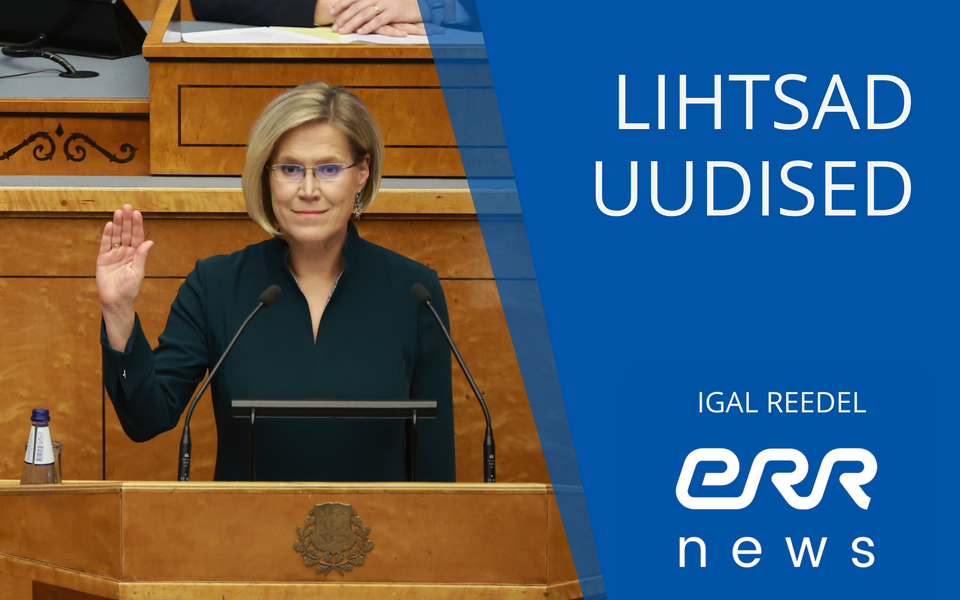
Spain's actions in undermining relations within the NATO alliance, for instance by rejecting a rise in defense spending and barring the United States from using its bases, are a major concern for Estonia, Riigikogu Foreign Affairs Committee chair Marko Mihkelson (Reform) said.
First off, Mihkelson said, Spain demonstrated unwillingness at last year's NATO summit in The Hague to agree to hiking defense spending to 5 percent of GDP by 2035 was a concern. Spanish Prime Minister Pedro Sánchez at the time said doing so would be "unreasonable and counterproductive."
"It is clear that this does not actually demonstrate an obvious willingness to show solidarity with all allies," the Reform MP said.
More recently, over the past month, Spain has barred the U.S. from utilizing its bases and airspace when conducting its strikes on Iran, something which Mihkelson also flagged as a concern, before going on to highlight support for the Miguel Díaz-Canel-led government in Havana as an ongoing worry too.
"A third issue is that Spain's current left-wing government has been one of the biggest supporters of Cuba's terrorist regime. Even ERR itself raised one issue that was a hot one here in Estonia, concerning our e-Governance Academy's possible project in Cuba, which came via Spain," Mihkelson said.
Prime Minister Pedro Sánchez has also backed closer ties with China, partly with a view to Beijing mediating in the Middle East conflict.
"He has been there four times in the last four years, while during this [latest] visit it was again pointed out or emphasized that China must take a leadership role in the world. That sounds, to put it mildly, very strange coming from the leader of a major European country," Mihkelson went on.
Finally, the MP noted Spain's continued purchase of fossil fuels from Russia. "As recently as March, Spain paid Russia €350 million, primarily for the purchase of oil and gas. This is the largest sum anyone in Europe has paid recently," he said. "It is very sad to see this. Essentially, every euro paid to the Russians by the Spanish and by everyone else in Europe who continues to buy Russian gas goes toward the destruction of Ukraine, and the groundwork for a major war against Europe."
"So the question is entirely justified, naturally not only for the U.S. but also, in my opinion, for all the other allies, including us: Are we really marching in lockstep with one another on all issues within the alliance?" Mihkelson inquired.
"The actions I have just outlined certainly do not indicate that one of Europe's major countries is itself replicating or creating unity within the alliance," he added.
At the same time, neither Estonia nor most other EU member states have much leverage over Spain's policies: The major player here is Washington.
"In Spain's case, the main likely influencer is the U.S. And as I understand it, the U.S. administration is now seriously considering its options — whether the term 'punishment' is the right one, but in any case based on what has been happening over the last four weeks or more in connection with the war in the Middle East," the foreign committee chair continued.

"Those countries which have obstructed U.S. operations in the Middle East will certainly face some kind of response, not only a rhetorical one but also real action. At least that is the information I have from Washington," Mihkelson said.
Estonia's interest remains, Mihkelson said, that NATO and the credibility of its deterrence remain intact and, in that light, supporting allies is vital, as demonstrated by the Riigikogu's foreign affairs committee statement in support of the U.S.
"So far, we have not received any requests from the Americans for more specific assistance, but we are expressing our readiness, 'an all-for-one, one-for-all' attitude," Mihkelson said.
Estonia should express more clearly the need to maintain unity with allies, too.
"In the current situation, where Russia is waging a war of conquest not only to destroy Ukraine but also to destroy NATO, it should be obvious that we all need to contribute to ensuring that Russia cannot achieve its strategic objectives. In other words, that we ourselves do not help bring about NATO's division and disintegration," Mihkelson noted.
"This also concerns other allies, and ultimately, of course, the U.S., with whom, if one listens to the diplomatic information from Washington right now, the situation is very, very worrying."
"Russia's goal, naturally, is to deepen these internal divisions by betting on them. In the end, that could lead to a loss of faith in the credibility of Article Five," he added.
Estonia's primary interest is thus to keep both Europe and the U.S. within the same alliance framework. "We should not work toward becoming, as it were, allies of Vladimir Putin in this shadow play or hidden war, helping to break apart the alliance," Mihkelson concluded.
In February an EU digitalization project with Cuba led by Estonia's e-Governance Academy and in partnership with Spain was frozen over issues internally in Cuba, as well as Havana's active support for Russia's war on Ukraine.
U.S. President Donald Trump in early March threatened to halt all trade with Spain after Madrid barred the U.S. from using its military bases for its operations in Iran.
Two Estonian parliamentary friendship groups last month backed U.S. and Israeli action against Iran, though three of the 31 signatory MPs subsequently withdrew their support.
--
Editor: Andrew Whyte