Estonia won't accept more international war criminals

Estonia will not accept additional international war criminals into its prisons in the coming years, prison service officials said, citing the burden on taxpayers. Estonia currently holds four convicted war criminals from the former Yugoslavia, one of the highest numbers in Europe.
Although Estonia's modern prisons and large number of vacant prison places make it an attractive destination for international organizations seeking places to house convicted war criminals, Estonia informed partners last week that it does not wish to consider taking in more such inmates.
According to Tiina Unuks, head of the prison department at the Estonian Prison Service, the main reasons are financial constraints and the need to focus on existing priorities.
"Our primary focus is on our own inmates, on the Estonia-Sweden project, and on allowing these four war criminals to serve their sentences here in Estonia. We have received suggestions from various international actors that we could consider housing more war criminals in Estonian prisons, but we do not see that as possible," Unuks said.
According to Unuks, Estonia's good detention conditions make it an attractive option.
"Our oldest prison, Tartu Prison, is a little over 20 years old. Across Europe, prisons are often overcrowded. In Estonia, nearly half of all prison places are vacant, so we have the space and capacity to hold additional inmates. We have a very modern system. From a European perspective, Estonia is one of the best places in which to serve a prison sentence, and that makes us attractive to others, especially when most countries face overcrowding problems," she said.
War criminals are costly
Unlike Estonia's prison cooperation agreement with Sweden, under which inmates are housed under a separate arrangement and budget, accepting internationally convicted war criminals is financed entirely by Estonia.
"When war criminals are transferred to Estonia, an Estonian court must recognize the international court ruling. From that moment, they become Estonian prisoners and their upkeep is paid for by Estonian taxpayers. No one else finances this. It is entirely a cost borne by the Estonian state," Unuks said.
The average monthly cost of housing one inmate is between €3,500 and €3,700, excluding medical, court and prosecution expenses.
Costs are higher for war criminals because services must be provided in their native language.
"If this is a cost borne by Estonia, we must provide additional services that are not always necessary for Estonian prisoners. For example, interpretation services. Not all of them speak Russian or English, which means we need Serbian-language interpreters to handle basic matters. All of that costs money," Unuks said.
"We also have to provide Serbian-language newspapers and Serbian-language television channels. All these requirements make imprisonment more expensive. That is the main reason," she added.
The inmates are also elderly, which increases health care costs.
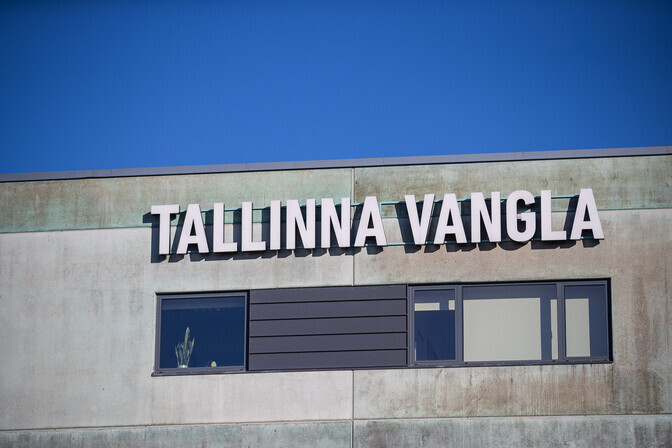
Four prisoners convicted of war crimes are serving sentences in Tallinn Prison. The first to be transferred there was former President of the Republic of Serbian Krajina Milan Martić, who was sentenced to 35 years in prison and brought to Estonia in 2009.
Also serving a sentence in Estonia is Dragomir Milošević, a former Bosnian Serb Army general who was sentenced to 29 years in prison for crimes committed during the siege of Sarajevo and was transferred to Estonia in 2011.
Milan Lukić, currently imprisoned in Tallinn Prison, was the leader of a paramilitary unit who was sentenced to life imprisonment for mass murders and war crimes committed in the Višegrad area and was transferred to Estonia in 2014.
Since April 2025, a fourth war criminal from the former Yugoslavia, Radislav Krstić, has also been serving his sentence in Estonia. He was transferred to Estonia to serve the remainder of his 35-year prison sentence. Krstić was the former commander of the Drina Corps of the Bosnian Serb Army and was the first person convicted of aiding and abetting the 1995 Srebrenica genocide.
Among Europe's highest totals
Most European countries hold only one or two internationally convicted war criminals, making Estonia's total of four one of the highest in Europe.
Unuks said Estonia's refusal to accept more inmates is unlikely to create international tensions because accepting war criminals remains voluntary and Estonia has already been one of the most active countries in this area.
She stressed that the current refusal applies only to convicted war criminals from the former Yugoslavia and does not cover potential future convictions related to Russia's war against Ukraine.
"If we are talking about the Russia-Ukraine war and if Russians are one day convicted of war crimes, that is an entirely different issue. We are prepared to discuss that and in any case are ready to help Ukraine. Our current response does not apply to potential future Russian war criminals," Unuks said.

Estonia-Sweden prison agreement differs
According to Unuks, housing Swedish prisoners in Estonia is not the reason the country is declining to accept additional war criminals.
"The Estonia-Sweden project differs fundamentally from accepting internationally convicted war criminals, both legally and financially. In the case of war criminals, all maintenance costs fall on Estonian taxpayers, whereas the costs associated with Swedish prisoners are covered under a separate agreement and budget," she said.
Before a Swedish inmate can be transferred to Estonia, an Estonian court reviews the conviction. The court assesses whether the offense is punishable under Estonian law and whether the sentence is reasonable and comparable to penalties imposed in Estonia.
"So far, courts have concluded that the offenses committed by Swedish prisoners transferred to Estonia are also criminal offenses under Estonian law and that the sentences imposed fall within a reasonable range comparable to those imposed here," Unuks said.
According to Unuks, Swedish prisoners have not proven more problematic than Estonian inmates.
"Their concerns are the same, the problems are the same, the complaints are the same and the behavior is similar. There is nothing new for us there. I cannot say Swedish prisoners complain more than Estonian prisoners, nor can I say they are more difficult," she said.
Although prisoners may appeal directly to the courts without approval from prison authorities, the Prison Service said complaints by Swedish inmates have not reached Estonian courts.
Lessons from Swedish prisoners
The arrival of Swedish inmates has prompted the Estonian Prison Service to review and update some of its practices and prison regulations more quickly than originally planned.
For example, prisons abandoned a practice under which guards turned on an additional light outside prison cells every hour during the night.
"If we see from our experience with Swedish prisoners that some things work better elsewhere or that some of our practices have become outdated, we update them. That is normal work. In some cases, it simply has to happen faster than we originally planned," Unuks said.
Estonian prisons, including Tartu Prison where Swedish inmates are housed, maintain a general smoking ban for both prisoners and staff. This differs from Swedish prisons, where smoking and nicotine products are permitted.
Prisoners transferred to Estonia are informed of the ban in advance, prohibited items are confiscated upon arrival, and they may purchase limited quantities of tobacco-free nicotine pouches through the prison e-store. The same right has now been extended to Estonian inmates.
--
Editor: Mari Peegel, Argo Ideon


