Parties struggle to navigate new EU rules on political advertising
With five months to go until the elections, parties are still unsure how they may legally run political ads this year. A new European Union rule meant to increase funding transparency has also created confusion and added bureaucracy.
Under the new requirement, an advertisement must include who ordered it, with what money, and who paid. The idea of increasing transparency of funding in this way is considered good by the parties, but the implementation not so much.
Tõnis Kons, board member of Parempoolsed, gave the example of radio advertising. "If its length is ten seconds and it is followed by five to ten seconds of a declaration that this is paid advertising, then probably every Estonian understands that if it is a party advertisement, it is paid political advertising," he explained. The same applies to television.
"With TV ads it is somewhat unclear that if it is a TV ad featuring Reform Party people, promises, colors, then we must additionally state both in audio and visually that this is political advertising," explained Reform Party secretary‑general Kristo Enn Vaga.
It becomes complicated when the advertisement is not so direct. With only five months left until the elections, politicians are still asking the consumer protection officials whether, for example, singer Stig Rästa must inform the audience during a concert that he is a politician, how to behave with opinion pieces, and whether a pen or flyer must also be supplemented with information.
"With one sentence it is unfortunately not possible to bring all of this out," noted Merike Koppel, deputy director‑general of the Consumer Protection and Technical Regulatory Authority.
She said that if a politician distributes something in public space during the campaign period and does not use a service provider for it, then it is internal activity and does not need to be marked. "The same applies to pens, flyers, and political merchandise," added Koppel.
Although the authority does not plan to start punishing anyone, the fines are still large and the room for error small.
Viljar Voog, communications manager of Isamaa, said that in case of confusion both parties and advertising sellers choose the strictest interpretation so they would not have to pay a large fine later.
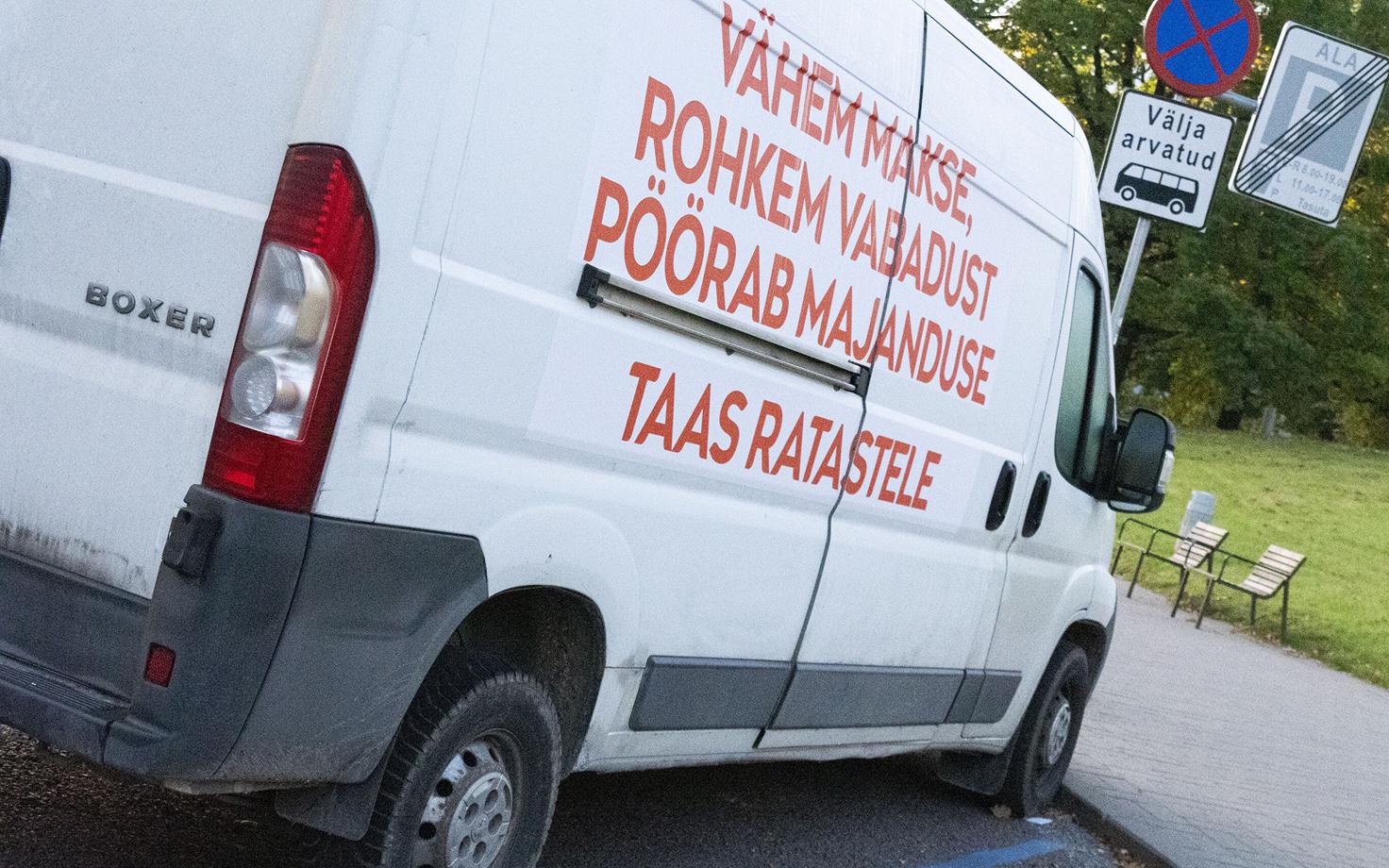
Parempoolsed, the first party to start with outdoor advertising, has already had to replace its posters once following an order from the consumer protection authority.
--
Editor: Merilin Leetna, Argo Ideon


