Local governments set for major funding overhaul next year

Local governments will, beginning next year with the planned change, gain greater freedom to decide over their finances. This is something municipalities have awaited, though in the first year it may punch a hole in the budget of some rural municipalities.
Currently, local governments receive money from two main sources – a share of their residents' income tax and about €122 million from the state support fund.
The problem is that the state money comes with a label, meaning it is intended for a very specific purpose, and the size of the support has not changed for 10 years.
With the reform, this same sum will be taken out of fixed envelopes and placed into a kind of common pool, which is the revenue base of the local government. Local hovernments will begin deciding themselves what the money is most needed for, and the amount of money would also change in the future along with income tax receipts.
The ministry hopes the change will take effect on 1 January.
"The draft has been coordinated and is awaiting the minister's approval to move forward to the government and from there to the Riigikogu, so that the changes could enter into force at the beginning of 2027," said Hardi Alliksaar, head of the local governments department at the Ministry of Regional Affairs.
Since in the first year some local governments would end up in deficit compared with the current system, the Association of Estonian Cities and Municipalities wants €3.4 million to offset the differences that arise.
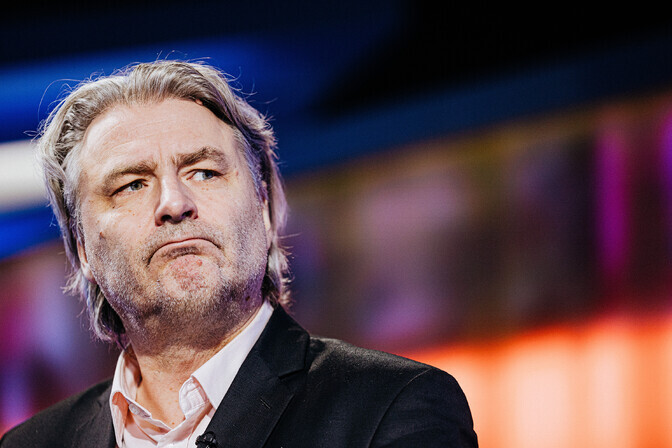
"This 3.4 million is a one‑time sum. It is not annual or some ongoing support, but a one‑time amount to smooth out the transition deficits. After that it proceeds routinely, as circumstances and the economic situation dictate," said Saue municipal mayor Andres Laisk, who also leads the finance and tax policy working group of the Association of Estonian Cities and Municipalities.
Signatures for the state budget will be placed on Monday. No cash injection is foreseen for the equalisation fund.
"There is no decision regarding the 3.4 million, but it has also not been a precondition for moving forward with the processing of this draft, and therefore we still wish to proceed with it," Alliksaar noted.
One of the local governments that may lose money during the transition is Jõelähtme municipality. Even if the state does not find money for the transition period, the reform is, in the long term, correct and necessary.
According to Jõelähtme municipal mayor Andrus Umboja, the municipality will manage anyway.
"We must complete our activities, we cannot leave anything undone. We must still repair those roads and ensure money for textbooks for schools or salaries for principals. We will surely ensure these. But the question is one of principle, whether local governments are treated equally or not," Umboja said.
--
Editor: Valner Väino, Argo Ideon


