Parents sue Estonian school over early start time
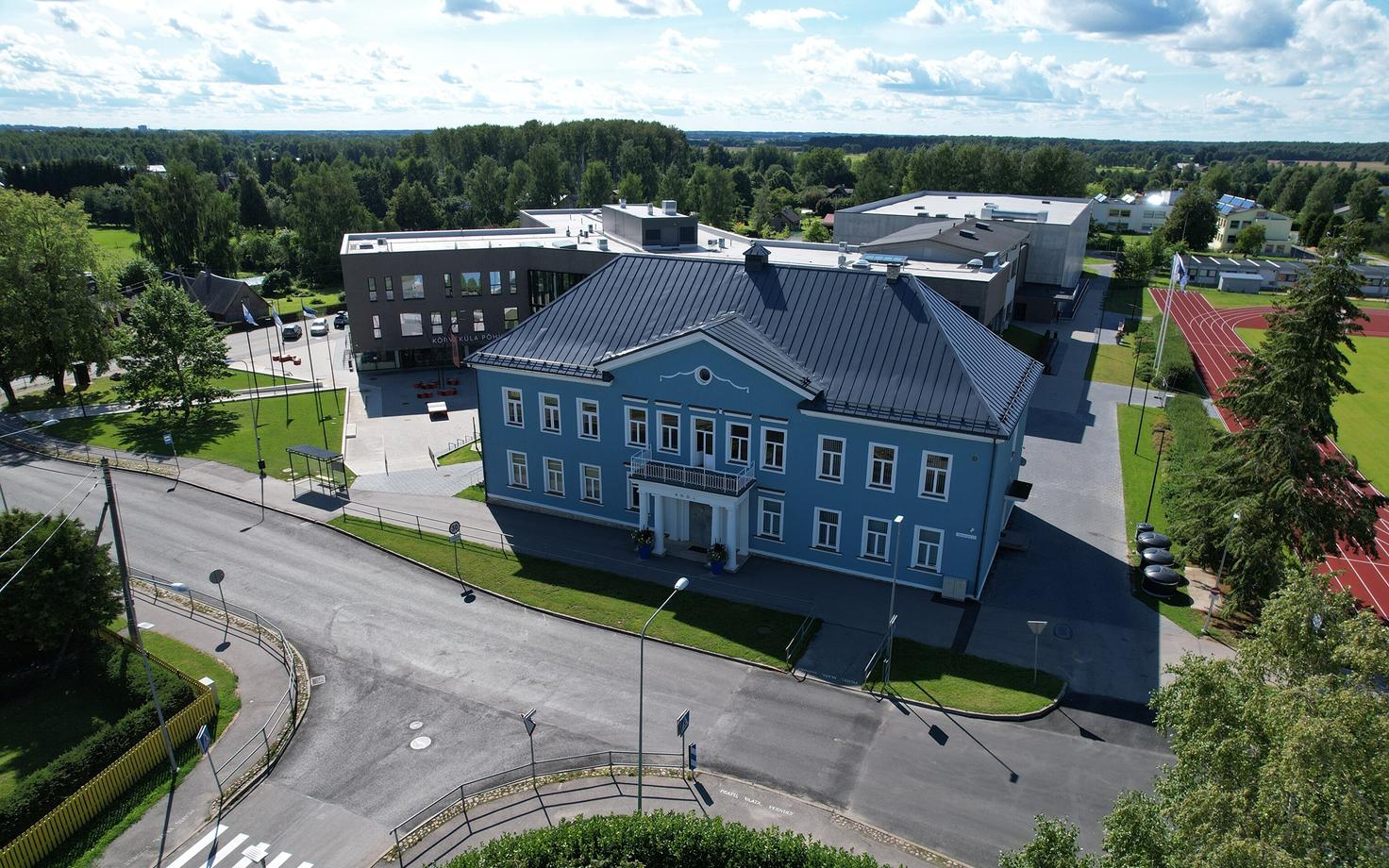
A dispute over the start time of the school day in Kõrveküla became so heated that a group of parents took the school operator to court.
More than 700 children attend Kõrveküla Basic School just outside Tartu. Although a government regulation says Estonia's general education schools should start at 9 a.m. from the 2026-2027 academic year, Kõrveküla has used an exemption to retain its decades-old 8 a.m. start.
Tartu Municipality, which operates the school, says changing public transportation schedules would be complicated and, more importantly, expensive.
"We are a sparsely populated area where Kõrveküla school is not just a community school and children come here from many different parts of the municipality," Tartu Deputy Municipal Mayor Agu Laas said.
Laas said bus schedules are coordinated with residents' work commutes and cannot be reorganized as quickly as the Ministry of Education and Research envisaged. He said a survey of parents, students and school staff found that roughly one-third wanted a 9 a.m. start, one-third did not and one-third had no preference.
A group of parents disputes that interpretation. This spring, 142 parents signed a petition calling for a later start, while 18 parents filed a case with the administrative court at the beginning of the summer seeking to force the school to begin classes at 9 a.m.
As far as is known, they are the first parents in Estonia to take the issue to court. They argue that scientific evidence shows later school start times benefit children's health.
Ott Oja, head of the Ministry of Education and Research's preschool and basic education department, agrees that research supports later starts.
"We know from decades of study after study that a later start to the school day translates to a significant extent into students getting more sleep," Oja said. "We also know very well that getting more sleep helps prevent a wide range of health problems, both mental and physical."
Parent Tanel Käär said the effects become particularly apparent as children enter adolescence and their sleep patterns change.
"I'm seeing exactly the same thing now with my older daughter," Käär said. "It's harder to wake up in the morning and she isn't sleepy in the evening."
Parent Marianne Tobro-Kerna said insufficient sleep affects not only children's moods but also their ability to learn throughout the day. Her eighth-grade son starts waking up at around 6 a.m. but struggles to get out of bed by 6:30.
"If a child is chronically overtired, that fatigue carries over into the afternoon, not just the morning," she said. "It isn't a matter of getting through the first class and then everything is fine."
Laas, however, said parents also bear responsibility for children's sleep schedules, including whether they go to bed at 10 p.m. or stay on their phones until midnight.
Tobro-Kerna rejected the argument that teenagers can simply go to bed earlier.
"That's not how a teenager's body works," she said. "A teenager's natural circadian rhythm means they need to fall asleep later and sleep longer in the morning."
The municipality and school administration say a 9 a.m. start would create other problems. In sparsely populated areas, many parents bring their children to school before starting work at 8 a.m., while beginning classes later would also push the end of the school day later.
Piret Jõul, Kõrveküla's head of studies, said older students could finish at 5 p.m., after which many would still have music lessons, sports practices or other extracurricular activities.
"I've thought about it myself and a child's day, during which they're actively engaged in things, would end at 9 or 10 p.m.," Jõul said. "I see it as actually doing children a disservice."

The government adopted the new start-time regulation in July 2025, giving school operators more than a year to prepare. However, the rules allow schools to retain an earlier start for compelling and carefully considered reasons.
Laas said the central issue for Tartu Municipality is the cost of reorganizing public transportation, which he estimated at more than €500,000.
Three of Tartu Municipality's six schools have moved to a 9 a.m. start, while Kõrveküla Basic School, Lähte Coeducational High School and Tabivere Basic School have retained earlier starts. Laas said those three schools depend on the same broader bus network, while the municipality's other schools have their own smaller bus routes.
The situation is far from unique to Tartu Municipality.
At ERR's request, the Estonian School Heads Association surveyed its members and received information from 122 schools. Of those, 54.5 percent did not change their start time this academic year. Only 31 begin at 9 a.m., while the first bell rings at 8:30 a.m. or earlier at 74 schools.
The pattern is also evident in Estonia's larger cities. In Tallinn, 36 of 61 municipal schools begin classes before 9 a.m. In Tartu, 10 of 23 city-run schools do not start at 9 a.m., while just one of Pärnu's 14 municipal schools does so.
The Ministry of Education and Research does not have comprehensive nationwide statistics, but the available figures suggest a large share of Estonian schools have retained earlier start times.
Laas criticized the ministry's approach, arguing municipalities should retain the right to decide when their schools begin and end.
Oja said the exemptions provided by the regulation are not intended to give municipalities unlimited discretion.
"This is an exceptional arrangement. The exception must have an end point," Oja said, adding that if transportation is the reason for an exemption, municipalities must work to resolve that problem.
Laas described the parents pursuing the court case as a vocal minority. The parents, however, say the school's survey was methodologically flawed and undemocratic. They argue its results could just as easily be interpreted as showing that 67 percent did not favor retaining the existing, earlier start time.
"Other schools have somehow found solutions," Käär said. "It's already working somewhere and I think we should learn from those solutions."
Tobro-Kerna said the municipality must find both a solution and the necessary funding because children's sleep and health justify the expense.
Court proceedings on the substance of the case are due to begin in November. However, the municipality has already indicated that Kõrveküla's school day could be moved to a 9 a.m. start next academic year.
--
Editor: Marcus Turovski, Mirjam Mäekivi
Source: "Pealtnägija"


