Hobby archeologists help rewrite Estonian Bronze Age history
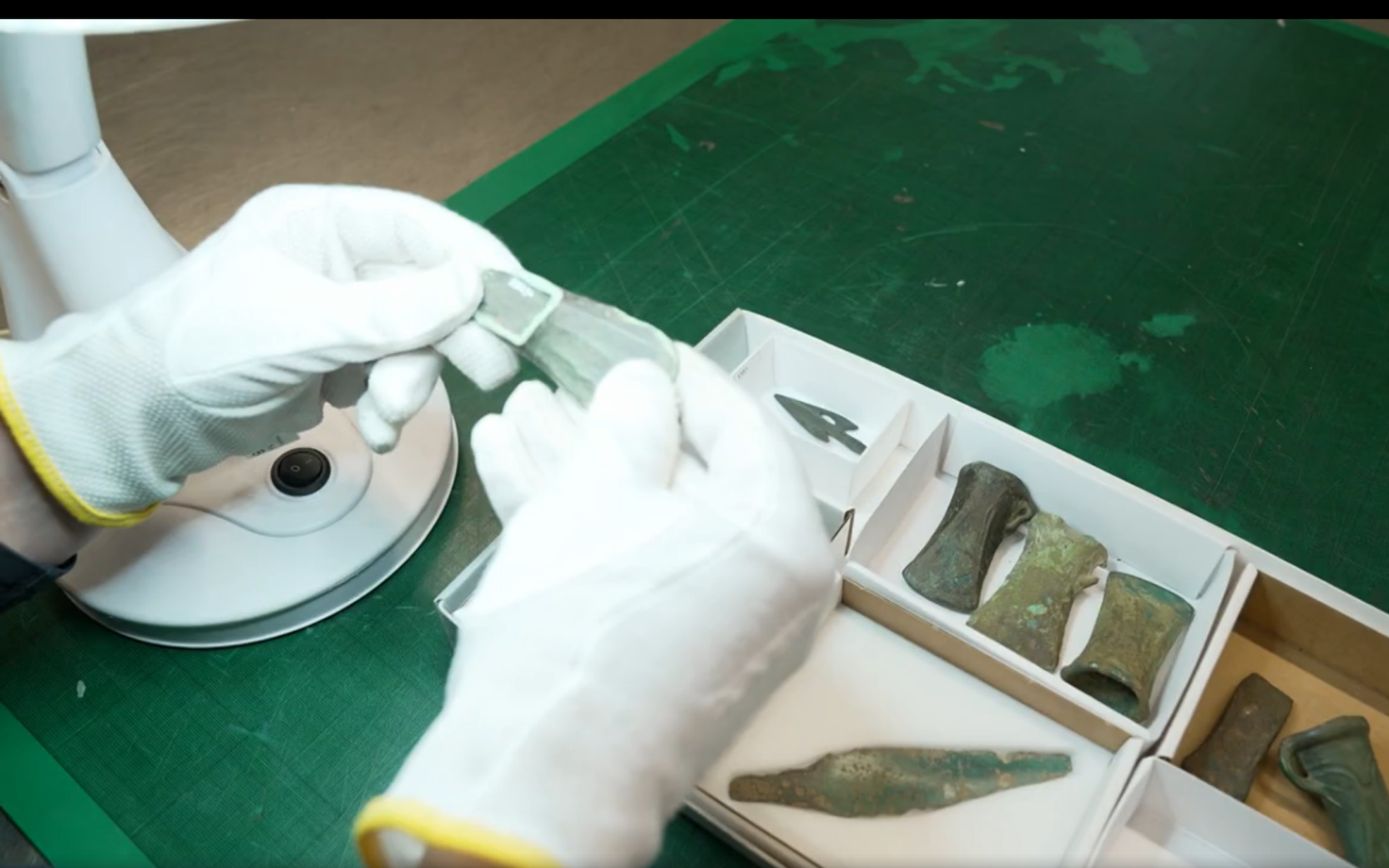
Metal detectorists have helped double the number of Bronze Age artifacts found in Estonia over the past 20 years.
In absolute terms, the increase is not particularly large, with the number of artifacts rising from 80 to 160. "Nevertheless, it has had a major qualitative impact on our understanding of the Bronze Age because it has changed the perception that Estonia essentially did not have a Bronze Age at all. Even some prominent historians have said as much relatively recently," Valter Lang, a professor at the University of Tartu's Institute of History and Archaeology, said on the program "Tähelepanu! Tegemist on teadusega." ("Attention! This is Science")
"Far more bronze circulated here than previously thought, although the figures still remain far below those for Scandinavia, which was a major center of Bronze Age culture. We are rapidly catching up with Latvia and Finland," the professor added.
In addition to increasing the number of known artifacts, the new finds also push back the timeline for local bronze casting. Bronze objects were apparently first produced in what is now Estonia 500 to 600 years earlier than historians had reason to believe based on previously available material. Archaeologists can now say with confidence, for example, that a local type of palstave, or flanged axe, was being cast here as early as around 1400–1300 B.C.
Various types of axes account for a significant share of the Bronze Age material. Researchers have found both large, full-sized working axes and smaller tools designed for different purposes. Comparing the shapes and sizes of the objects reveals a clear pattern of development.
During the earlier part of the Bronze Age, craftspeople cast relatively large axes, but toward the end of the period the tools became progressively smaller. Lang offered a practical explanation. "One reason may have been to conserve metal and make more axes from the amount of metal available. This is a trend characteristic not only of Estonia but of Northern Europe more broadly," the professor explained.
The new finds also show that imported valuable metal was distributed unevenly among different parts of Estonia. Most of the artifacts are concentrated in three clearly distinguishable core areas: one around Tallinn, stretching from Keila to Kahala; another covering part of Virumaa; and a third major center encompassing Saaremaa and Muhu. All three are coastal areas. Coastal locations gave residents access to overseas contacts through which all the bronze needed in the region arrived.
Tuuli Kurisoo, a senior researcher at Tallinn University's School of Humanities, emphasized that the growing wealth of finds is revealing broader patterns in the region's development. "Thousands of finds help us identify new distribution patterns and give us a clearer picture of different periods in Estonian history," Kurisoo said.
The new data is reaching researchers thanks to regulations governing the activities of amateur detectorists. Searching with a metal detector is permitted in Estonia provided that enthusiasts have completed the required training, obtained a permit and follow the rules prescribed by law.
Kurisoo stressed that archaeological research directly depends on how detectorists conduct themselves. "The foundation of it all, however, is cooperation and compliance with the law. Finds made by amateur detectorists are useful to science only when they are accompanied by precise information about where they were found and are reported to the National Heritage Board," the senior researcher said.
--
Editor: Jaan-Juhan Oidermaa, Marcus Turovski
Source: "Tähelepanu! Tegemist on teadusega"


