Estonia ranks among top countries in latest PISA results
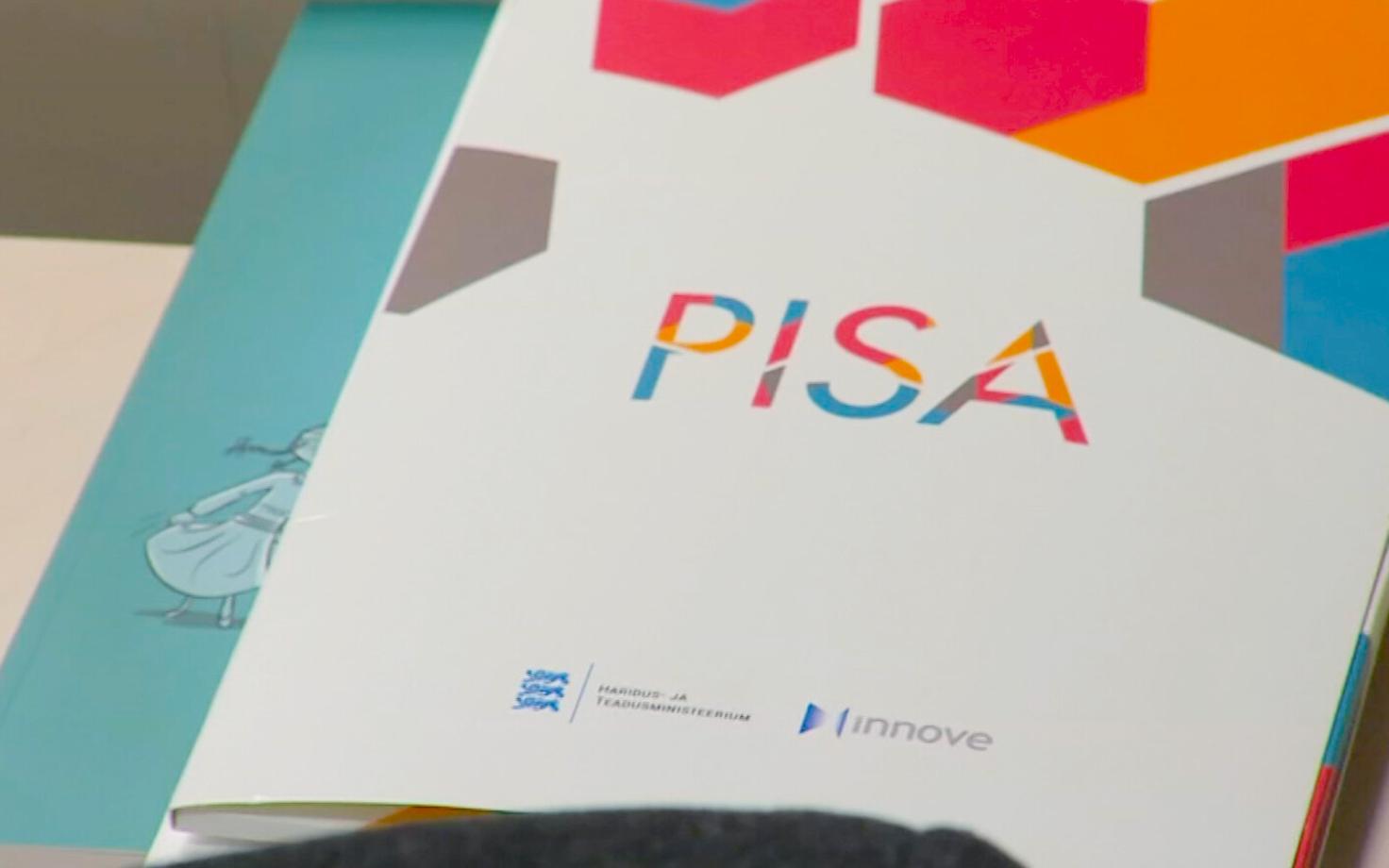
Only Japan and South Korea surpassed Estonia in 2025 overall PISA test scores among OECD countries. At the same time, education experts are concerned about the continued decline in functional reading literacy.
"This is undoubtedly a festive day, because compared with others we are in a very good place, but at the same time it also sets off an alarm bell. Over a ten‑year view, PISA results have fallen everywhere. Our situation is better and the picture is not as steep, but Estonia's best results were actually in 2018," said Gunda Tire, head of international studies at the Education and Youth Board (Harno).
The OECD organizes PISA tests every three years to assess the knowledge and skills of 15‑year‑old young people. In Estonia, the tests are mostly taken by ninth‑grade students.

Unlike classical exams, PISA does not measure how well students have mastered the national curriculum, but gives an indication of whether a young person can apply the knowledge acquired in mathematics, science and functional reading in real life.
To keep pace with the world, OECD experts assessed computational problem‑solving ability for the first time this time.
Estonian 15‑year‑old students have been taking PISA tests since 2006. The country stands out globally as an example. For instance, in 2022, only young people from Singapore, Japan and South Korea scored higher overall than Estonian students, with certain special administrative regions of China added. The same happened this time.
Among OECD member countries, only Japan (538) surpassed Estonia (average 527 points) in science. In mathematics, young people from Japan (525 points) and South Korea (522 points) performed better than Estonian students (508 points).
In the functional reading literacy test, only young people from Japan (503 points), South Korea (501 points) and Ireland (500 points) achieved better results than Estonian youth (499 points).
In the newly added field of computational problem‑solving, only young people from Japan (557 points) surpassed Estonian students (541 points).
If non‑OECD countries, such as Singapore, are included in the ranking, and China's special administrative regions are treated separately, Estonian young people place 6th in science, 8th in mathematics and functional reading literacy, and 7th in computational problem‑solving.
--
Editor: Argo Ideon


