School psychologist: Signs of school avoidance manifesting increasingly early in life
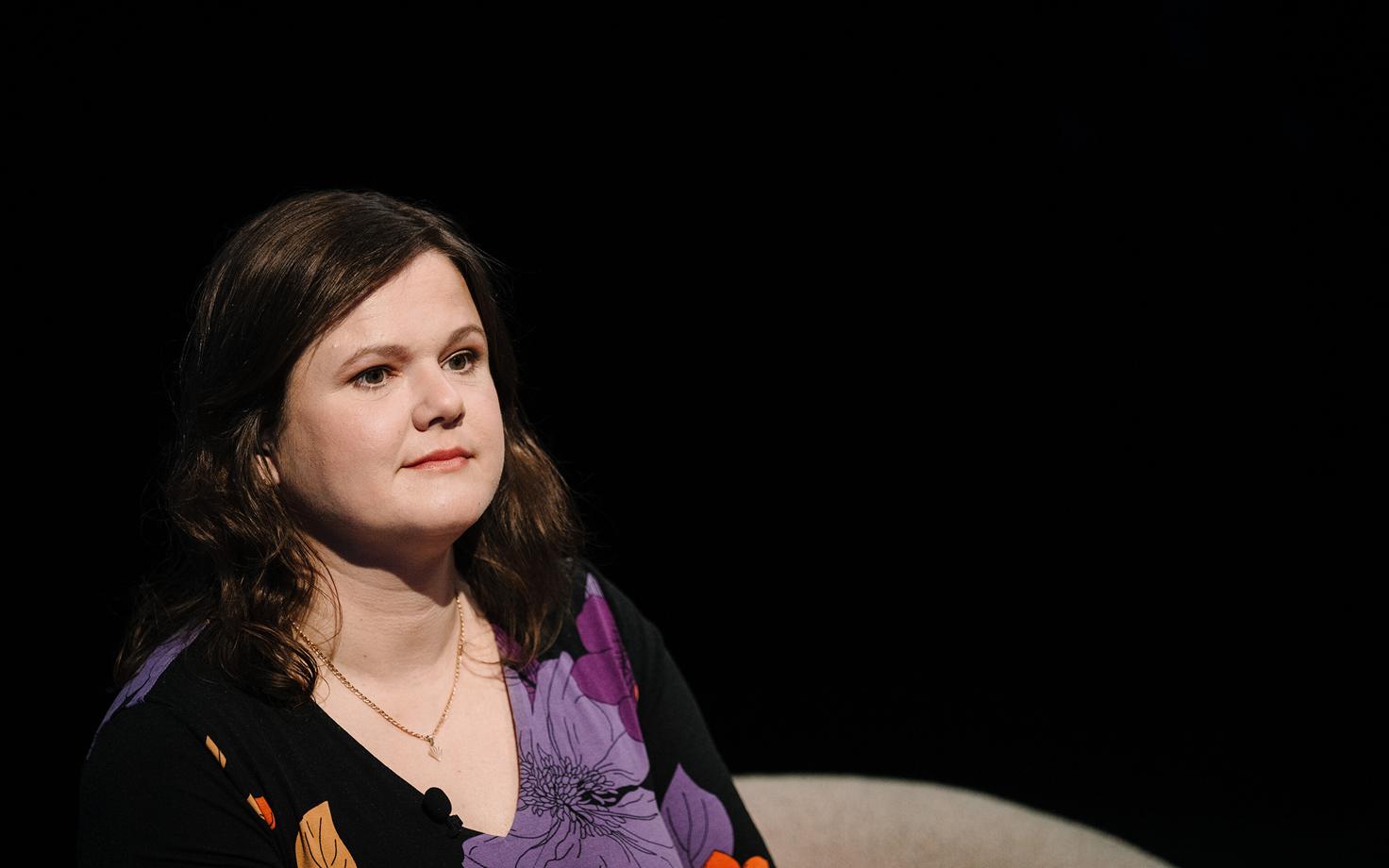
Kiili High School psychologist Kristi Feldman says she is seeing more children and young people develop school avoidance each year and that it is occurring at increasingly younger ages.
How often do you encounter young people in your work who, at some point, lose the desire to learn?
It seems to me that there are more and more of these young people every year. In fact, perhaps we are no longer even talking about young people, but about children. School avoidance is increasingly affecting younger children and we are also hearing that even children in preschool do not want to go. In other words, avoidance can sometimes begin before children even reach school age.
What causes this avoidance?
I think of school avoidance as a concept in which a child's needs and their environment are not well aligned. In other words, there is something in the environment that makes the child feel they do not want to be there. There can be many different reasons for this.
When we talk about young people, we often see school avoidance and mental health disorders become most prominent when puberty begins — when hormones kick in and a young person starts asking questions such as: Who am I and what am I doing in this world? There is also anxiety about graduating from school and what to do next.
School avoidance is most common in the third stage of basic school, but the signs are usually visible earlier. Today, there are also children in primary school who do not want to go to school. Some children entering first grade have difficulty adjusting.
We also see straight-A students who one day simply stop coming to school. They no longer have the energy to go. They cannot get themselves up in the morning. They simply do not have the energy to go to school.
We live in a highly information-saturated and achievement-oriented society. A great deal is expected of children and they are not given the time to develop at an age-appropriate pace and as individuals because expectations are so high.
This kind of achievement-oriented society creates the expectation that you always have to be exceptional. You constantly have to do everything as well as possible. You cannot just participate in a sport for the sake of it — you have to compete and win. At school, you have to get good grades, be talented at something and stand out.
Children grow up in this environment and internalize these expectations and they begin expecting a great deal of themselves. Children are extremely self-critical. As the saying goes, sometimes a person is their own worst enemy and the same is true of children.
When we talk about young people who have already developed school avoidance, we can usually also talk about burnout. If an adult burns out, they can take sick leave for several months and nothing particularly drastic happens. But a young person is constantly falling further behind. Young people themselves say they cannot stay home sick for a week because afterward they will have so much schoolwork to catch up on.
How can young people who have developed school avoidance be helped?
First, it is essential that we notice them. Schools and families can work closely together on this. If a parent notices that something is different about their child, they should first try talking to their child at home and asking what has happened. They should also feel comfortable contacting the school and asking whether something has changed there that has led to the child no longer wanting to go to school.
On the one hand, it may have to do with relationships. On the other, changes may need to be made to the child's curriculum because the child is unable to cope with the program they are currently expected to follow.
There can be many different causes that create such severe stress that it leads to mental health disorders. This, in turn, can leave a child unable to attend school or study and unable to find enjoyment in what they are doing.
That young person definitely needs support to keep them from falling into that hole, to keep them from slipping. Once they start slipping, it is very difficult to come back. And if they do not come back, the longer a child remains at home, the harder it becomes for them to return to the school environment.
Young people who drop out of the education system are often described as coming from disadvantaged socioeconomic backgrounds. From what you're saying, it sounds like that is no longer necessarily the case.
Yes, I also feel that we cannot really say that anymore. Of course, it varies by region, but I think the support system is what ultimately makes it possible either to bring a young person back to school or to prevent them from dropping out.
The thing about prevention is that we probably do not have statistics showing how many people it has saved who might otherwise have ended up on the brink of dropping out.
What we do know, however, is that among young people who need this support, a very large proportion can be brought back to school if they are given that support. And it needs to be done in cooperation with their families.
Schools can do quite a lot to create an environment that suits the child. For example, if a child has fallen behind or developed excessive anxiety or mood disorders, we know that their capacity is reduced at that point and that needs to be taken into account. They can be supported through an individualized curriculum, including studying temporarily at home.
The most difficult situations are actually those in which it is not school avoidance but learning avoidance that develops. In other words, the child is at home but does not do even the bare minimum there because they simply do not have the energy. They also blame themselves a great deal. They often say themselves, "Oh, I'm just lazy." But in reality, they are confused too and do not know what would help.
Do we have sufficient resources to work with students individually?
Our children have to be number one. Our priority across the country must be to support the mental health of our children and young people. At present, about half of schools have a school psychologist. Quite a few schools have a social pedagogue. What is important here is identifying and making use of the support systems available at school. Another important point is that a student's homeroom teacher plays a central role at school and can communicate with the family and provide support.
Municipalities have child welfare specialists and today they also have youth welfare specialists who work to prevent young people from dropping out of school and to encourage them to continue their education. I think support is available, but coverage is not equal across Estonia and these services are not accessible to every child. It is important to point out that these services are, in fact, required to be provided under the Basic Schools and Upper Secondary Schools Act.
If a child has to obtain this support outside school for a fee — for example, by seeing a psychologist because that option is not available at school — the local government is required to reimburse the family. Support must be provided to children, but I suspect many parents do not know that.
Several years ago, we also launched a school psychologists' advice line that any parent, child, young person, teacher or support specialist can call to ask questions and receive initial advice from a qualified school psychologist. It is open on weekdays from 4 p.m. to 8 p.m. at 1226. It is free and anonymous.
How does a child's motivation to learn develop in the first place?
Children arrive at school curious and eager to learn. My question is actually how that motivation disappears. But perhaps societal expectations are again partly to blame: We are expected to do everything with enormous motivation. Sometimes a particular subject is simply boring or part of a subject is boring and that is when the teacher needs to explain why it is necessary to learn it.
At our school, we have now drawn up a new development plan and made developing self-directed learners our main goal. In other words, we are training our teachers in how to develop self-directed learners. When students are self-directed, they understand why they are learning, what they are learning, how they learn and how they could learn better. We place autonomy and responsibility in the child's hands.
If people do not understand why they are learning something or what they are learning, no one wants to learn that way. We need to understand things; that is part of human nature. Young children are extremely curious. They ask a lot of questions and if they do not get answers, if they do not understand why something is necessary, their motivation disappears.
There is quite a lot we can already do at home. During that difficult and sometimes slightly tiresome "why?" phase, parents can answer a great many of their child's questions, helping preserve the child's curiosity about the world.
--
Editor: Marcus Turovski


