Tallinn ignores architects' proposals for major thoroughfare reconstruction
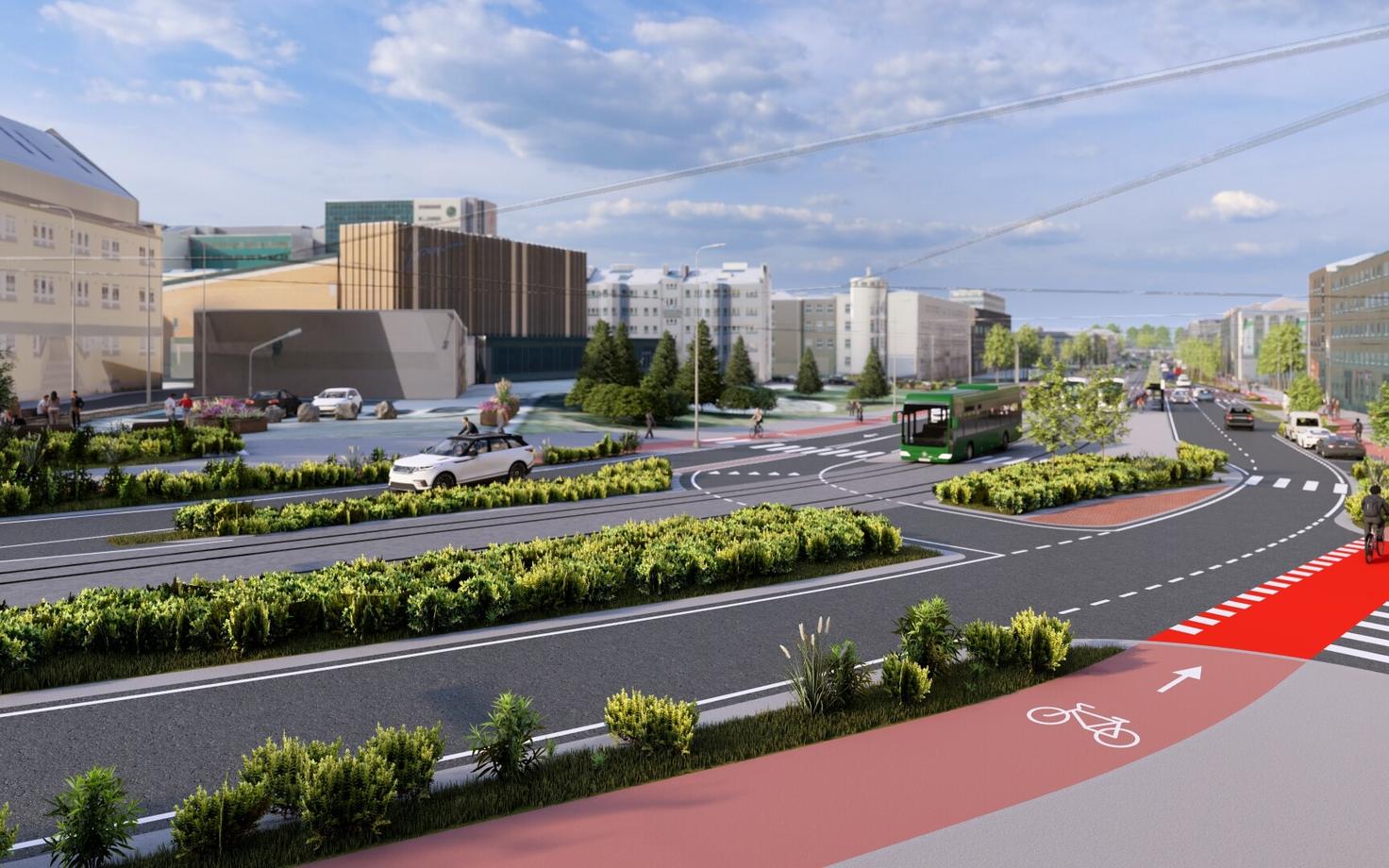
The Estonian Association of Architects has made several proposals to the City of Tallinn to modify the Pärnu maantee reconstruction project. The city, however, has not adopted the architects' suggestions.
In discussions on the reconstruction of Pärnu maantee, the association has emphasized the importance of public space quality. At the latest meeting with city officials, it became clear that the architects' proposals would not be incorporated into the project.
"We met last week, and it was a very pleasant meeting with very pleasant people, but unfortunately there was no result. The main reason cited was the tight schedule of the European-funded project, and because of that it is supposedly no longer possible to make any changes," said Jaak-Adam Looveer, a member of the association's board.
Looveer said the current project would turn what is now a city-center environment primarily into a transit corridor, rather than a space that supports making the street more attractive.
"The project deserves credit for the considerable effort that has gone into the bicycle lanes. But there are no benches for pedestrians, no designated stopping areas for cyclists, and none for cars either. Public transportation stops are also viewed more as obstacles that slow transit down, and they are being moved much farther apart from one another," he said.
Tallinn Deputy Mayor Kristjan Järvan said that after comparing different solutions, the city concluded that the current version is the best option. As a result, there are no plans to change public transportation stops.
"Because colleagues at the Transport Department have thoroughly modeled and analyzed public transportation usage, we have seen that the most important thing is for a stop to be in the right location. If additional stops are added between existing ones, it makes public transportation slower. If public transportation is slower, we lose users as a result," the deputy mayor said.
But should expert opinions be taken into account in projects like this?
"The city government's position is certainly that experts should be involved. In that respect, it is important to note that various city departments employ highly professional specialists. We also procure design work and traffic analyses through public tenders, and those are carried out by professionals as well," Järvan said.
"At the meeting with the Association of Architects there was, I would say, a curious distinction. The association seemed to suggest that architects are experts, but that mobility engineers are not experts whose views should be taken as seriously as those of architects," he added.
--
Editor: Marko Tooming, Argo Ideon


