Dmitri Teperik: Ida-Viru County should be pro-Estonian, European and successful
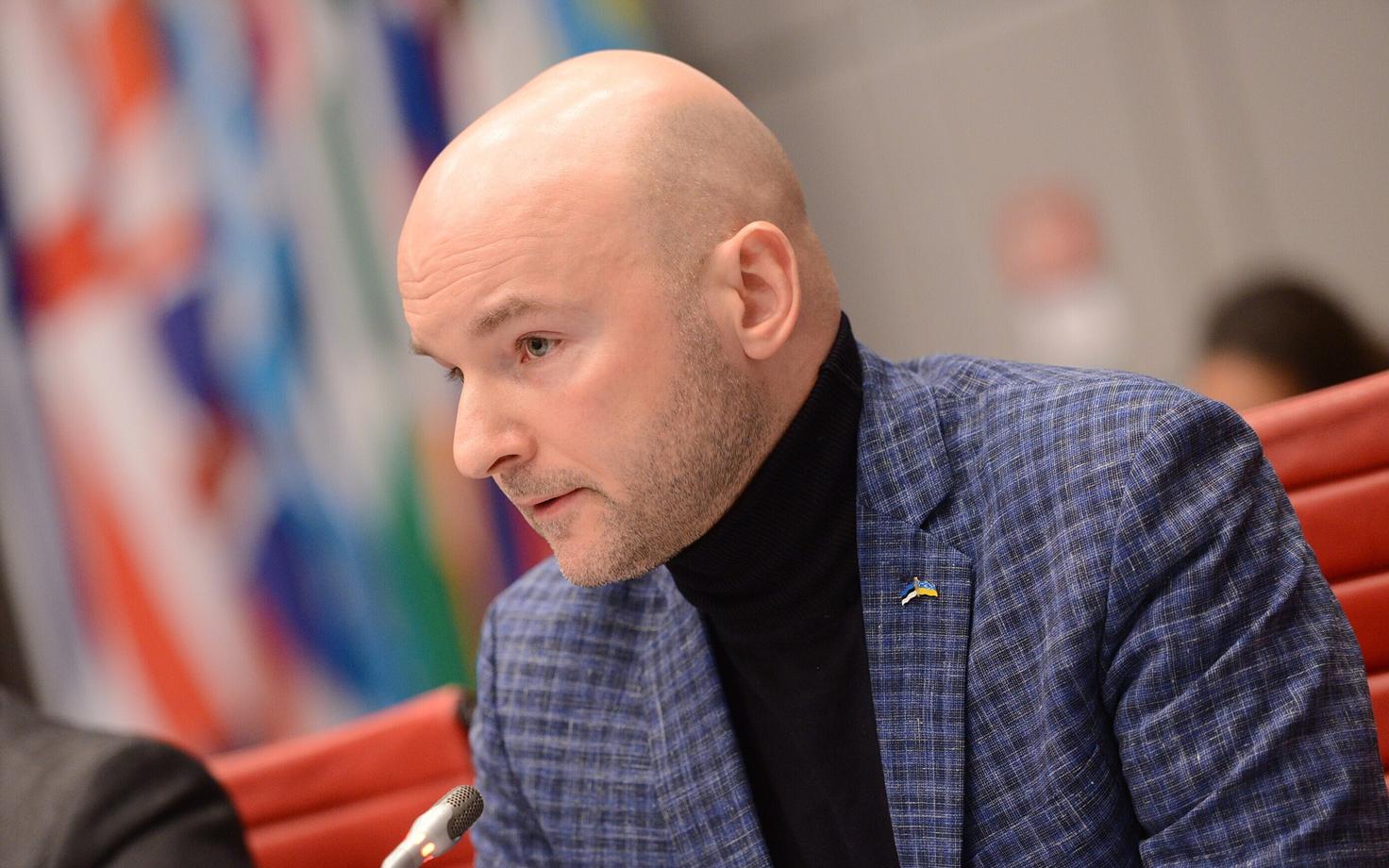
Ida-Viru County must be seen not as a region defined by its problems, but as a source of opportunity for Estonia's future, with long-term investment, local involvement and development essential to the country's prosperity and security, Dmitri Teperik writes.
"I'm from Ida-Viru County." I believe the emotional and substantive meaning of this sentence has changed more over the years than any statistical indicator collected about the county. I remember a time when it was met with a sympathetic nod. I also remember a time when it was followed by a cautious pause. At the same time, I sincerely hope that, before long, it will simply spark curiosity or, better yet, genuine enthusiasm.
I have spent most of my professional life working on security and societal resilience in Estonia, Ukraine and elsewhere. The longer I do this work, the clearer one thing becomes: The most important decisions, those with the longest-lasting impact, are not made in the midst of a sudden crisis. They are made years earlier, on ordinary workdays when passionate election promises and dry statistics are of little interest to anyone.
Once multiple crises strike simultaneously and their consequences begin to mount across different sectors, it is, of course, rather late to revisit someone's decisions or failures to act. This has only strengthened my desire to bring my professional experience back to my home county, not as an outside adviser, but by working on the ground alongside those who live in Ida-Viru County every day.
Over the past few years, I have found many dedicated, like-minded people in Ida-Viru County whose eyes still shine with trust, whose hearts are in the right place and who are firmly in tune with Estonia. I believe there are many more of them.
Ida-Viru is a process
We tend to talk about Ida-Viru County as a border region, industrial, Russian-speaking and shrinking. What else? The list could go on indefinitely, with a statistical table or deeply entrenched stereotype to back up every item. But this describes the current situation, not the direction in which the region is heading. And there is a consequence: When our region is consistently described in terms of its shortcomings, it is offered temporary relief measures rather than long-term investment.
The list of shortcomings can be extended endlessly. Perhaps now is the time to recognize the progress that has been made. Anyone who has lived, worked or regularly visited Ida-Viru County over the past two decades can see and knows just how much has changed. They can actually feel it because the transformation is not just about infrastructure, although that has changed, too. The biggest change is in the people.
Ida-Viru County is a region that has undergone restructuring across several industries within a single generation and the effects will continue to be felt. At the same time, studies conducted in the region reveal findings that challenge the widespread myth of local passivity: Helping neighbors and providing informal mutual support are part of everyday life in Ida-Viru County. People help one another without anyone having to organize them.
What is lacking is neither willingness nor compassion, but safe, welcoming meeting places that people feel are their own, along with trusted channels through which that willingness can translate into decisions. This is a very different diagnosis from passivity and therefore calls for a very different remedy.
Rethinking how we perceive Ida-Viru County is the first and least expensive thing we can do. Ida-Viru County offers a diverse range of resources for building the future: people, industry, skills, culture, nature and experience in navigating major upheavals. Few regions in Estonia have more experience of this kind. I believe that, under the right conditions, Ida-Viru County is capable of bringing renewed socioeconomic vitality not only to the region itself but to Estonia as a whole.
The "Ida-Viru Future 2050" program, launched as a civic initiative, has developed a vision for the region's future based on an extensive public engagement process involving public discussions, seminars, study visits, expert consultations and community workshops. The vision is grounded in the principle that sustainable development emerges when local people feel included in decision-making and believe their contributions matter.
The next decade is being decided now
There is a specific reason why the timing of this discussion matters. The national spatial plan "Estonia 2050" identifies the Ida-Viru urban area — Jõhvi, Kohtla-Järve, Narva and Sillamäe, which function together as a single regional center — as one of Estonia's three regional urban centers, alongside Tartu and Pärnu. The same document identifies it as a key area for Estonia's energy and economic transition. This is not a courtesy gesture, but the position of the Estonian state itself, set out in the country's foundational spatial development document through 2050.
Ida-Viru County is part of Estonia's eastern border region, a stretch of territory extending from the Gulf of Finland to Setomaa where the challenges are the same or very similar throughout: declining populations, disappearing services and stalled investment. The state's own analysis has concluded that this is a matter of national security and societal resilience.
This conclusion has practical implications. In regional policy, the usual question is where each euro invested will generate the greatest return. In national security, that question is asked far less often, although it should be. We do not maintain air surveillance and air defense systems because they are economically profitable, but because without them, the country would be blind and vulnerable. A depopulating border region that is losing hope poses the same kind of risk, only one that develops more slowly and is therefore politically easier to put off addressing.
These choices will come together in the national partnership agreement for 2028–2034. What does this mean for Ida-Viru County in practice? A child starting first grade in September 2028 will be in seventh grade by the time the agreement expires. Their entire school experience — the school building, extracurricular activities, swimming pool, bus routes, teachers' salaries and the next generation of teachers, their parent's or parents' jobs and opportunities for retraining or continuing education, the comfort and safety of public spaces and much more — will be shaped by decisions made over the next year and a half. The previous window of this kind opened in 2021. The next will not open until 2035.
Will the region come to the decision-making table with well-founded proposals or will it arrive largely through media coverage, bringing only its problems?
Pro-Estonian, European and successful
If I had to briefly describe what Ida-Viru County should look like in 2050, I would say it must be pro-Estonian, European and successful.
Being pro-Estonian means that the people who live here, regardless of the language they speak at home, feel a sense of ownership of our country rather than seeing themselves as temporary or permanent guests. Loyalty grows from the state's presence and from local people's genuine ability to make democratic decisions about their own lives.
Being European means building a normal European region where human rights are respected, public spaces are well maintained, public transportation works, services are accessible and businesses compete in the European market.
Being successful means that Ida-Viru County is a hub of socioeconomic activity — a place people come to live, study and work, rather than a place they leave. This is the most difficult of the three goals, but also the most measurable.
These three goals cannot be ranked or separated from one another. There is no point in constructing abstractions that have no personal relevance to anyone. I believe Ida-Viru County deserves the opportunity to foster a sense of belonging. Estonian, European, progressive. Three words, one idea.
So far, we have had varying degrees of success in strengthening pro-Estonian sentiment through language policy, education and culture. This work must continue.
The European dimension can be strengthened further and there is a concrete opportunity to do so: Narva's bid for the title of European Capital of Culture could become a shared undertaking for the entire region and the country. Progress is driven by both grassroots initiatives and major projects in business, urban planning and community life. Most importantly, people should experience the satisfaction of achieving success by making their home county a better place.
All of Estonia safer when things are in order in Ida-Viru County
Security is usually discussed in the context of the eastern border and the Russian-speaking population. This is appropriate, but somewhat incomplete. Societal resilience also depends on whether people trust their country enough to cooperate with it during a crisis. That kind of trust cannot be bought overnight. It is built over decades, not only through modern infrastructure or jobs, but through people's actual experience of having their local voices heard.
Every euro invested in developing employment and education, improving the living environment and strengthening communities in Ida-Viru County is also an investment in security, one that delivers returns even if no crisis ever occurs. When things are in order in Ida-Viru County, the whole of Estonia feels more secure. This works both ways and we know it.
The "Ida-Viru Future 2050" vision has now given rise to the Ida-Viru County Renewal Charter, which sets out concrete proposals on investment, housing, skills and services and community development. Each proposal comes with a measurable outcome to be achieved by the end of 2028. The charter, like the author of this opinion piece, is nonpartisan. It neither supports nor criticizes any political party and is addressed to all political forces and officials involved in preparing major development decisions.
No one claims this plan is perfect. But I would argue that a good plan for Ida-Viru County now is better than a perfect plan in the future. Ida-Viru County deserves more so that all of Estonia can enjoy better, safer and more prosperous lives. Ida-Viru County is not merely a recipient of prosperity; it is a co-creator and contributor because Estonia's prosperity grows when we build it together.
--
Editor: Marcus Turovski


