Estonia seeks clearer domestic and psychological violence punishments
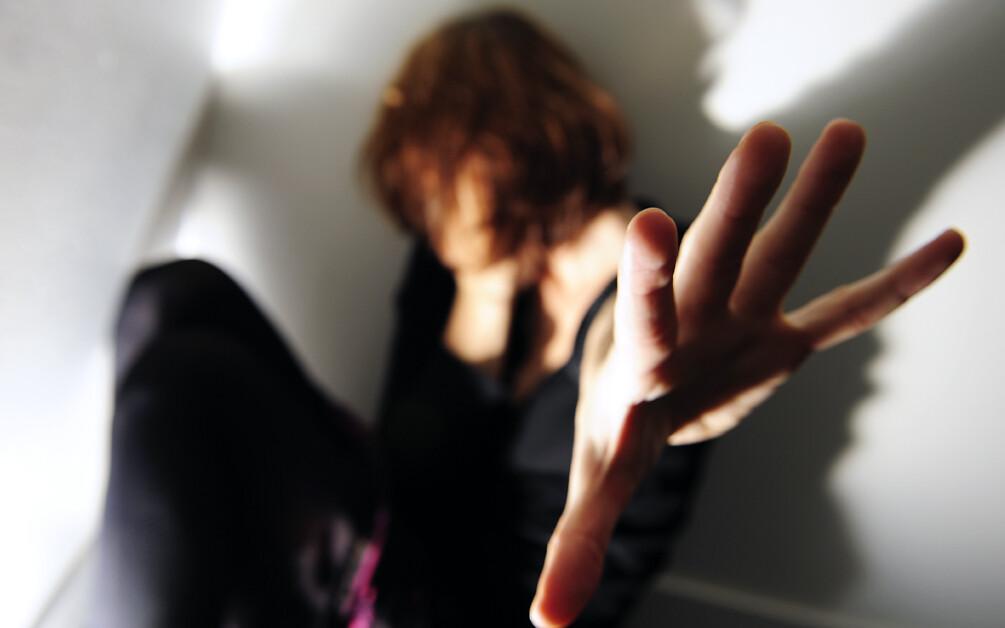
Estonia is preparing to transpose an EU directive aimed at combating violence against women and domestic violence, with the Ministry of Justice pledging to amend draft legislation to strengthen protections against domestic and psychological violence.
Statistics on violence against women and domestic violence in Estonia are among the worst in Europe. As these problems are widespread across Europe, Brussels has adopted a directive requiring countries to address them.
"The directive was adopted because it was clear that countries were still not doing enough to tackle the problem. Services exist, but there are not enough of them, not enough is being done on prevention and some forms of violence, for example, are still not punishable. The directive must be transposed as it stands and compliance will also be monitored very strictly," said Kristiina Luht, head of victim support policy at the Ministry of Social Affairs.
According to Luht, Estonia has been preparing for this for some time and has already taken many important steps, but some provisions have yet to be incorporated into Estonian law. One example she cited concerns protecting children when people close to them are violent.
"In cases of domestic violence, it must indeed be assumed that minors need protection in all circumstances, even if the attack was not directed at them. This will be written into the Code of Criminal Procedure. Another requirement is that every victim's need for assistance must be assessed, meaning specialists really have to think very carefully about what that particular person needs — what kind of protection and what kind of support," Luht explained.
Another important provision to be written into law concerns cooperation within the support network, meaning close collaboration between victim support services, law enforcement agencies and local authorities. Luht said this has so far been done in high-risk domestic violence cases, but in future it will be required in all cases. A stronger legal basis will also be established for situations where the system has failed a person and the case needs to be analyzed, requiring different authorities to exchange information.
Concern for domestic and psychological violence
Under the directive, countries must draw up national action plans to prevent and combat violence against women and domestic violence. Certain offenses must also be criminalized. Both the Ministry of Social Affairs and civil society organizations are concerned that domestic violence is not criminalized under Estonia's Penal Code. According to Luht, the term "domestic violence" is currently used only in the Victim Support Act.
"There should at least be a specific offense in the Penal Code so that everyone clearly understands what domestic violence is. Psychological violence should also be criminalized — that, too, should be punishable, not just physical violence. We are somewhat concerned that we may be missing an opportunity here. If transposing this directive is such a major process and involves such significant changes, then why not go as far as defining domestic violence very clearly in criminal law as well?" Luht said.
She cited several problematic Supreme Court rulings which, in effect, state that an intimate relationship ends when a couple separates or divorces, even though the reality is different.
"Especially when people have children, they actually remain connected for the rest of their lives and a child can be used to manipulate the other person and harass them endlessly. Unfortunately, that is what they do," Luht said. She stressed that perpetrators of violence are unfortunately very resourceful in such situations, sometimes surprising even those who have spent years helping victims.
Estonia has also seen a case in which a woman was killed the day before she was due to leave her home, illustrating how dangerous leaving an abusive relationship can be.
Draft legislation to be complemented
When ERR approached the Ministry of Justice to ask why these forms of violence were not addressed in the draft legislation, several days passed before the ministry announced that it did, in fact, plan to amend the bill in these respects. Justice Minister Liisa Pakosta also confirmed this in an interview.
"It is certainly not true that the Penal Code does not address domestic violence. On the contrary, we have a problem with the police not initiating proceedings. If violence has occurred, proceedings must be initiated under the Penal Code and the perpetrator can then be removed immediately for up to two months. The bill also broadens the definition of an intimate relationship so that violence between former partners or violence that continues after cohabitation has ended will also be considered intimate partner violence."
According to Pakosta, Section 121 of the Penal Code will be given a new title so that it no longer covers only physical abuse, but any harm to a person's health. The substance of the section will remain broadly unchanged, but it will also become possible to punish psychological violence on the same grounds.
The Penal Code's provisions on threats are also set to be broadened so that a person can face penalties when the victim experiences serious and well-founded fear. Penalties for physical abuse will become more severe. Forms of violence and harassment committed in digital environments will also become punishable, including publishing sexually explicit material depicting a person without their consent, as well as threatening to publish such material.
Officials still engage in victim-blaming
One concern that cannot be addressed through legislation is people's attitudes, Kristiina Luht said. According to Luht, feedback from organizations that assist victims shows that some professionals still hold attitudes suggesting that victims themselves are to blame for their situation.
"I do believe that laws can have an educational effect, but if a professional thinks the victim is to blame, then the law won't help with that. People can be harmed again both by law enforcement and within the social services system. A person is hurt all over again because people don't understand, for example, how difficult it can be for a victim to leave their family or how hard it is to move on with their life after experiencing violence for a long time. These attitudes are actually the hardest thing to change," Luht said, describing accounts she had heard from volunteers.
To some extent, these issues will also be addressed through the European directive, as the law will stipulate that victims must not be revictimized when they enter the system. All professionals, including judges, police officers and victim support workers, must also receive training to understand the nature of domestic violence and the suffering experienced by victims, and to make sound decisions.
--
Editor: Marcus Turovski, Urmet Kook



