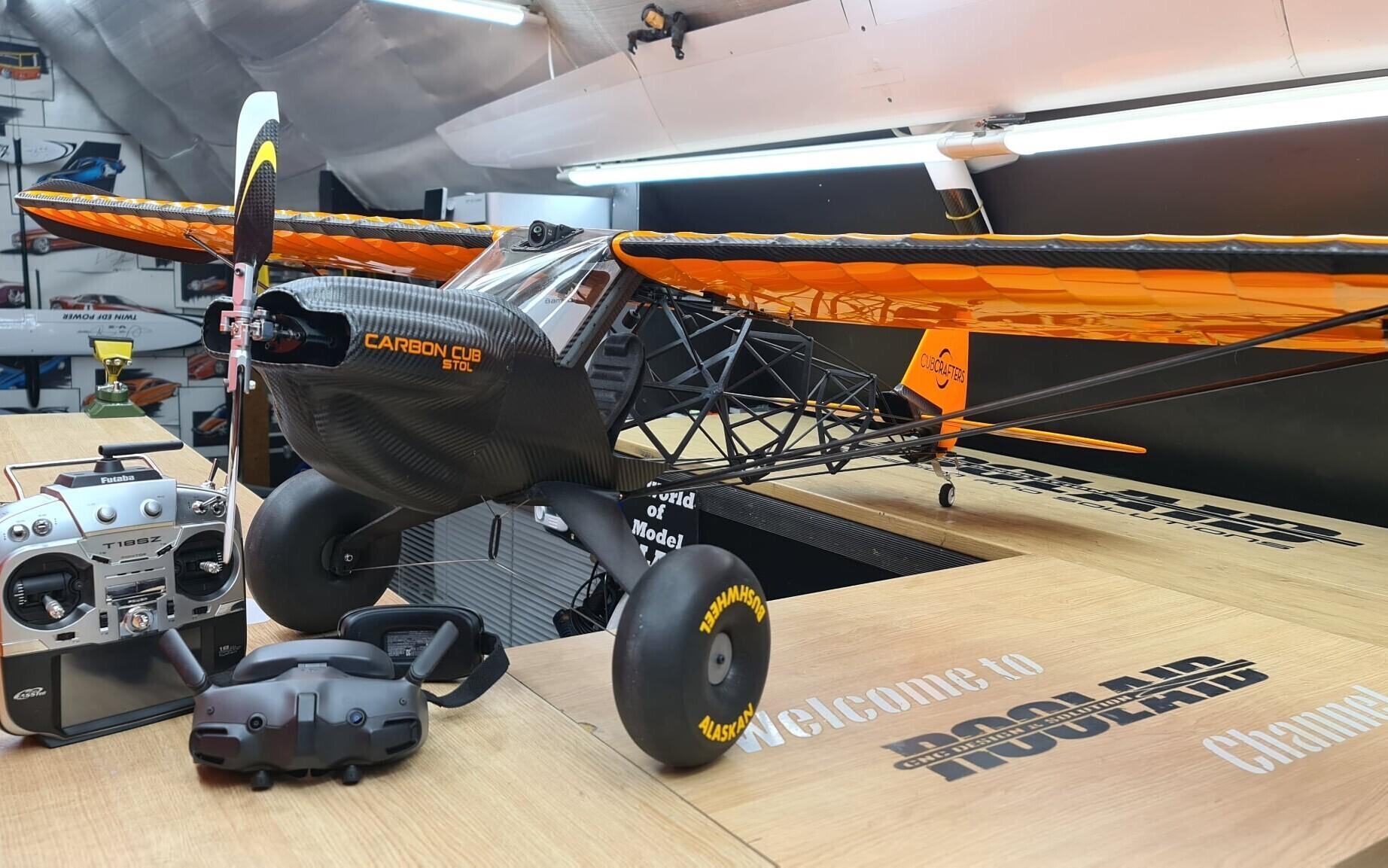
Authority reminds enthusiasts rules apply to RC planes as well as to drones

While drone hobbyists may be aware rules apply to their use, the Transport Administration notes this applies to radio-controlled (RC) aircraft too.
With the arrival of spring, more and more enthusiasts are likely to be out and about with their RC planes, helicopters, etc., so it is key to keep abreast of the rules, which also change over time.
"Model aviation is an exciting hobby for many, but even when flying recreationally, the same basic requirements that apply to drones must be followed," said Priit Rifk, head of the Unmanned Aviation Department at the Transport Administration. "It is important to know where and under what conditions flying is permitted, and to make sure before each flight that all requirements have been met."
Estonia's airspace is becoming increasingly busy. Alongside piloted aviation, the number of unmanned aviation vehicles (UVAs), including drones, is also growing, which makes it especially important for all airspace users to know the rules and take each other into account.
"Model aviation is generally conducted under the rules of the open category. If someone wishes to deviate from these conditions, the appropriate authorization is required or the flight must take place in a designated geographical area," Rifk explained.
The administration says in the open category, model aircraft may be flown up to 120 meters and must remain within visual line of sight at all times. Before flying, always check for any additional restrictions in the selected area using a map application showing geographical zones and their conditions.
Depending on the flight and aircraft, a remote pilot competency certificate may be required. The Transport Administration recommends at least A1/A3 training to understand rules, risks, and responsibilities, and it is mandatory for model aircraft weighing 250 grams or more.
Attention must also be paid to operator registration. If a model aircraft weighs at least 250 grams or has a camera, the operator must be registered and the number affixed to the aircraft; registration and the A1/A3 test can be completed in the LOIS Aviation Safety Supervision Information System.
With first-person view (FPV) flights, an observer is required to keep the aircraft in sight and monitor the surrounding airspace.
The Transport Administration urges all model aircraft enthusiasts to fly responsibly, check applicable conditions before each flight, and comply with safety requirements. This will help ensure that the model aviation season proceeds safely and smoothly.
Additional information on the use of drones and their rules in Estonia is here and here.
--
Editor: Andrew Whyte